How to Work With Your Cycle Instead of Against It
Your boss wants the big project now, but your body says not this week. A cycle coach shows how to plan around your phases without over-explaining.
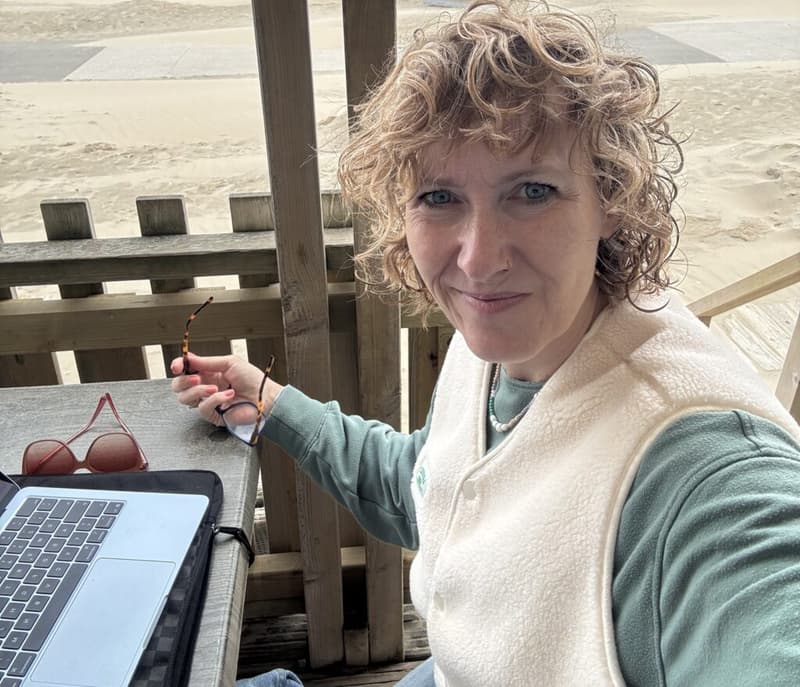
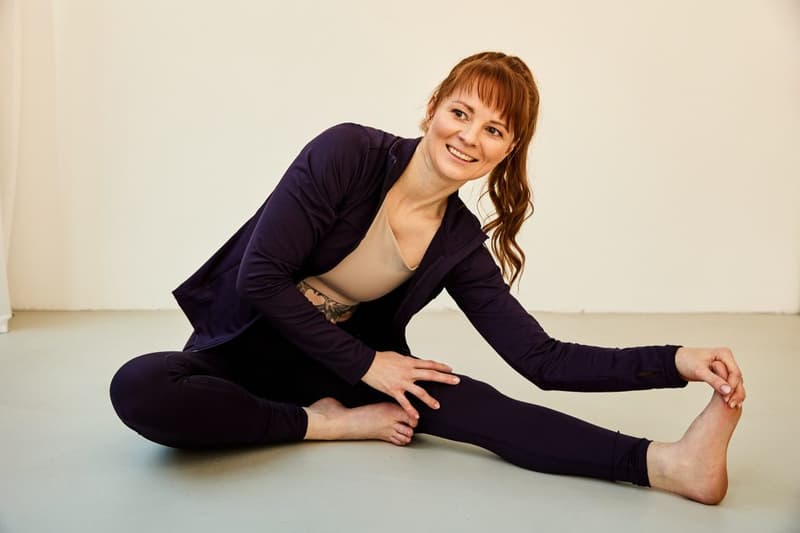
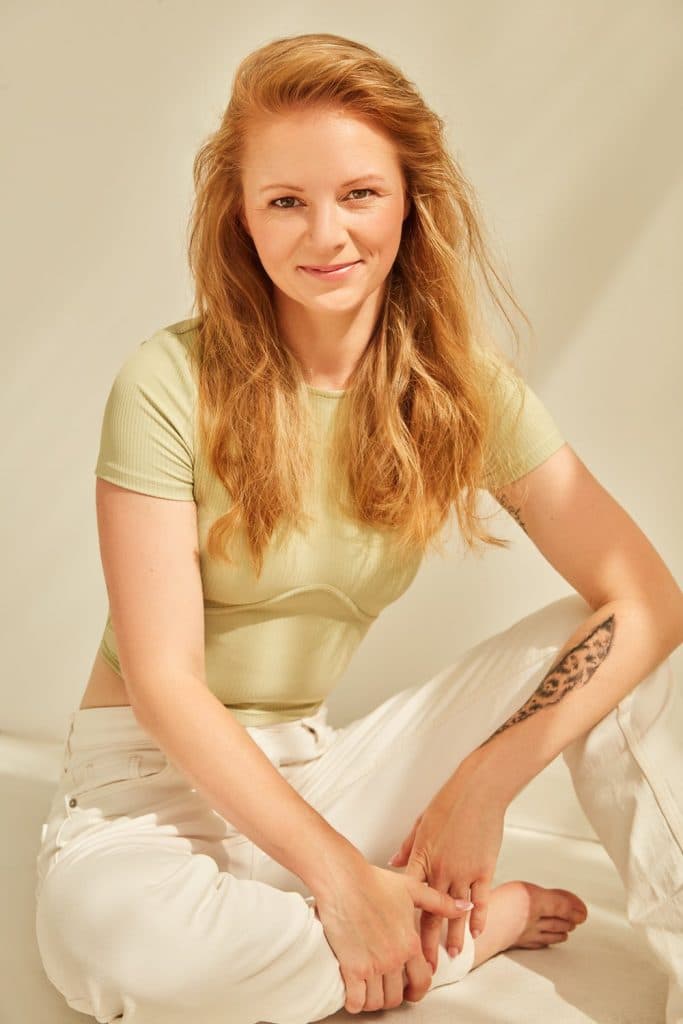
Hi friends, Fran Wiedemann is a mindset coach, cycle expert, mindfulness trainer, and nutrition consultant. Today she's explaining how our menstrual cycle can become a real success booster. In one-on-one coaching, she works with women at all kinds of life stages, supporting them through cycle disorders, menopause challenges, and cycle-based training.
Her work at Wiedemann Women Mentoring focuses on whole-body women's health and rests on three pillars: mental health, the menstrual cycle (with an emphasis on the transition into menopause), and nutrition. She encourages women to live in tune with themselves and to stand up for themselves. She's a mom of three herself and lives with her family in Brandenburg, the German state that surrounds Berlin.
Ms. Wiedemann, we all know that women are cyclical beings, but how can we actually use our cycle as a natural success booster?
Honestly, I don't think everyone does know that women are cyclical beings. For a lot of women, this is a brand-new topic, and they're only slowly getting familiar with the idea and everything that comes with it. That's why it's so important that the conversation is getting louder and more people are paying attention.
To use your cycle as a natural success booster, the first step is learning about it. When you know your own cycle and understand what each phase does, you discover yourself as a woman in a whole new way. You live with more understanding for yourself, and that brings more ease. You also put less pressure on yourself, and in my view that's where the success comes from. Or, if you want to put it that way, that's how you use your cycle as a success booster.
Even professional athletes are now thinking about adjusting their training to their cycle… When are we at our strongest, and when are we at our weakest?

That's a great question, because it shows just how individual all of this is. When we perform best and worst depends on your own personal cycle. There is a general pattern, a kind of main flow, that says you're strongest in the follicular and ovulation phases. Then, as the hormone progesterone slowly rises and you move into the luteal and menstrual phases, that same pattern says you're at your weakest.
But like I said, it's all very individual. The exception proves the rule, though really we shouldn't talk about exceptions at all, just about individual experiences. Some women, for example, feel very strong during their period and can give it everything they've got.
It's also worth knowing that in sports, there's a difference between pure performance and how you perceive it. Studies have found that performance measured in numbers, like times, reps, or distances, doesn't always match how athletes feel. In other words, an athlete who doesn't feel good may rate her performance as worse even though the numbers show a good result. So our cycle doesn't just affect our performance, it also affects how we feel about it.
Many of the women reading this are already in perimenopause. What can they pay special attention to so they can use their energy as efficiently as possible?
The most important thing is to pay attention to yourself and your body and to listen to what it's telling you, even if it isn't always easy to engage with the topic. It's important not to be afraid of it. And never lose sight of the fact that perimenopause, and the whole stretch of the menopause transition, is a marathon, not a sprint.
A wide range of symptoms can show up during this time, from hot flashes and sleep problems to vaginal dryness and a lower libido. And those are only some of the possible symptoms, all of which can sap your energy. It's important to notice the signs and learn more about what can help, because there are plenty of options.
Your own lifestyle, meaning nutrition, sleep, and exercise, can make a big difference and ease symptoms. Hormone replacement therapy is another one of many ways to relieve discomfort. But no woman has to search for solutions alone. There are places you can turn to that lay out the different options, so you can filter out what's best for you.
Finding the right fit is a process, and it's one I support women through intensively in my coaching. There is no one right solution, no one right path. Every perimenopause, every menopause, the whole transition looks different for every woman. How it goes depends on lifestyle and has ethnic and genetic factors too. What matters is seeing that you can do something about it, and meeting it with a positive attitude and, above all, without fear.
Say I want to tell my boss I'd rather work on the big project in two weeks because I'll be at my best then. How can I back that up biologically?
Honest communication is the only thing that helps here. Women are cyclical beings, and in the luteal or menstrual phase, symptoms and hormone swings can make a project like that harder to tackle.
It's right and important to stand up for yourself, and personally I love it when women find the courage to do that. But if direct communication like that doesn't feel comfortable to you, and the project has been on the calendar for a while or there's plenty of time to work on it, you can plan around your cycle instead.
You could do the hardest part of the project during a high phase, the follicular or ovulation phase, and let everything lighter fall into the other two phases, luteal and menstrual. If you factor your cycle into your planning, you can simply schedule accordingly, and you don't necessarily have to tell your boss anything about your cycle at all.
Of course, there are also situations where you can't plan around your cycle phases or your own energy, and you have to give more than you actually can right now. In those moments, it helps to acknowledge that you're asking a lot of yourself and pushing harder than you maybe should have. Afterward, make sure you build in enough time to recover, even if that can't happen until two days later.
We're at the start of a new year, and a lot of people set out full of enthusiasm with resolutions, then drop them quickly. How can we stick with them?
That's true, a new year always motivates us, and before you know it you've got a whole list of resolutions. But the truth is, you don't need a new year to make resolutions or to kick off changes for yourself. It doesn't matter when you start. What matters is realizing that not every change you want has to begin with one giant leap.
It's worth starting with small steps and celebrating every bit of progress. Consistency is especially important here, so you keep those small changes going for the long haul. When we're too hard on ourselves and try to achieve too much at once, it usually fails, and the result isn't progress but frustration.
Can you give us an example?
We don't have to suddenly exercise for an hour every day starting in January, especially if we haven't worked out in years. A good start would be 10 minutes of light movement a week: a little yoga, a short run, or a few strength exercises. That's doable, and it keeps you motivated. You might not expect it, but you'll quickly feel how much of a difference even those 10 minutes a week make.
So it's important to set goals that are manageable and realistic, that fit both our calendars and how we're doing right now, so we can actually keep them up. There's no point in resolutions so unrealistic that they just add more stress to our days. When we plan our goals, we should think carefully about what we really want and how we can work it into our lives for the long term. And of course, it's important to stick with it and not give up the moment it gets a little harder.
Would you say our cycle, and knowing about it, can be a source of real strength?
Absolutely, definitely! Knowing about our cycle explains a lot and makes many things clearer for the woman who takes the time to understand herself and her cycle. She stops seeing herself as wrong or weird. She knows, for example, that mood swings are okay and are allowed to be there. Once you have that knowledge, you're also much kinder to yourself. I also believe it helps you stand up for yourself more.
It changes your mindset, which, like emotions, is always tied to hormones. We have to remember that it's not just about the cycle, that all of these things are connected. Knowing more about your cycle and those connections, and putting that insight to use, means looking at things holistically. So for me, it's definitely a strength, maybe even a superpower!
What would you like to tell us moms in general to help us have a good 2026?
Don't be too hard on yourselves, and don't compare yourselves to others. Go your own way and pay attention to what's best for you and what fits you. If you want to make changes, don't take huge, fast steps. Take small steps, steadily and at your own pace. Consistency is the magic word here.
Also, give yourselves enough me time. It's so important, because only when we're doing well as women and as mothers can we pass that on to the people we love, our kids, and everyone around us. When we moms have no energy left, we just function, and we can't really enjoy life. Think of it like on an airplane: in an emergency, you put your own oxygen mask on first and then help the others, because it doesn't work the other way around. You can't take care of anyone if you have no oxygen yourself.
This story first appeared in German on StadtLandMama.