Dating as a Single Mom: Apps, Time, and Making Room for Love
You plan the dentist, the soccer practice, the work call. So why does your love life only get the leftovers? Two experts have a few uncomfortable, helpful answers.
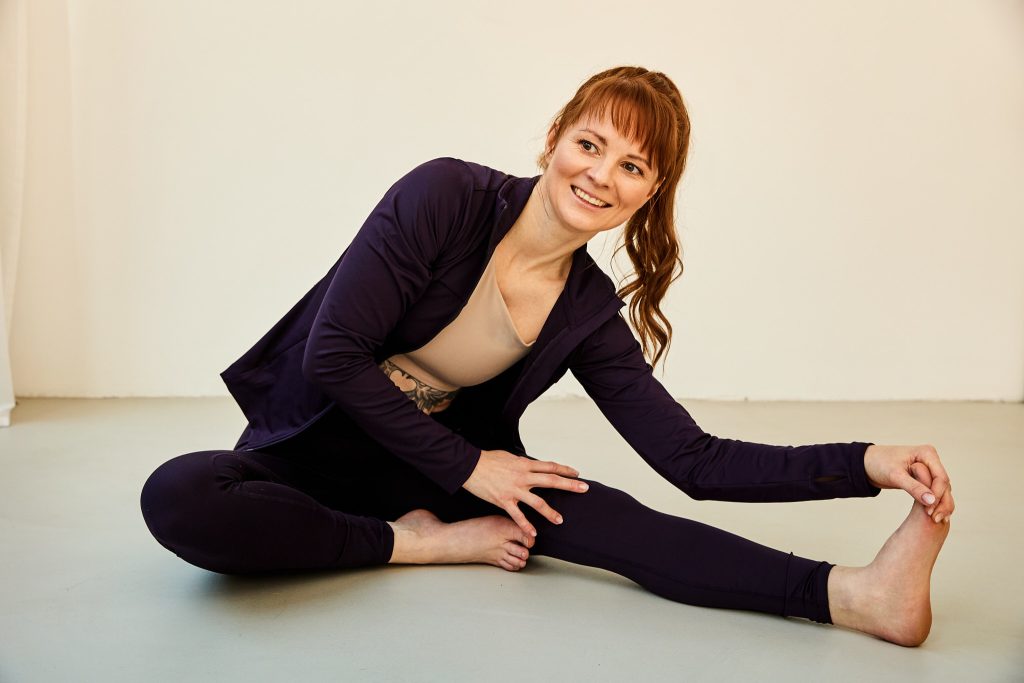
Hi, friends! Today we want to give you two well-informed perspectives on dating as a mom. Prof. Dr. Wera Aretz is a psychologist and professor whose research covers online dating, partner choice, and relationships. Simone Janssen is a dating and relationship expert who has helped singles find partners for more than 33 years. She also hosts the podcast “Liebe ohne Filter” (“Love Without a Filter”).
The two women have recorded several podcast episodes together in Cologne, combining scientific research with what they see in the everyday reality of dating. And they've noticed that for moms, the search for the perfect match isn't all that easy. Here's their take.
Kids, work, housework, appointments, and maybe still the logistics with an ex. If you're a single mom, you rarely feel like you have too much time on your hands. And still, the wish is there: a person at your side. But where do you meet someone? Do you have to be on Tinder or Bumble these days? How much time should you give the search? And have we maybe forgotten a little how to meet people in real life?
“As a mom, I have zero time for dating”
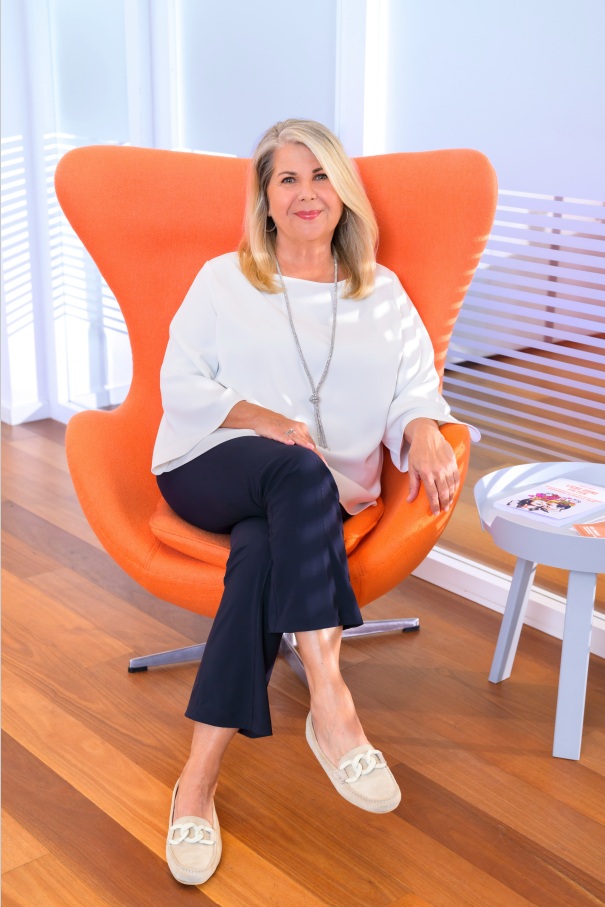
Simone Janssen: I hear that sentence a lot. And of course I know what an incredible load single moms carry every day. Still, I sometimes say something a little uncomfortable: if I want a relationship, that wish has to show up somewhere in my life.
That doesn't mean dating suddenly gets to matter more than your kids. But why do we put doctor's appointments, workouts, parent-teacher nights, and work meetings on the calendar without a second thought, and then wait for our own private life to get some time by accident, whenever there happens to be some left over?
So I'd advise women to deliberately plan time for themselves. And me-time doesn't always have to mean lying on the couch alone. Get dressed up. Go out with a girlfriend. Go to a café or an event by yourself once in a while. Make a date. You can be a mom and still be a woman.
Prof. Dr. Wera Aretz: Of course time is often tight, especially for single moms. At the same time, I see that something can shift when dating is framed differently: not as one more task in an already full life, but as a chance to deliberately make room for yourself again. Because if you organize a lot, carry a lot of responsibility, and are there for everyone else, you're often stuck for a long time in planning, functioning, and caretaking mode.
Dating can open up a completely different kind of space: one where, for once, it's not about getting something done or taking care of someone else, but about being curious, trying something new, and noticing again what you want.
Psychologically, breaking up our routines like this can be very valuable. When our days are shaped by the same roles, routines, and obligations, we tend to experience ourselves in the same way over and over. New situations, on the other hand, can bring out new sides of us: we meet other people, see ourselves in a new context, and maybe rediscover needs, interests, or wishes that don't get much room in everyday life.
That's why it can help to take some of the pressure off dating and think of it more as an open space for new experiences. Not every encounter has to be checked right away for relationship potential. Under time pressure especially, we slip quickly into evaluation mode: Is this person a fit? Does this have potential? Is he worth my limited time?
Often, very different questions are more helpful at first: Did I feel comfortable and alive? What did I notice about myself, or maybe discover anew? What interested or surprised me? And am I curious enough to see this person again? To encourage this more open attitude toward dating, even small changes can help:
- Don't treat dating as an extra obligation, but as time you've deliberately chosen for yourself.
- Use small windows of time: A coffee or a walk is plenty for a first meeting.
- Leave the outcome open: After a first date, you don't have to know yet whether it will turn into more.
- Welcome new experiences on purpose: as a counterweight to a tightly scheduled life and a chance to step out of familiar routines.
- Pay attention to how you feel: “How do I feel in this encounter? What might I be discovering about myself? What comes easily? Where do I get insecure or pull back? What feels good, and what do I want more of?”
Dating can create a space where curiosity, new experiences, and your own wishes move to the front again.
Do I have to be on Tinder or Bumble?
Simone Janssen: No. And that's exactly what I want to keep telling women. Many say to me, “Online dating just isn't for me.” When I ask a few questions, it turns out they tried one or two of the big apps and concluded that online dating as a whole doesn't work for them.
But there are an incredible number of niche options now. There are platforms for certain age groups, for people with particular interests or lifestyles, for nature and outdoor lovers, dog people, vegetarians and vegans, people from the country, or people for whom religion and faith matter a lot. So I wouldn't ask: Which dating app is the biggest right now? I'd ask: Where might the people be who fit my life?
Prof. Dr. Wera Aretz: Online dating is, of course, a very convenient way to look for a partner from home, especially for single parents who have less flexibility with their time. It also hugely expands our pool of potential partners: we can meet people we'd probably never run into in our everyday lives.
But it's important to be aware that meeting someone digitally works differently than meeting in person. On dating apps, we often make decisions based on very little information: a photo, a few details, and short messages. That makes us quick to compare and weed people out. At the same time, a lot of the information that comes naturally in person is missing: voice, facial expressions, gestures, eye contact, or the sense of how it actually feels to interact with someone.
Written communication also leaves more room for misunderstandings and projection. We automatically fill in what's missing, and sometimes we form a picture of a person before we've really gotten to know them. So I'd see online dating mainly as an extra way to widen your circle, and not as a replacement for real-life encounters. A few simple rules can help:
- Switch to another medium fairly quickly: Instead of texting for weeks, try to talk on the phone early, swap a voice message, or meet in person soon. You'll get a more realistic impression of each other faster.
- Look closer if something feels off: If details seem contradictory or something doesn't add up, it can make sense to check the person's identity and photos, for example with a reverse image search.
- Limit your time on dating apps: Don't swipe or check messages constantly in the background. Set fixed windows on purpose. That protects you from feeling overwhelmed and keeps dating from taking over your whole life.
Have we forgotten how to meet people in real life?
Simone Janssen: I'm actually convinced of it. I hear all the time, “Nobody just meets anyone anymore.” But they do! Of course we run into people. At the café. At the gym. On a walk with the dog. At the grocery store. On the train. On vacation. At events. Through friends. And as a mom, you're constantly running into people through school, sports teams, or other parents.
But we look at our phones far more often. We make less eye contact. And a lot of women wait exclusively to be approached. I always say: you don't have to hand a man your phone number right away. A glance is enough. A smile. A small comment. A question. You can make encounters possible.
Prof. Dr. Wera Aretz: When we think about how much of our communication now happens through smartphones, social media, messaging apps, or dating apps, it's clear that the way we meet people has changed too. We've gotten used to preparing, steering, and optimizing our communication: we think about how to present ourselves, rewrite messages several times, presort people by certain criteria, and can even use AI now to improve profiles or replies.
A real-life encounter works differently. It's harder to plan and control. We react spontaneously, pick up on lots of small signals, and click, or don't, with each other. It's not only what someone says that counts, but also voice, facial expressions, eye contact, body language, and above all the question: How do I actually feel around this person?
That immediacy is exactly what makes meeting in person so special. At the same time, it takes a lot of courage for many people to make the first move. Because if you approach someone, you show interest, and you also take the small risk that the interest won't be returned.
With a good friend, I've turned this into a little challenge more than once: “If you go talk to that person over there …” or “If you walk in there and just ask for XY, you get a little treat.” I can really recommend it: it's fun, takes the pressure off, and makes approaching someone much easier and more playful.
My tip: keep your expectations small. It doesn't have to be about “getting to know” someone or landing a date right away. Eye contact, a smile, a quick question, or a spontaneous chat is often enough. The more we allow these little moments of contact, the more natural it can become again to strike up a conversation with strangers.
Why do we write people off so fast?
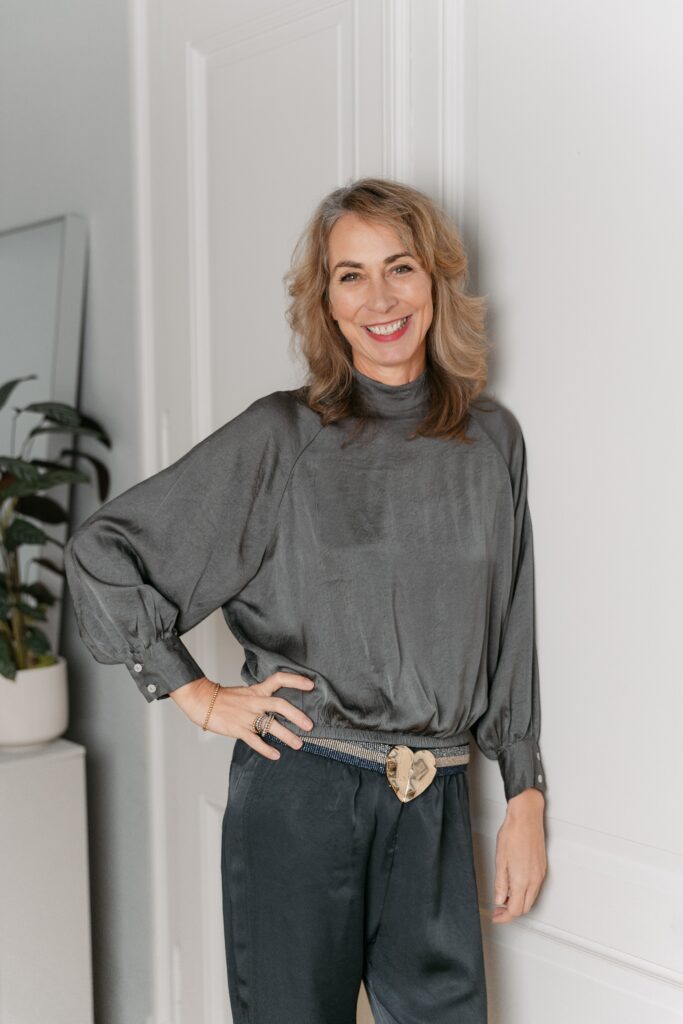
Prof. Dr. Wera Aretz: Online dating demands constant decisions from us. Based on very little information, we decide whether someone might be interesting to us. On the one hand, that's efficient. On the other hand, there's a risk of quickly writing people off over a single trait.
Then there's the sheer amount of choice we perceive. When a great many potential partners are available, deciding can get harder. We compare more, doubt our choice more easily, and may wonder whether someone else might be an even better fit. This so-called choice overload effect shows up mostly when the options are plentiful and hard to survey, and when we don't yet know exactly what we're looking for.
Simone Janssen: I see this every day. Too short. Two years too old. Doesn't like the job. Wrong hobby. The distance is ten miles farther than they wanted. Of course nobody should meet someone they find completely uninteresting. But I sometimes ask my clients: Are you looking for a person, or are you filling an order? After more than 33 years of matchmaking, I can tell you that people fall in love surprisingly often with someone who wouldn't have made their original wish list.
Simone Janssen: This is one of my big topics. I'm not a fan at all of ruling someone out based on a photo alone. A photo can't show how someone laughs. How he talks. How attentively he listens. Whether he has a sense of humor. How he smells. How he moves. And above all, it can't show how I feel when I'm with him. Over decades, I've seen people say at first, “From the photo, he wouldn't have been my type at all.” And after meeting in person, the world suddenly looked completely different.
Prof. Dr. Wera Aretz: From a psychological standpoint, attraction is much more complex than judging a single photo. A picture gives a first impression, but it reduces a person to one short, static moment. In real life, a lot more information comes in: voice, facial expressions, gestures, movement, humor, eye contact, behavior, and the whole dynamic between two people.
Those extra signals can be decisive in whether we find someone likable or attractive. Someone who barely registers with us in a photo can suddenly seem very interesting in person. And the reverse can happen too: someone we find especially attractive in a photo can come across as much less appealing face to face.
Do the sparks have to fly on the first date?
Simone Janssen: No! I think we sometimes expect too much from a first meeting these days. After an hour and a half, it's supposed to be settled: Is this my future partner or not? My question would be much simpler: Was it nice enough that I'd like to see this person again? That's all you need to know after a first date. Not every great love starts with fireworks. Some start with a good conversation and grow slowly.
Prof. Dr. Wera Aretz: Exactly, the sparks don't have to fly on the first date. Of course, strong attraction can be there right away. But romantic interest can also develop as we get to know someone better and familiarity grows. Studies even show that many relationships start out as friendships. Not all attraction begins with fireworks. Some things only develop over time.
When do I introduce a new partner to my kids?
Simone Janssen: Not after the second date. I'll say that very clearly. Moms in particular get to meet someone as women first. A date is not a blended family yet. I'd involve the kids only once I know myself: something is really developing here. That also takes pressure off the new relationship. Two people get to get to know each other before the whole family is suddenly sitting at the table.
Prof. Dr. Wera Aretz: In new relationships where kids are involved, different needs collide. That's why it makes sense to let a new relationship take shape as a couple first and to bring them into family life deliberately and gently.
What we'd like to tell single women
Simone Janssen: Don't wait for the perfect man to show up on your doorstep someday. If you want love, create opportunities for someone to meet you. Get out there. Try things. Use online dating if you want to, but look closely at which platform fits you. Don't let photos be your only guide. Talk to someone yourself once in a while. And maybe give a nice person a second date. Most of all: don't believe your life has to be perfectly organized before there's room for love again.
Prof. Dr. Wera Aretz: Digitalization has changed the search for a partner a great deal. The options have grown, and so have the demands on our decisions. That makes it all the more important to be clear about what really matters to you in a relationship, while staying open to the fact that a real person will never match a perfect wish list. Because in the end, it's not an algorithm that decides whether closeness develops. That still happens between two people.
This story first appeared in German on StadtLandMama.