When Your Adult Son Cuts You Off: We Remember It Differently
She hung balloons for the homecoming from the hospital. Months later her son blocked her everywhere, and she's still finding her footing.
Friends, as parents we can try to do everything right… and still not know whether it lands as “right” with our kids. Our reader and her husband always cared about having a good relationship with their children. Even so, one of them ran into difficulties and cut off contact with his parents after starting a family of his own. We asked this mom how they're coping.
Dear friend, here are our questions about your son cutting off contact. Is he your only child?
No, he's the middle one of our three kids. He has an older brother and a younger sister.
When you think back on your son's childhood, what happy moment comes to mind first?
It's not one moment, it's lots of little ones. I always felt I had a very special, close bond with him, like a really thick cord between us.
Even as a little boy, he loved doing things for other people. It mattered to him that the people around him were doing okay. That closeness stayed when he grew up. Almost every morning a little message would come: “Good morning, Mom.” Little things like that are among my dearest memories now.
How did your relationship as mother and son develop in his teen years?
I actually felt even closer to him in his teens. He was very independent early on and liked being part of our family life. At the same time, with all three kids it was important to me that they could go their own way. Freedom is a very high value for me.
Today I see some of it with more nuance. My son, with his helpful and very present way, took up a lot of space in our family, and I gave him that space. If I'm honest, that was sometimes pretty convenient for me. Some family dynamics you only recognize when something suddenly changes at a fundamental level.
Your son then got married and a baby was on the way. How did you react?
Actually it was the other way around: first we found out our first grandchild was coming, and the wedding came after. We were unbelievably happy about the baby and about becoming grandparents. We were in touch a lot and helped whenever we were asked.
At least, I experienced that time that way. That qualifier matters to me now, because I've learned that two people can live through the same situation and come away with completely different memories.
The baby arrived. Shortly after, he cut off contact. Will you tell us about that day?
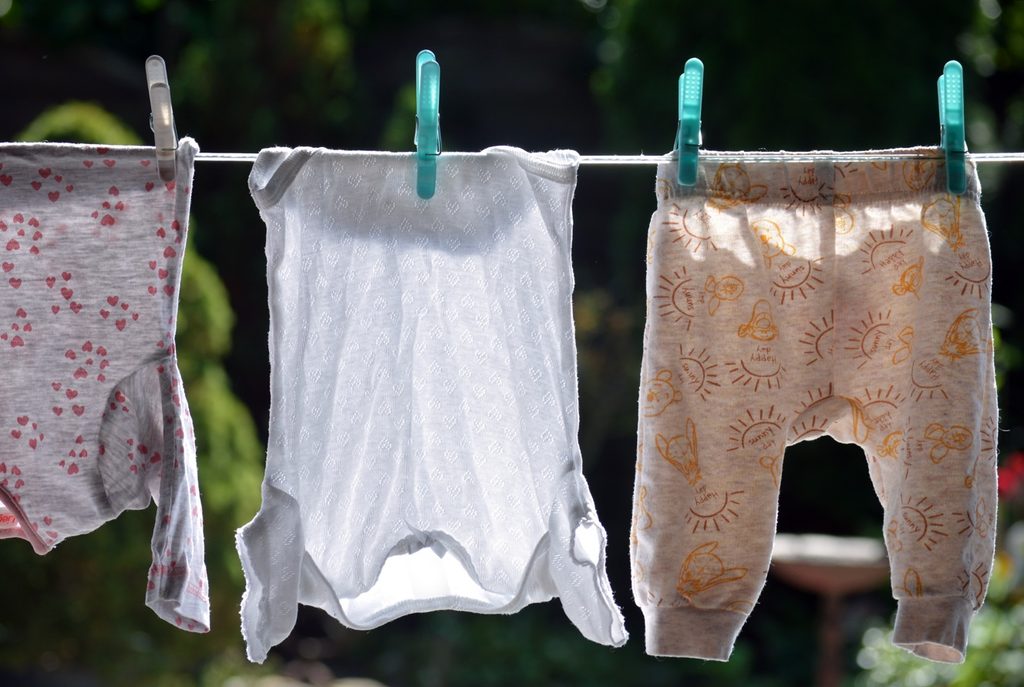
This was in the summer of 2024. We had decorated the young family's apartment and garage for their return from the hospital: balloons, garlands, a big stork, and homemade pennant banners strung with tiny baby onesies. It was unusually stormy that day.
When our son called from the car to say they were driving home from the hospital, I was curious whether our decorations had survived the storm, and of course I was curious about their reaction. The drive home took only a few minutes and I stayed on the phone with him. When they pulled up, I asked, “So, what do you see?” His reaction caught me completely off guard: “What am I supposed to see? It's decorated.” The call ended shortly after.
Only afterward did I realize how differently we had experienced that moment. My question was simply an expression of my joy and my curiosity about their reaction. In the conversations afterward, it became clear that my behavior had come across to him more as interfering in a moment the young family would have liked to have for themselves.
Of course, an estrangement doesn't happen over a single sentence. Looking back, I know that on his side there were experiences and perceptions of our shared history long before that, and I wasn't aware of what they meant at the time. What had still felt to me like a very close and fundamentally good relationship, he obviously experienced differently in parts.
So that moment was probably less the cause than the trigger that made visible something that had stood between us for a while. An argument developed out of it later. That was the beginning of our first break in contact. Today that little scene is almost symbolic for something I only had to learn later: I can know what my intention was. But I can't decide what lands with the other person.
When your father died half a year later, you felt there might be a chance to reconnect …
Yes. When my father died a few months later, I wrote my son a message. After almost half a year with next to no contact, he called me. A cautious closeness grew again and we hoped for a fresh start. A few weeks later, he told us he wanted to talk with us about the future.
My resolution was: listen, don't justify myself, don't dig up the past. But that very past was what the evening was about. Harsh accusations were made, and it became clear to me how differently we saw our shared family history. When I asked to end the conversation for that night, he said that if they left now, we would never see them or our grandchild again. Then they left.
Shortly after, we were blocked everywhere. Since then, my son and I haven't spoken or written to each other.
How long ago was that last contact, and what stages of grief have you been through since?
The last contact was about a year and a half ago now. I wouldn't even call them clear stages of grief. It was much too chaotic for that. There was anger, disappointment, sadness, disbelief, and self-doubt. I asked myself what I had done wrong, whether I had been a bad mother, and what I could have done differently.
The turning point only came months later. In fall 2025, I was on a Greek island with my husband. I'm actually afraid of going into the sea. One day I went in anyway, stood chest-deep in the water, and suddenly asked myself: “What happens if I do it anyway?”
A few weeks later, we were in Berlin. On the roof of our hotel I spotted a swing 430 feet (130 meters) up and booked a time slot. I stood up there in a winter jacket, gloves, and a headband, and, secured in a climbing harness, sat down on that narrow black swing seat. Then they started swinging me.
I spread my arms, let myself fall backward, and looked down at Berlin. And suddenly the thought was there: This is freedom. This is life. This is my life. I realized that every day I wait for something to change is a day of my life I spend waiting. And that my waiting doesn't change my son's decision. That day, I decided to live again.
You don't even know where he lives. You say that kids are free people too and get to make their own decisions. You've learned that you don't find peace by waiting for answers, but by no longer needing them …
Today I really don't know where my son lives. And there are questions I'll probably never get an answer to. For a long time I thought I had to understand what happened in order to make peace with it. I don't believe that anymore.
Maybe there isn't one truth that would resolve everything. There's my perception and his, which is apparently completely different in places. And at some point a question came up for me: What if nobody is to blame? I don't have to understand his decision to accept it, and acceptance doesn't mean agreement.
What is still within my control? Not his decision. But how I live, which relationships I nurture, which boundaries I set, and who I want to be after all of this, that's up to me.
What has this done to you as a couple? How does everyone around you react, and can you talk about it with people?
My husband and I have handled it very differently. I needed to talk, and for a long time I was full of anger. My husband tends to withdraw, and for him it was more grief. Still, the estrangement has brought us closer as a couple. We've talked a lot, reflected, and looked hard at our own part in it.
Our family has changed too. Our son had always taken up a lot of space, and when that space was suddenly empty, it hurt at first. At some point, though, we stopped looking only at the empty chair, and that's how the relationships with our other two kids, and their relationship with each other, have grown closer.
Our family isn't better without our son. It's different, and even that different is valuable today. At first, people around us often said, “He'll come around.” Later, more and more people told us about estrangements in their own families. That's when we realized how many people this touches and how little it's talked about.
If you look five years ahead, what would you wish for?
My daughter said something about this that I find beautiful: “Whatever happens in five years, it's good the way it is.” I picture my relationship with my son today as a door. It isn't locked, but it isn't standing wide open either. It's ajar.
If there's a reconciliation at some point, I'd be happy, and at the same time we couldn't and wouldn't want to just pick up where we left off. I have boundaries and needs too. My son gets to make his decisions and I get to make mine.
He can have a place in our lives, and that place isn't automatically the same as before. And if he doesn't want contact, that can be okay too. It's allowed to make me sad. But my good life no longer depends on it.
What would you like to tell other parents in your situation?
First, I probably wouldn't give any advice at all. I'd say: I'm so incredibly sorry. I wouldn't wish going through this hell on anyone. And then, at some point, I'd say: Look at your own part, take responsibility for what you want to do differently today, and stop looking for the one person to blame.
Your adult child's decision isn't within your control. Our kids don't belong to us. We give them roots and wings, and sometimes they use those wings in a way that hurts us deeply. And then, most of all, I'd wish for that mother or father to live again. Not to love less, not to forget, but not to spend your own life waiting.
If the pain is still too big for that, it's okay to get support. Our child is a part of our life, not our whole life. This is my life. And I get to live it.
This story first appeared in German on StadtLandMama.