Menopause Counselor: "If You Know Your Symptoms, You Can Get Help"
You walk into a room and forget why, and it's not just stress. A menopause counselor shares what finally helped her make sense of her own symptoms.
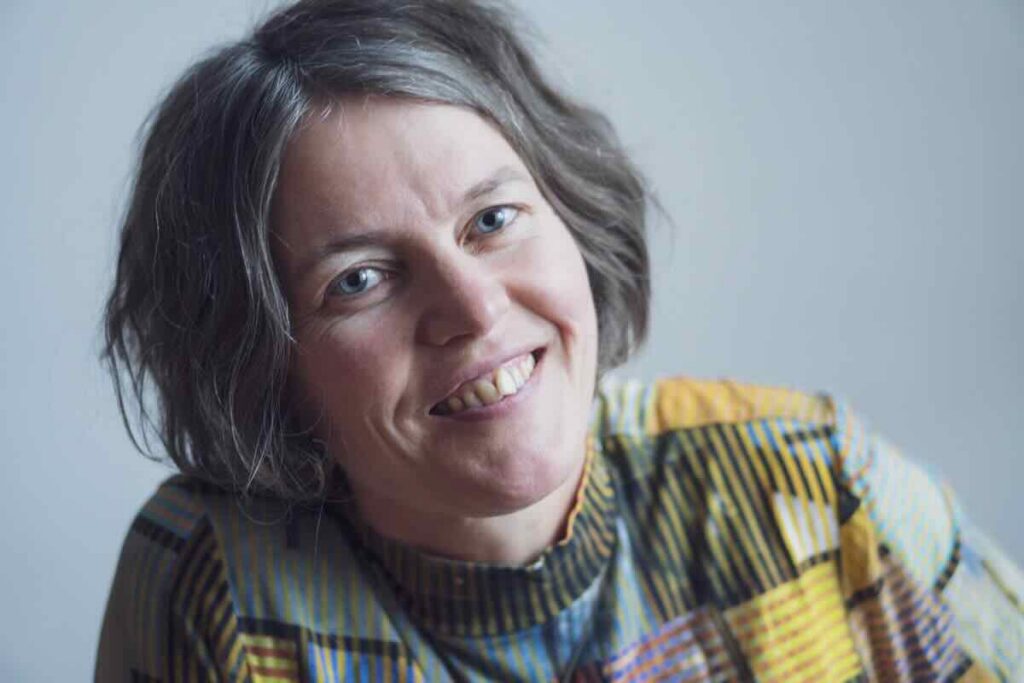
Hi friends! Katrin Menssen, @Yourinnerbloom_bykat on Instagram, trained as a menopause counselor for women. At first, the program was a wonderful way to help herself. Today she helps other women through the wild years of the hormone roller coaster, which shows up for many women not just physically but emotionally, too.
What made you decide to train as a menopause counselor? (I didn’t even know that was a thing.)
I started digging into menopause when I was trying to understand and make sense of my own symptoms. I read a lot, and I quickly realized that hormones, cycles, metabolism, and women’s health fascinate me.
I didn’t want a surface-level understanding. I wanted to really know what happens in the body during this stage of life and how I could handle the changes better. The more I learned, the clearer it became: when we understand what’s going on in our bodies, we can make informed decisions and feel capable again.
I think education, counseling, and support before and during menopause should be as normal and easy to access as they are during pregnancy. There’s a lot of room for improvement there. Through Instagram, I came across MenoCert and its two founders, Annunziata and Karen, and at that point in my life it just felt exactly right.
In the beginning it was definitely about helping myself. But very quickly I realized I wanted to pass this knowledge on to other women. I was lucky enough to complete a solid, evidence-based training that qualifies me to guide and inform other women through this stage of life. What mattered most to me during the training was working in peer groups on real case studies, and the exchange and reflection with the wonderful women I met along the way.
Women still often aren’t taken seriously when they describe their symptoms to doctors. Has that happened to you?
In my experience, symptoms are sometimes written off very quickly as too much stress, your age, or “you just have to get through it.” Of course stress plays a big role. But we all have it in midlife, when work, kids, parents, relationships, and our own expectations pile up, sometimes for years. Still, stress alone doesn’t explain everything.
Many women sense that something is changing. Even when your cycle is still regular, symptoms can already show up: trouble sleeping, mood swings, low mood, loss of energy, changes in your cycle, migraines, joint and muscle pain, heart palpitations, anxiety, panic attacks, trouble concentrating, brain fog, and so on.
And still, women often don’t get a good explanation, aren’t taken seriously, or have already been through an odyssey of doctor’s appointments. What many of them want most is simply to be listened to and have their symptoms taken seriously.
That’s exactly where we need more knowledge, more time, and more education. If you can recognize your symptoms, you can get help and spare yourself an unnecessarily long road of suffering. For me personally, my knowledge has made a huge difference in preparing for conversations with my doctor. For example, I used a cycle journal to organize my symptoms, ask targeted questions, and talk through possible treatment options.
How are you doing when it comes to your own health in perimenopause and menopause?
Perimenopause has mostly shown me that I need to listen to my body more closely again. I used to just function. Now I ask myself more consciously: What feels good? What am I letting go of? Where do I need breaks? What gives me energy?
Some symptoms I could only make sense of in hindsight. In the moment, I often think: I’m just tired, I’m stressed, I need to pull myself together, this used to work fine. Only later do you realize that a lot of it can be connected to hormonal changes.
Small everyday routines have helped me a lot: regular sleep and exercise, especially strength training, nutrient-rich food, breaks, handling stress better, and paying closer attention to my cycle and my energy. I’m not perfect at it every day, but I’ve learned that small steps often do more than radical changes.
Beyond that, I see menopause as an enormously important time for prevention. That applies to all women, whether or not we have symptoms. By postmenopause at the latest, low hormone levels affect all of us, including our bone health, heart health, and brain function.
The choices we make in midlife have a big influence on how strong and healthy we’ll be in the decades ahead.
Hormone therapy used to be frowned upon, but today it’s considered much safer. How do you advise women on this?
It’s important to me that women are able to make an informed decision. I explain the current findings on treatment options and their possible benefits and risks. In each case, we talk about which individual symptoms are present, but also about her current life situation, her personal risk profile, and so on.
Everyone experiences menopause differently, and there’s no “one size fits all” in treatment. Some women have hardly any symptoms, while others are severely limited in daily life. That’s why I want to encourage every woman to listen to her body and get help. Nobody has to just white-knuckle the hormonal roller coaster.
Today there’s a whole menu of treatment options. First and foremost, adjusting your lifestyle. But also hormonal approaches, such as bioidentical or synthetic hormones, pharmaceutical medications, plant-based products (phytoestrogens and non-hormonal plant compounds), and supportive measures like cognitive behavioral therapy, hypnosis, acupuncture, and so on.
Diagnosis and treatment always belong in the hands of the doctors treating you, and can only be sorted out individually. My role as a menopause counselor is to share knowledge, offer orientation, help prepare questions together, and in doing so help women make informed decisions.
When can it be an advantage to just let the body do its thing? Is exercise and good nutrition sometimes enough?
For me, the foundation is always a trio of exercise, sleep, and nutrition, regardless of whether you’re on hormone replacement therapy or another treatment. On top of that come stress management, enough time to recover, and being kind to yourself.
Strength training in particular, plus regular, conscious, anti-inflammatory eating with the stable blood sugar that comes with it, good sleep habits, and regular everyday movement can make a big difference. We often underestimate how strongly these basics affect our hormones, metabolism, mood, and well-being, and that even small changes can have a big impact.
At the same time, some women’s symptoms are so hard on them that additional support may be necessary. I also always think it’s important to look at the body as a whole. Similar symptoms can have other causes. For example, it’s always worth checking your thyroid and making sure you’re getting enough micronutrients.
We women tend to hold out as long as possible. Do you feel that way too?
Yes, very much. Many women have spent decades learning to be there for everyone else, put their own needs last, and keep functioning. Menopause often makes that pattern visible. In perimenopause, your resilience to stress changes. Strategies that used to work well suddenly stop working. That can be really unsettling. And when things suddenly don’t go the way they used to, we look for the fault in ourselves first.
The body then sometimes becomes the loudest voice. Sleep problems, exhaustion, or other symptoms can be signs that things can’t go on the way they have been. I think an important part of counseling is also to take some weight off women and encourage them to listen to their bodies’ signals again.
You can learn self-care, taking breaks, and setting boundaries. That’s why I see menopause as an invitation to take our own needs seriously again, and to see self-care not as a luxury but as a necessity.
When an OB-GYN recommends a low-dose pill and also wants to add estrogen, some women say they don’t want to take on the side effects of one medication and then add another on top. What do you advise?
I’d first sort out what we’re actually talking about here. This isn’t a classic combination pill but a progestin-only mini-pill. Unlike the combination pill, it contains no estrogen, just a synthetic progestin.
In perimenopause especially, hormones can swing wildly. That’s why a progestin-only mini-pill can be a good option: it can calm the system down, slow the ovaries more, stabilize the uterine lining, and so soften those big hormone swings. If your own estrogen then gets suppressed too much, or does gradually drop, transdermal bioidentical estradiol, meaning a gel, spray, or patch, can be added.
The progestin-only mini-pill is usually taken continuously, and the transdermal estradiol is added daily too. That’s the only way to get a stable hormone level without swings and relief from your symptoms. I can confirm that from my own experience.
I would always recommend weighing the benefits and risks together with your doctor. What matters is that women understand why a treatment is being suggested, and that they feel comfortable with the decision and feel better again while on the treatment.
Keep this in mind, too: perimenopause is dynamic and unfolds in different phases with changing symptoms. That’s why treatment during this stage is often, to a degree, well-supported trial and error. Nothing is set in stone.
For example, there are different progestins, and women tolerate them very differently. If a progestin-only mini-pill doesn’t work for you, that doesn’t automatically mean the whole approach is wrong. Sometimes you need a different dose or a different ingredient, or a completely different type of treatment is the better option. There’s always a Plan B.
Menopause isn’t only physical. A lot happens in your head, too. Do you counsel on those topics as well?
Absolutely. I actually think this part of menopause is often underestimated: how the hormonal changes affect the brain, and what that means for symptoms and women’s health. It’s important to understand that there are estrogen receptors throughout the body and in the brain. There, estrogen acts on areas connected to sleep, mood, concentration, memory, temperature regulation, and stress processing.
The brain and the ovaries are also in constant communication, through what’s called the hypothalamic-pituitary-gonadal axis. The brain sends signals to the ovaries, and the ovaries answer with hormonal feedback.
In perimenopause, this interplay gets more restless. Hormone levels fluctuate, and the ovaries no longer respond as evenly. The brain has to adapt its metabolism to these changed signals and rewire itself. That’s why menopause isn’t only something you feel physically, but mentally and emotionally, too.
Understanding this can be a huge relief for women. In counseling, we should always look at the whole picture: sleep, stress, mental load, mood, energy, nutrition, exercise, recovery, and room for the question of what a woman really needs right now.
Do you plan to counsel full-time, or will this be a side gig?
For now, it stays a side gig that’s developing “step by step.” Nothing happens by accident, and in recent months my training and conversations with other women have sparked an incredible number of ideas.
I’ve seen how big the need is, personally but also in society and in the workplace. I want to keep gathering experience, support women, and stay open to where this path leads. I feel well prepared, and I’m excited and curious about what’s still to come.
Is this new training also part of searching for meaning in the second half of your life?
Yes, definitely. Though I’d maybe call it looking inward, or a change of perspective. What matters to me? What feels good? What am I letting go of? What am I taking with me? Who or what gives me energy? Midlife invites exactly those questions. I love it when something that grows out of your own experience ends up helping others, too.
That’s why the training feels so right to me. It brings together evidence-based knowledge, women’s health, prevention, personal growth, and support. And maybe that’s a good sentence for this stage of life: change isn’t a loss. It’s a new phase of growth that we get to actively shape. Life is always where we haven’t been yet.
This story first appeared in German on StadtLandMama.