Everyone Around Me Is Having Babies. I'm Not Sure I Want One
Heads-up: This post contains affiliate links. If you buy something through them, we may earn a small commission at no extra cost to you. As an Amazon Associate, we earn from qualifying purchases.
Her friends are all pushing strollers, and she's not sure she wants to join them. A frank talk about doubt, regret, and growing old without kids.
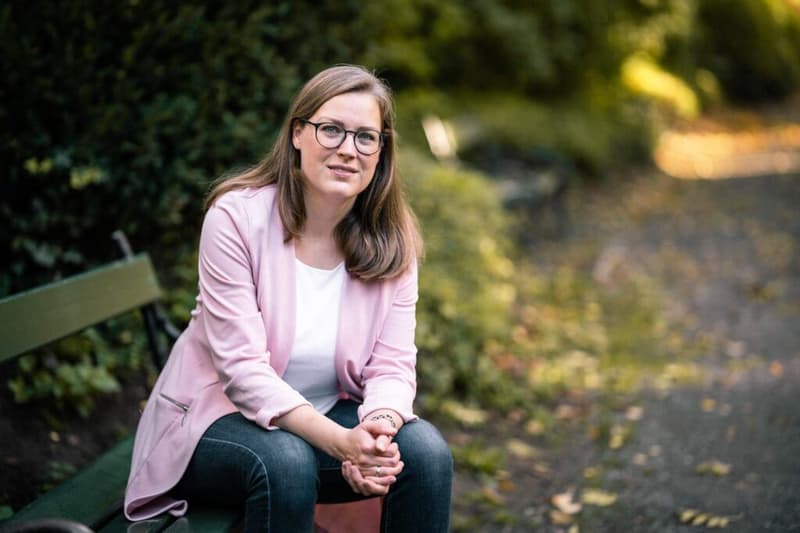
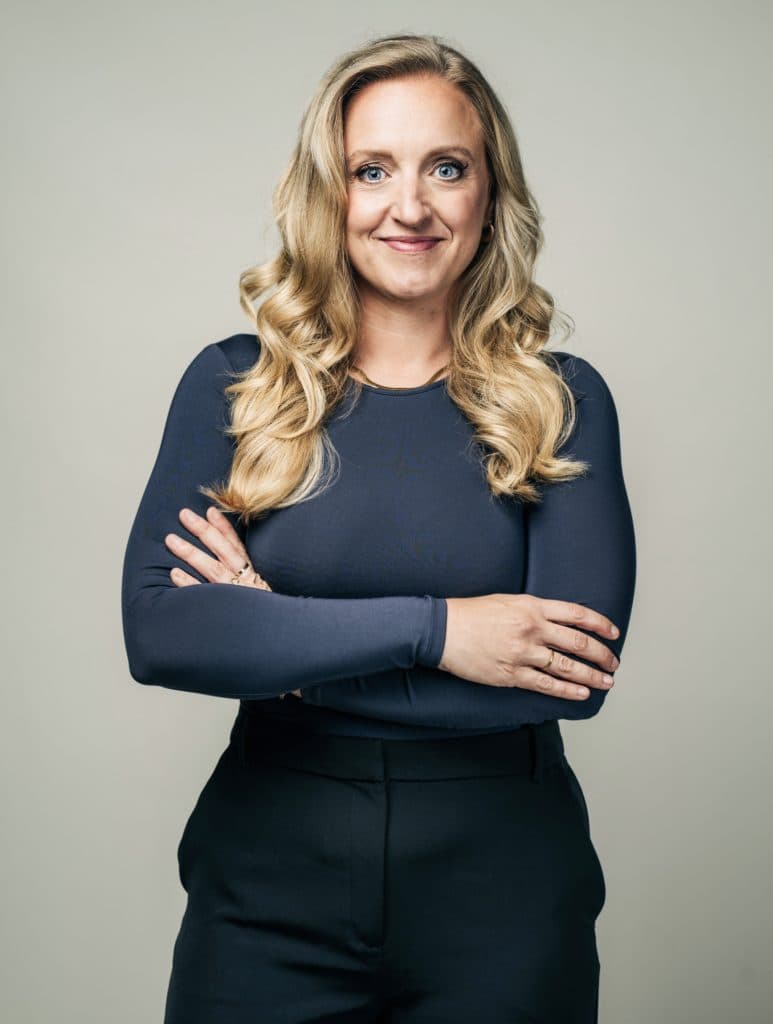
Hi, friends. Did you always know you wanted kids? Did they show up unexpectedly, or did you decide after a lot of thought? Verena Kleinmann is at a point in life where many of her friends are having babies.
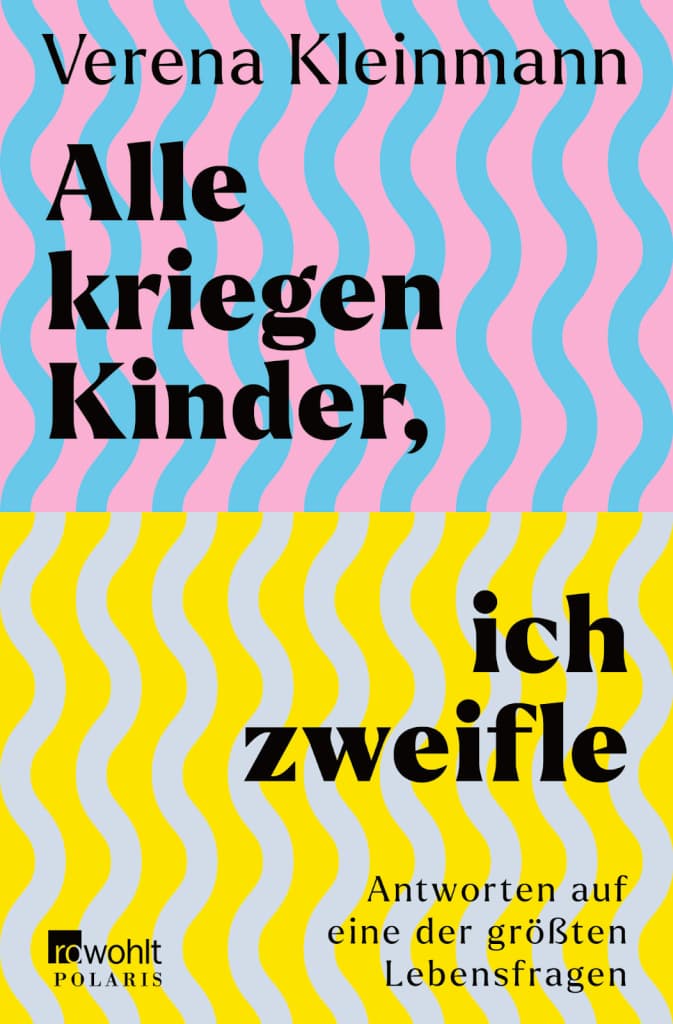
For a long time, kids were an unquestioned part of her life plan, even though she never felt a real desire for them. Still, of course she wonders: Will I regret it if I don't have kids? Will I be lonelier or unhappier? Which expectations from society are shaping my decision? And who will my family be someday if I don't have kids? She wrote a book about it: Alle kriegen Kinder, ich zweifle (“Everyone's Having Kids, I'm Having Doubts”).
Dear Verena, which question about having kids is the loudest in your head right now?
Probably how my book on the topic will be received. But I guess that's not what you were getting at 😉 Right now, most of my close friends have little kids. The friends I've known the longest, the ones I'm closest to, also live in other cities.
What keeps me up at night is how we can avoid losing each other when our lives look so different when it comes to kids. I've talked about it with a few of them, and to counteract that, we decided we'd like to try a short getaway together, even though our lives are so different.
You did dozens of interviews for your book. What was the big takeaway? Is it possible to live a life that's just as fulfilling outside the classic nuclear family?
Phew, there are so many “takeaways.” First of all: yes, of course you can live a fulfilling life without the classic nuclear family. And the reverse is true too. The classic nuclear family doesn't automatically mean you'll have a fulfilling life. That's not a given. If only because “fulfillment” looks different for every single person. Okay, now to the takeaways.
One is that there are endless ways to live our lives. I'm convinced that every version comes with beautiful, tragic, wonderful, crazy, sad things, and so on. With kids and without. So to me it's total nonsense to think that the people who started the classic nuclear family did everything right and live “happily ever after” forever.
In reality, as I said, that's obviously not how it works. But we were taught that, among other things, by movies and fairy tales, and we internalized it. That's why we're so surprised or shocked when couples split up, like Collien Fernandes and Christian Ulmen, the well-known German celebrity couple, just did. In every family model and way of life, there are big and small challenges.
Another takeaway is that you always bring yourself along. Meaning, if I doubt what I'm good at, I can do that anywhere. In any kind of life or family model I'm in. For me that means: don't think so much in terms of what's missing. Look more at what I have. And if something is missing, see whether I have the resources to change it.
Did you also talk to moms for whom motherhood meant not only fulfillment but also self-sacrifice? Moms who struggle with the patriarchal structures we still live family life in today?
Yes, of course. I talked with a lot of women who, especially looking back, notice how much they sacrificed themselves. They're exhausted. They were always the ones keeping the emotional peace in their families, and for many years they pretty much forgot about themselves. The women I'm talking about are older than I am. I can't (yet) judge how much this will hit my friends who are my age, or the even younger generation of moms.
My sense, though, is that not nearly enough has changed (yet). What makes me angriest: in most of the cases I know, the men don't see how much their wives, the mothers of their kids, have done and are still doing. Especially when there's a breakup, they try to protect themselves, financially in particular. These men still just don't understand how much unpaid care work their wives did. That makes me so angry and sad.
If you stay childless, do you also miss having role models, at least a little?
Yes, totally! There are hardly any childless role models beyond the cat lady or the career woman without kids. And role models give us direction. Through them, we see what's possible. If all we ever see is the self-sacrificing mom who cooks, vacuums, and works part-time, then of course we think that's what you do as a woman later on.
Okay, that was exaggerated, and it's no longer completely the reality. But we need role models for growing old without kids, too. That's why I loved talking to childless women in nursing homes. All of them told me they don't feel lonely. I found that really reassuring. By the way, the risk factors for loneliness are little education and too little money. Childlessness is not a risk factor.
What ambivalence do you still feel yourself about whether or not you should become a mother?
I see the huge love my friends and their partners feel for their kids, and I also see how much I enjoy spending time with them and their kids. Then every now and then I think, that's so beautiful, and so deep. I don't have that. Then I go back home and really enjoy my free life, and of course I also see how much energy, responsibility, and sacrifice it takes when you have kids. I think that's the tension that will probably never go away. But I'm also very good at always seeing different perspectives.
What other doubts and taboos are there around wanting kids or not wanting kids?
Among moms, it seems you still can't say that you regret being a mother. At least that's what two women who count themselves part of the “Regretting Motherhood” group told me. On the side of women who want a child, going to a fertility clinic still seems to be a taboo. A fertility doctor told me that in an interview.
The OB-GYN said, “People talk about anal bleaching, breast lifts, and who knows what else, but the fertility clinic is a bigger taboo.” I thought that was a funny way to put it, but also really startling. And those are just two of many taboos around this topic. I think it's partly because so much emotion, shame, vulnerability, and so on is wrapped up in it.
Your conclusion after writing the book is, a little, that above all we need bonds. What exactly do you mean by that?
Yes, according to studies, bonds are the central factor in a happy life. We need people we can rely on, and who can rely on us. For deep relationships, two things matter most: putting in the work, meaning time spent together and shared experiences, and compatibility. You can find these bonds in your biological family, but you don't have to. That's also why it's so important to me to spend more time with my longest-standing friends again. 😊
How do you look at your future? What are you afraid of, and what are you looking forward to?
I'm super curious what twists and turns my life still has in store. Next up for me is a move. When I think about it, I feel excited on the one hand and a bit tense on the other. My biggest fear in general, as a hypochondriac, is that I'll get a terrible illness or that my mind will stop working. If that doesn't happen, I can trust myself pretty well to be good at making things nice for myself. Which means I hope there's still lots coming that I can look forward to. Alongside all the doubts in every area of life, of course. 😉
This story first appeared in German on StadtLandMama.