Math Without the Meltdown: Helping Kids Get Past Math Trauma
Heads-up: This post contains affiliate links. If you buy something through them, we may earn a small commission at no extra cost to you. As an Amazon Associate, we earn from qualifying purchases.
Your child isn't too dumb for math, just too stressed to think. One teacher's fix starts with a trampoline, not another explanation.
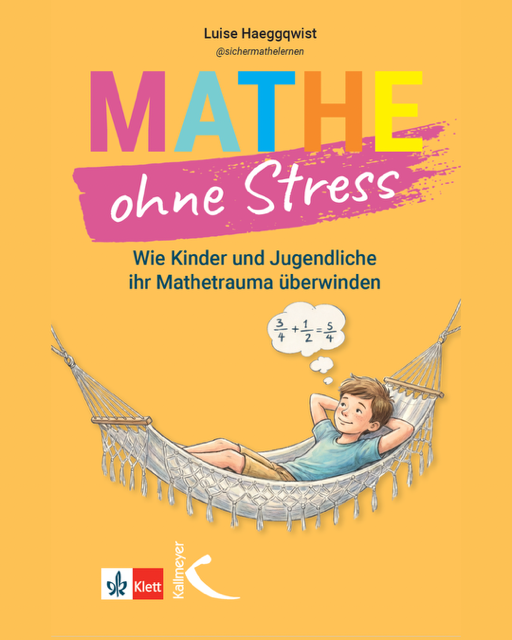
Dear friends, every one of us has her own history with math, and when our kids get to that point, we get to live it all over again. But Luise Haeggqwist offers some encouragement. She shows us how math without the stress can work, and how we can build our kids up without piling on pressure.
Luise is a math and physics teacher and a certified trauma educator (DeGPT). She leads workshops on Montessori and trauma-informed education, and she works with kids one-on-one and in small groups, with a focus on trauma-sensitive math support. Her Instagram account “Sicher Mathe lernen” (“Learning Math Safely”) has more than 30,000 followers.
Luise, why is it such a big deal to you to help kids and teens approach math without stress?
So many kids, teens, and adults have had bad experiences with math, and they think they're “too dumb” for it. In reality, they just didn't have the right conditions, or still don't. I can't let that stand, because it simply isn't true: Nobody is “too dumb” for math!
Math always came easily to me. It was just something I did that relaxed me and made me happy. I'd love to pass that ease on to as many people as I can, because math itself isn't the problem. It's the way it's so often taught, plus all the negative side effects like put-downs and shaming, which are still business as usual in German schools. That's what creates the immense stress for kids.
Almost nobody looks at those causes when a child struggles with math. Instead, everyone goes looking for a fix in tutoring, in different or supposedly better explanations, or in new textbooks. That misses the point completely, because usually people who don't understand math simply aren't regulated enough in that moment. Stress literally clouds their senses. That's why I always say: “Regulate first, then calculate!”
You even talk about “math trauma.” What do you mean by that, and did you ever experience it yourself?
Actually, the term math trauma is a little misleading, because the people who can't do math and feel blocked usually don't have a “real” trauma in the clinical sense. The more “everyday” version of real trauma is a stress response of our nervous system, and that's really the more accurate term for most math problems.
I still use the term math trauma, because then everybody knows right away what I mean. Lots of people have a very direct emotional or even physical reaction when they think about math, because their experiences with it were so incredibly negative.
At the same time, the methods that help with stress reactions are the same ones used in trauma education. It's basically the same model, just in an everyday form. So I like to use everything I learned in my training as a trauma educator, and I don't worry too much about the terminology.
You stress that students aren't “too dumb” for math, they're too stressed. What do you mean by that?
This is the most important insight, and the foundation for all of my work: When we're stressed, we slip into a stress mode (also called a survival state). Our nervous system set up these states for special moments, when we feel threatened and survival comes first. Unfortunately, these days we often feel threatened and stressed, because modern life doesn't really fit our nervous system.
An extreme example is an oral exam, where it often comes with physical symptoms like nerves or sweating. A socially difficult situation can do it too. Some kids are in stress mode the entire school day because, for example, they're being bullied in their class and never feel safe. For a lot of kids, school overall isn't exactly a haven of safety.
In these stress states, our brain works differently, and trauma research backs this up well. Specifically, the higher-level networks that process things like math, language, and logic shut down. The networks that react faster and more intuitively, the ones built for survival, take over instead.
For math, that means learning is only possible when a person feels “safe enough” and isn't stuck in stress mode. That's why I first look at what state of regulation a child or teen is in before I get into any content. We adults should help kids get into a regulated state so that learning can actually work!
So if my nervous system blocks me when it comes to math, what can I do to get things moving again?
There are a lot of options, which is why I wrote a whole book about it. The most important one I mentioned earlier: Connection beats everything else, because people build their sense of safety mostly through feeling connected to other people. If you can make your child feel accompanied and seen in their struggles, that's half the battle.
The second way to improve concentration in learning situations, and a very concrete one, is movement. Activity gets us out of stress states very quickly (there's theory behind that, but it would take us too far afield). So use it a lot as a preventive measure, or as a break when a learning session is stuck.
When a child can't cope anymore, I always offer something along those lines: “I think you can't really think right now. Want to move for a bit, maybe 5 minutes of jumping on the trampoline?” That's always the simplest and most effective tool. And I try to work in a little fun too, because if you're having fun, you're not scared, and that's always the most important thing!
What does a relaxed, supportive learning environment look like to you?
It's important to understand that “feeling safe” is the single most important requirement for successful, lasting learning. Trauma and stress research supports this well. Feeling safe is basically the same as feeling comfortable, because it really is the same thing. So anything that makes a person feel comfortable and more relaxed is helpful. That starts with an environment where put-downs, constant grading, and maybe even shaming aren't business as usual.
We humans also build our sense of safety mostly through social safety. There's a saying, “No learning without relationship.” I always say that's almost right. It should really be: No learning without safety, but the biggest factor in that is strong, supportive relationships. Above all, kids and teens shouldn't feel left alone while they learn.
That goes for the school environment as much as for home. Sometimes friends in the class or afternoon study dates with a learning buddy help too. I once had a student who always struggled in my colleague's math class whenever her friend was out of school and she felt alone at her group table.
What tricks do you have for boosting motivation for homework, too?
I have a few. My most important tip is to focus on the relationship instead of on explaining. When a child doesn't get something, parents tend to explain it again and again. But a child usually doesn't understand because they aren't regulated enough, and their brain isn't in a state where it can learn.
Repeated explanations only increase the stress for the learner, because no matter how good the explanation is, the child can't take anything in. They just feel more and more incapable and end up completely blocked. Phrases like “Look, it's really easy!” or “How can you not understand this?!” make it even worse.
It's better to explain less and, above all, stay present on a relationship level as a “lighthouse.” I often just sit down next to the learner, say very little, pay attention to my own stress regulation, and stay as relaxed and cheerful as I can. A lot of parents don't find that easy, but their own stress only strengthens the child's block.
Have you seen a child have a breakthrough thanks to your tips?
I've seen it many times. I've always had a knack for kids with math blocks, and I was already working in a similar way intuitively before I developed this whole trauma-sensitive, nervous-system-focused approach. Over the last two years, as a homeroom teacher, I worked with a student who was handed over to me at the start of third grade with a suspected case of dyscalculia and a complete refusal to do math.
What made the biggest difference was a conversation I had with him. It took 10 minutes, and in it I explained the basics of stress regulation in kid-friendly language. The message is simple: When you slip into a survival or stress mode, your brain can't work properly anymore and can't understand math.
In that conversation I used the example of the saber-toothed tiger, which trauma theory always cites as the trigger for the survival state in earlier times. The next day he brought in a Playmobil tiger, built it a little cage, and set himself a routine: “Do one problem, then doodle in my doodle notebook for a bit to relax.”
Within a few weeks he was working completely on his own. After that he only rarely slipped back into his math block (once, when I was out sick for three weeks and he was alone with my colleague), and he actually always did math happily and by choice. By the end of fourth grade he'd caught up on all the material, and he's just moved on to middle school. I'm curious to see how it goes for him there!
What last piece of advice would you like to give parents and students if learning has been hard so far?
Our school system doesn't fit a lot of kids at all, and in many places it's really not set up well for learning. Always take your own perception seriously when something doesn't fit or doesn't feel right. You can't always change every part of the situation. Maybe the math teacher will stay a jerk, and the school isn't the best. But you're always allowed to listen to your gut and trust your inner compass.
In my experience, when kids and teens feel that their perception is taken seriously, it's a key to feeling able to act, even if the outside circumstances can only be changed to a limited degree. So if your child doesn't feel comfortable, don't say “Yes, but Mrs. So-and-so is actually really nice!” Say instead, “Okay, that doesn't feel good for you. How can I support you in making the best of it?”
This story first appeared in German on StadtLandMama.