Young Mom, Widowed: How Lini and Thilda Live With Grief
Heads-up: This post contains affiliate links. If you buy something through them, we may earn a small commission at no extra cost to you. As an Amazon Associate, we earn from qualifying purchases.
Three years after losing her husband, Lini is raising her daughter alone. She shares what helped, what didn't, and why she's still grateful.
Hi friends, I've been following @liniundthilda on Instagram for a while now, and Carolina (aka “Lini”) has just written a moving book about living with grief: Jung, Mama, Witwe (German for “Young, Mom, Widow”). Three years ago, Jacek, her great love and the father of her little girl, was killed in an accident. Here she tells us how she copes with her grief and why grief and gratitude can exist side by side.
Dear Carolina, what was it like for you to become a mom?
Becoming a mom was the most beautiful and the most challenging thing I've ever experienced. Overnight, I wasn't just responsible for myself anymore, but for a tiny human. This new role turned my life upside down, and I really needed time to find my footing.
The first days, weeks, and months were anything but easy. I was already self-employed back then, so I started working again just two weeks after the birth. As a freelance journalist, I could technically write my pieces from my bed while recovering, but combining work with the demands of a newborn was an enormous double burden.
The birth also took a heavy toll on me mentally. I had the baby blues, panic attacks, and anxiety (especially about the sleepless nights). Looking back, it was just an incredibly intense time.
How did your husband change when he became a father, and what did that do to your relationship?
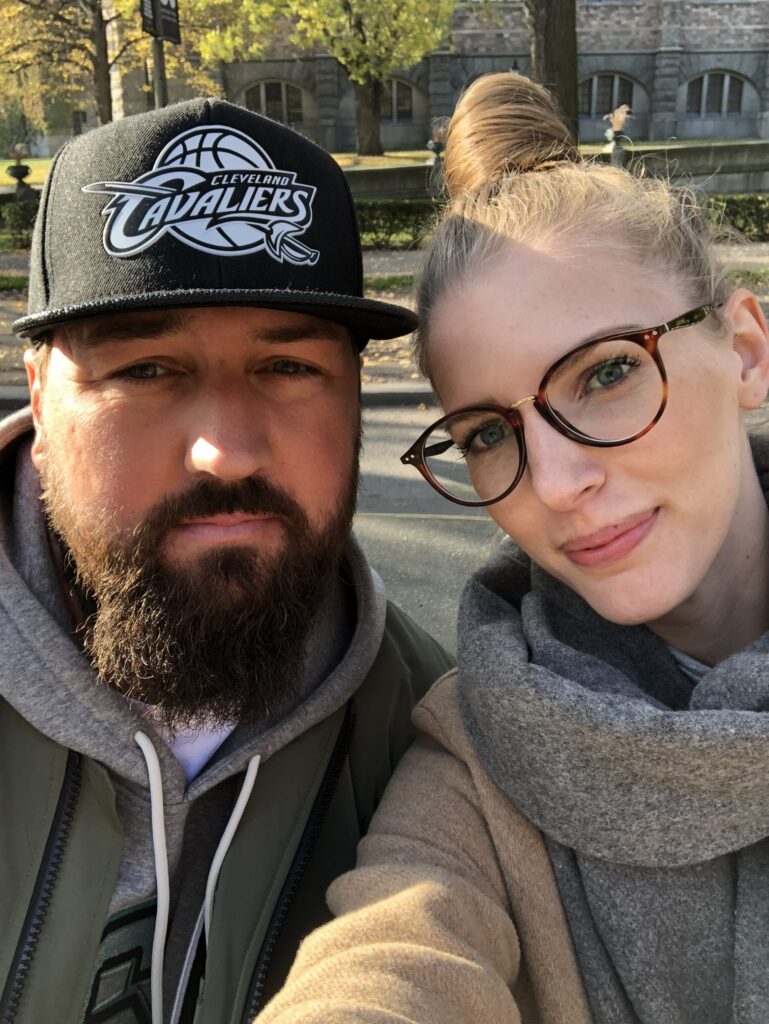
When our daughter was born, my husband grew into the role of dad in his very own way. It was lovely to see how naturally he took on responsibility and how loving and caring he was with our little one. He even took parental leave for Mausi's entire first year (in Germany, parents can take up to three years).
Of course, parenthood changed our relationship too. Suddenly so much revolved around daily life with a baby, a dog, sleep deprivation, and logistics. There was often little time for just the two of us, and we had to learn to work together even better as a team. That wasn't always easy.
We often hit our limits, fought over every little thing, and really had to remind ourselves that we weren't fighting each other, we were fighting side by side.
Two years after your daughter was born, your husband died in an accident. How were you told?
Officially, I was told at home on Thursday, September 7, 2023, at around 5:35 p.m., by police officers and the German Red Cross crisis intervention team. I write about it in detail in my book “Jung, Mama, Witwe,” because a lot went wrong in that process.
Unofficially, I found out about my husband's death through Google. I had a kind of premonition that something was wrong, and when I couldn't reach my husband that evening, I googled.
How much did your then two-year-old daughter understand about the sudden loss of her dad?
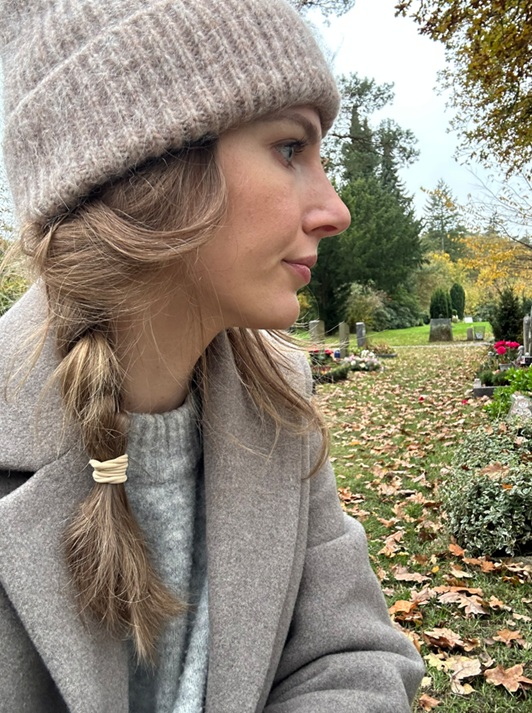
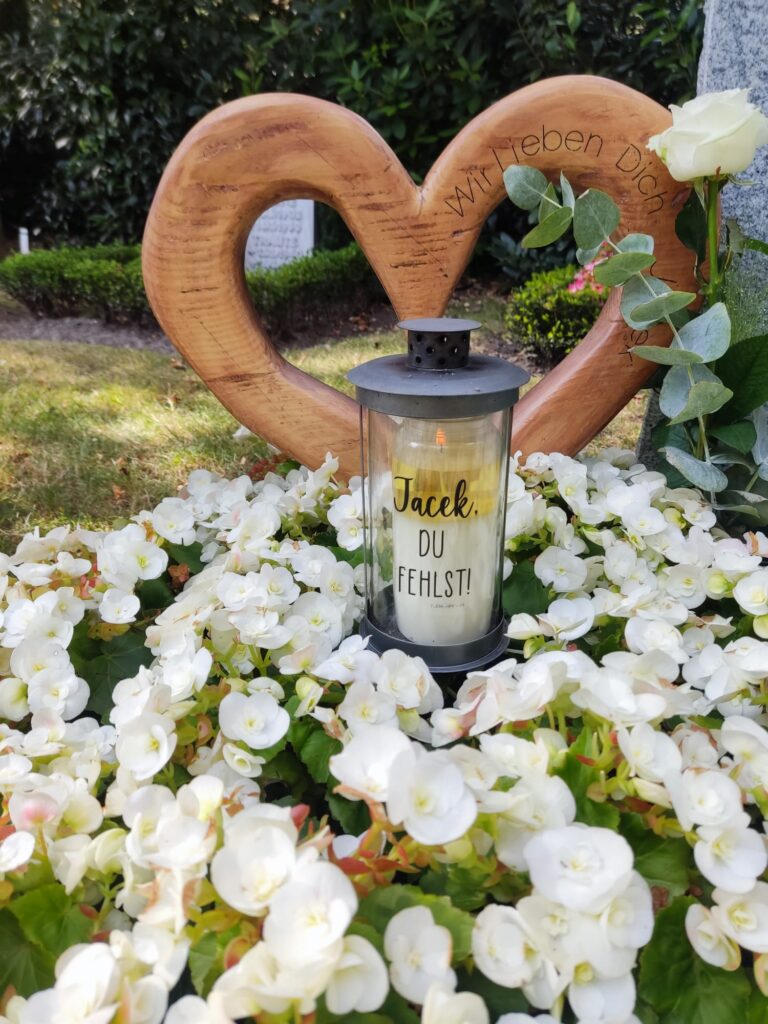
Hardly anything. She was still very little. Of course she noticed that suddenly several people in uniform were standing in our living room, but I tried to keep her out of the situation as much as I could. Still, it was important to me to explain, in a way a child could understand, that her dad wasn't coming home anymore.
I wanted to avoid her waiting for him or hoping he'd come back someday. For her, it was all somehow “okay.” Kids are puddle jumpers when it comes to grief, anyway. They deal with a terrible loss differently than we adults do.
The next day, I took her to daycare like always, so her routine would keep going as normal. In that extraordinary situation, I wanted her to have as much normalcy as possible.
What helped you most in the first shock, and what didn't help at all?
Functioning and keeping going. I didn't crawl into a hole. I promised myself that I wouldn't fall apart over my husband's death. I looked for professional help right away, and one week after the accident I was sitting in a therapist's office for a first appointment. I'm still in therapy today (behavioral therapy and trauma therapy), and I don't know where I'd be if I hadn't taken that step back then.
What didn't help me, and this might sound very harsh, were friends who held back and didn't reach out, or who handed the responsibility to me, the grieving one: “Let me know if you need anything.” Nobody does that in this situation, at least I didn't.
Family, friends, and neighbors who did my grocery shopping or left meals on my doorstep took so much weight off me. It doesn't have to be anything big. Even little things like that helped me enormously back then.
You've now lived in “before and after” for three years. How has your grief changed since then? How does living with grief actually work?
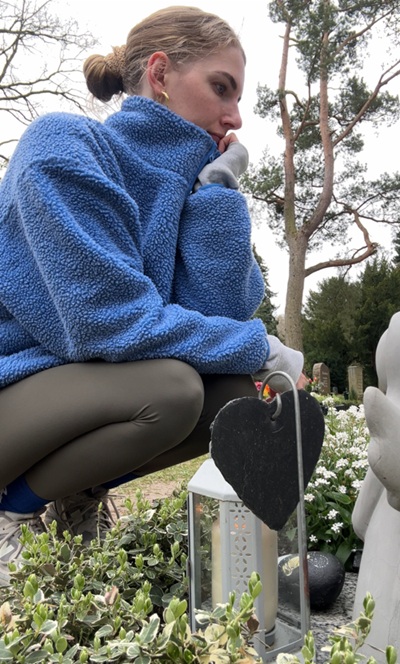
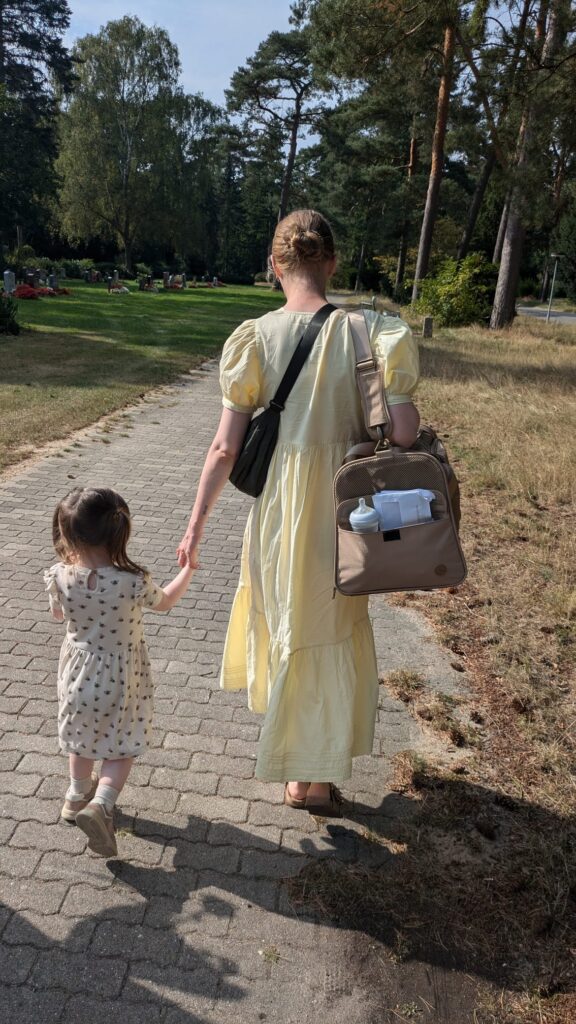
For three years now, grief has been a part of me. It has become part of my identity. Grief isn't a state that eventually goes away. Sometimes it's loud and sometimes it's quiet. At first there was always this heaviness on my chest that made it hard to breathe. Grief doesn't get better or easier, it gets different. But I've learned to live with it, and I'm in the process of building a new, different life.
When do you feel completely overwhelmed with gratitude?
I'm endlessly grateful that I'm still here and get to watch my daughter grow up. Despite everything that happened, I still love life. I'm also grateful that I got to experience such a great love, because not everyone is lucky enough to have that.
At the same time, this gratitude doesn't make my grief any smaller. It doesn't take away the heaviness or the pain. For me, these feelings don't cancel each other out. I've learned that gratitude and grief are allowed to exist side by side. Both are part of my story.
Who helps you in your “motherhood without a backup”?
I handle my daily life completely on my own. My daughter has wonderful grandparents who would love to support us, but they're still working full-time themselves, so they can't step in regularly. That means organizing our family life falls to me.
As a mom with ADHD especially, all this constant planning and structuring is often a huge challenge. Organization is incredibly important, but incredibly hard for me. What helps me a lot is talking with other widowed and/or single moms on my Instagram account. It reminds me again and again that I'm not alone in my mom struggles, and that it's completely okay not to do everything perfectly, and that some things I don't have to do at all.
You also host a podcast for other young widows. What connects you?
All of us had to lose someone far too early, someone we wanted to spend our lives with. Suddenly we're facing topics that hardly anyone our age talks about: death, grief, single parenting, financial fears, and the question of how life can even go on.
With the podcast, I want to show young widows that they're not alone with all these thoughts and feelings. Grief, anger, hope, love, and even laughter are allowed to exist side by side there. It's a place where nothing has to be explained or justified, because my co-host knows exactly how this loss feels. I hope every young widowed mom who listens gets, at least for a moment, the feeling: There are two women who get me.
What would you like to say to people who have to walk a path similar to yours and your daughter's?
Don't give up. I know life can be incredibly hard and unfair sometimes, and that there are moments when you just want to throw it all away. But I believe that eventually there will be more light than shadow again. With time, the colors come back, and even though the pain stays part of your story, new beautiful moments and new reasons to keep going appear.
What do you wish for from the bottom of your heart for your future?
My big wish is that someday I'll find the courage to make our dream of moving to Scandinavia come true. Jacek and I shared that dream for many years. I hope that one day I can take that step with our daughter and carry a piece of our shared story forward.
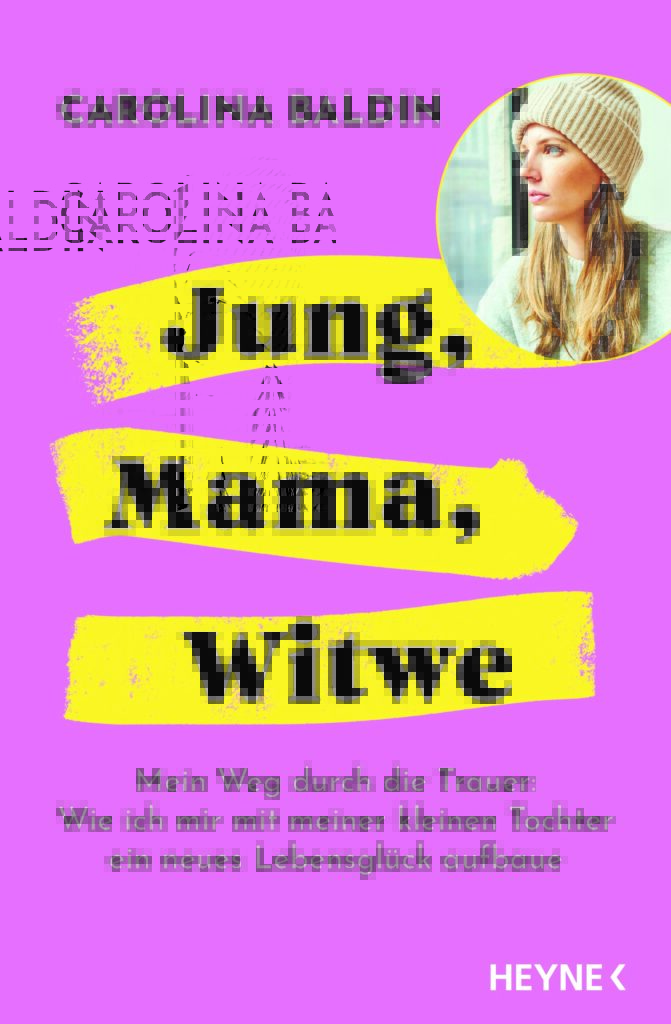
This story first appeared in German on StadtLandMama.