I'm Not the Family's Feel-Good Manager Anymore
Heads-up: This post contains affiliate links. If you buy something through them, we may earn a small commission at no extra cost to you. As an Amazon Associate, we earn from qualifying purchases.
She asked every question, filled every pause, and realized her friend knew nothing about her. That was the night she said enough.
Friends, do you ever feel responsible for everything emotional in your family? Mental load expert Laura Fröhlich has had enough! Her new German-language book says so right on the cover: “I'm Not Your Feel-Good Manager.” Here she explains how, as a working mom of three, she put an end to managing everyone's feelings… and how she finally shook her “good girl syndrome.”
Am I Everyone's Feel-Good Manager?
Am I the feel-good manager everywhere I go? That question kept coming back to me over the last few years. It hit hardest after an evening with an old friend. By the end of our conversation, I knew everything about him. I'd asked him lots of questions and listened with real interest. But then it dawned on me that he knew nothing about me. I'd hosted the whole conversation, filling every little pause with another question. And he never once interrupted to ask about my life.
The Invisible Work of the Household Elf
That wasn't the only time. Little by little, I realized how much emotional work I was doing in every area of my life. At home, I was the busy little elf too. I planned birthdays, started conversations when I sensed worries and troubles, decorated the house with flowers and candles, and sprinkled glitter over everyday life. I was the Tooth Fairy, the Easter Bunny, the resident psychologist, and the conversation moderator, all in one. I ran every group chat and kept track of everyone's emotions, except my own.
Harmony at Any Price
Classic people pleasing, in other words. It's a learned adaptation program: keep the peace, avoid conflict, deal with my own needs later. Spoiler: “later” rarely comes. It also shows up as constant apologizing. On every phone call, I start with “Oh, sorry, is this a bad time?” and at the hair salon, I have trouble asking for warmer water at the shampoo bowl. More and more, I realized I wasn't the only one who struggled with this.
There are men who do this too, but women especially become people pleasers, do more than their share of emotional work with family and friends, and are the heart and soul of the workplace too. Buying gifts for colleagues, organizing the office party, or just quickly tidying the break room: women know these tasks are expected of them more than of men, and so they take them on.
Why Emotional Work Falls on Women
So we women pay a kind of time tax, and over the long run, emotional work takes a lot of energy. And even though I like playing the Tooth Fairy, every single time I have to remember to have a coin ready and slip it under the pillow once my child is asleep. It would be nice to cross a few of these jobs out of my head for once.
Mental load, a phenomenon I talk about in my speaking events and write about in my books, is something we all know: the burden of having to remember everything that makes daily life possible. It fills up our to-do lists, and emotional work can weigh on us too when it gets to be too much.
And it starts early, because little girls get pulled into emotional work more than boys do. At school, girls sometimes hear things like “Why don't you sit next to Noah? He's so restless, and he learns better when you're around.” Girls and young women are more likely to be encouraged to create a good, positive atmosphere instead of competing or opting out of the emotional work.
As a society, we expect women to be domestic, to be interested in children, to care about how they look, and not to put their qualifications or skills front and center. No wonder we tend to act like the shrinking violet instead of a proud rose. That dumb saying was in my childhood poetry album, the kind German kids pass around so classmates can write rhymes in it. Even though I knew as a young girl what nonsense it was, that message left its mark. Talking about my accomplishments, being proud of myself, or asking for more space, even in a conversation with a good friend, still feels strange to me as a woman.
Ways Out of the Feel-Good Trap
Enough is enough! That's what I thought when my daughter watched YouTube videos of a mom influencer who got up early to fill lunch boxes with homemade muffins and, depending on the theme, “firefighter” or “police,” packed them into backpacks along with all kinds of other homemade snack trinkets. My daughter found it fascinating, and I was alarmed.
On social media, she's confronted with the caring-mother role and pushed into the box of the woman who's always looking after everyone. But I really want my daughter to be able to say “no,” to be allowed to talk about her qualifications, to care for others, or not. To make her home pretty if she wants to, and to let chaos reign when she doesn't feel like cleaning up. And not to put pressure on herself.
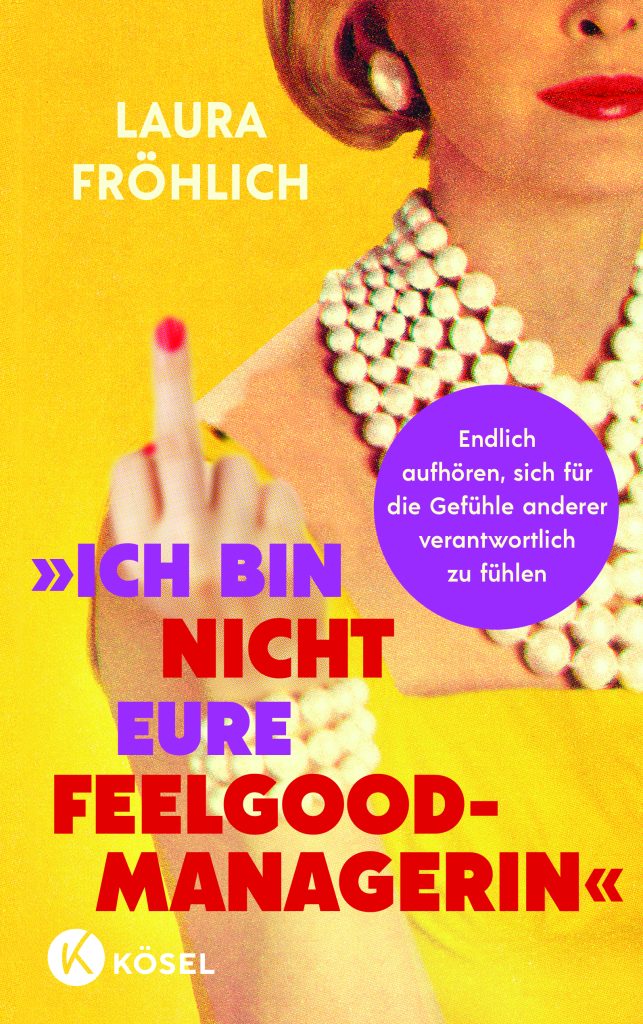
Society's expectations turned me into a perfectionist as a mother. From the outside, I glided through the water like a swan, but underneath I was paddling like crazy to keep from going under. In my new book, “I'm Not Your Feel-Good Manager,” I write about how insidious the myth of the Mother is. How we women get pushed into caretaking and can hardly break free, because the guilt kicks in right away.
What helps: talking about it, swapping stories, and realizing we're not alone. Care work and emotional work are important parts of our lives, but we don't want to be reduced to them. Because it gets old when unpaid work is simply expected of us.
I've made a few changes that help me keep my inner people pleaser in check. I watch my wording and cut every “Happy to” and every “Sorry” that isn't needed. In conflicts with my family or friends, I think carefully about whether I'm actually responsible for other people's emotions. Almost always, I'm not.
In conversations with men, I take up space, because I have interesting things to say too. Every now and then, I still don't dare to stand up for myself. But for my daughter and my goddaughters, to whom I dedicated my new book, I want to be a role model as best I can. A woman who bangs her fist on the table and says: not with me. I'm simply not your feel-good manager!
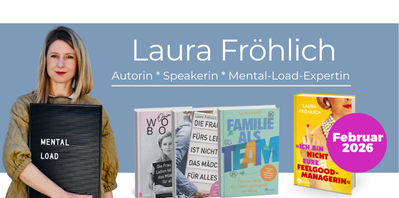
Laura Fröhlich: Ich bin nicht eure Feelgood-Managerin (I'm Not Your Feel-Good Manager). Endlich aufhören, sich für die Gefühle anderer verantwortlich zu fühlen (Finally Stop Feeling Responsible for Other People's Feelings), Kösel Verlag. Publication date: February 25, 2026
This story first appeared in German on StadtLandMama.