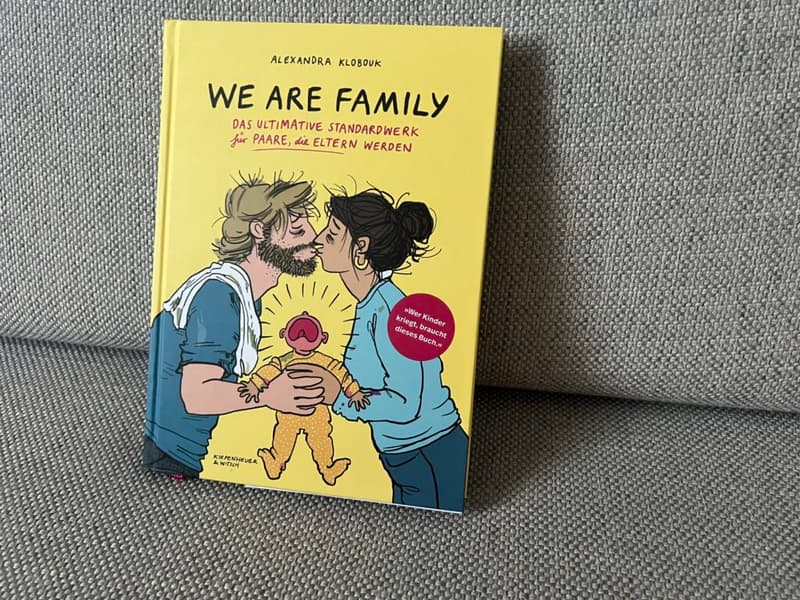
We Are Family: A Crash Course in Equal Parenting
Heads-up: This post contains affiliate links. If you buy something through them, we may earn a small commission at no extra cost to you. As an Amazon Associate, we earn from qualifying purchases.
Nobody prepares you for how a baby tests your relationship. Alexandra Klobouk drew the guide she wished she'd had, with humor.
Friends, when you open a book and instantly feel seen, hugged, and understood, you're holding something special. We are family by Alexandra Klobouk is exactly that kind of book.
Patricia Cammarata says of it, “The book I wish I'd read before I became a mother,” but I don't think that goes far enough. Even I, with kids who are already grown, felt so, so validated in my struggles, my happy moments, and my feelings.
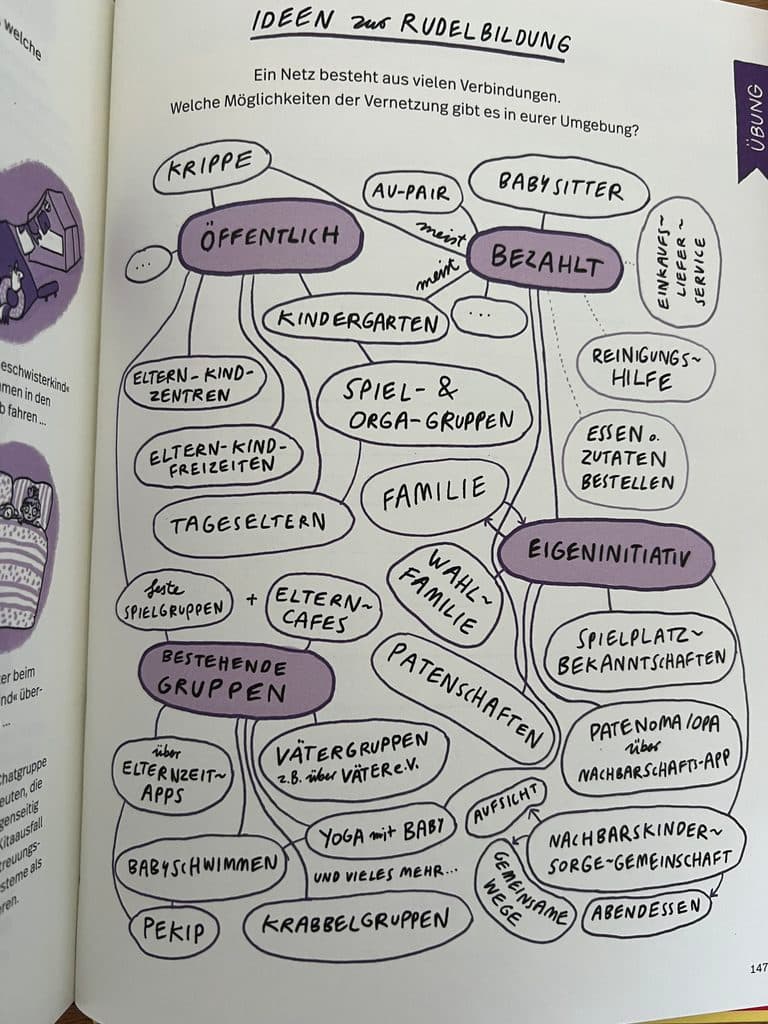
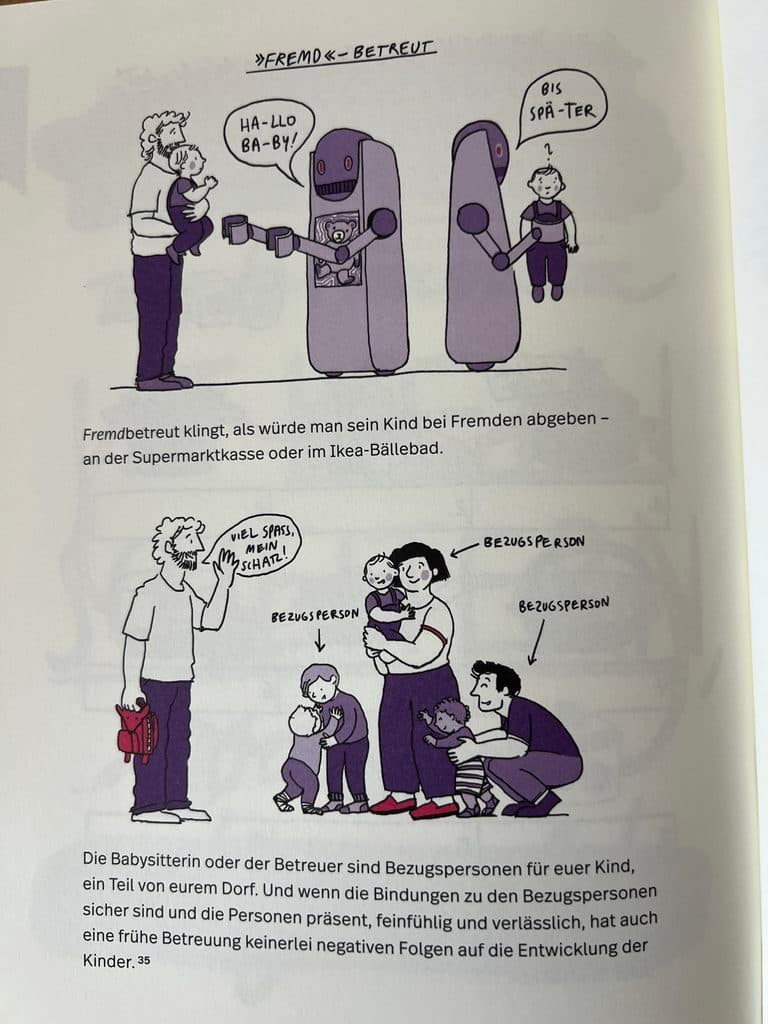
It's about everything a family needs: how to communicate nonviolently. Who can help us from the outside. And what a dumb, loaded term “stranger care” is, because we're not dropping our child off with some stranger at an Ikea checkout. We're leaving them with a caregiver they know!
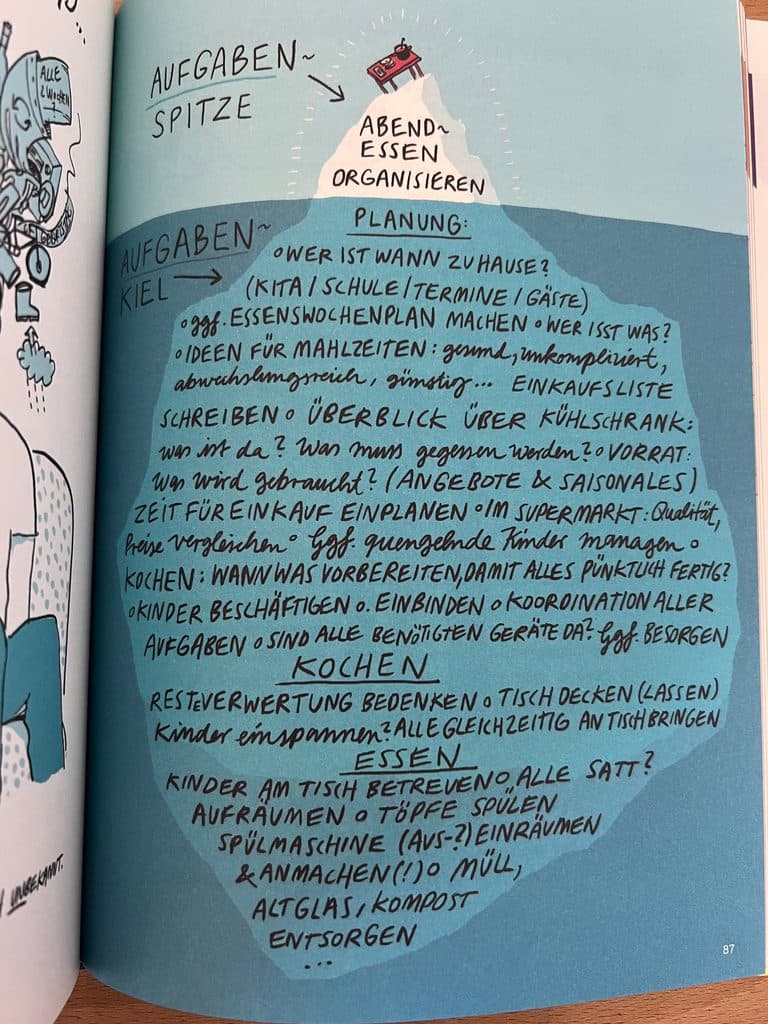
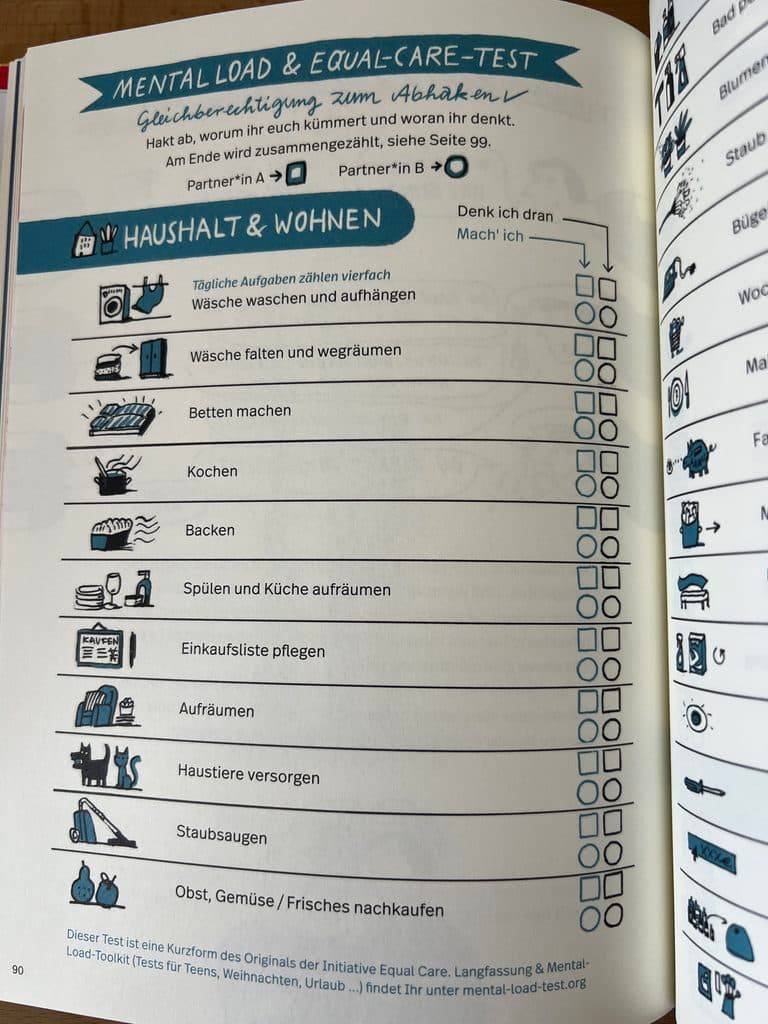
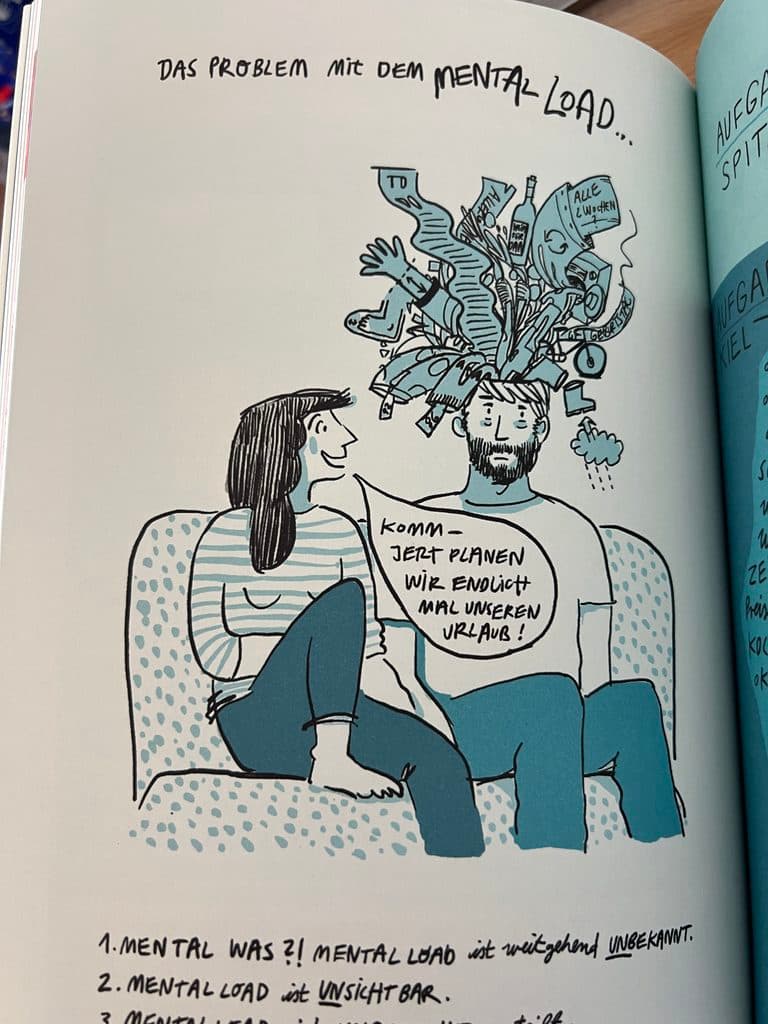
How to work out the family finances between us. Checklists you can tick off to see how the mental load is split in your family. This is a book that opens your eyes and shows that we're allowed to be good-enough parents. And if your partner doesn't pick it up on their own, you can keep putting it in front of them, because every time there's another aha moment.
Thank you for all the work you put into this, Alex! Here are our questions for you:
Dear Alexandra, do you think we're honest enough about parenthood? Or are there still too many myths floating around about a rose-colored fantasy world once a baby arrives?
Interestingly, I see two opposite trends right now, especially when it comes to becoming a parent. On one hand, particularly in cities, more and more people are deciding not to have kids at all. They cite financial reasons, and fear of how demanding it is when two full-time working people become parents with no family nearby to help.
The other trend is almost the opposite: we don't want to spoil the joy for expecting parents, so we go easy on them and soften our descriptions of those first months, which, as those of us with kids know, can be seriously exhausting in phases. It's well meant, but we're missing a huge opportunity: preparing future parents for what's coming.
Because it's the same challenges over and over: too little sleep, a fair split of the mental load, time, money, and what's going to become of us as a couple? … There are great solutions for all of these. Imagine how much easier future parents could have it, and how much more equal parenthood could be, if they knew those solutions before “the wheels come off.” That was my motivation for making this book.
As an illustrator, your newest work speaks to expecting and young families on the verge of a breakdown. Why was it clear to you that this was the audience you wanted to reach?
Like I said, most expecting parents prepare conscientiously for the birth, but not for what happens to them as a couple afterward. Having a baby changes everything. Isn't it insane that we just let people walk into this new life unprepared?
We would never tell someone who's planning to climb the Himalayas, “How great, a mountain! You'll figure it out. Others have done it before you.” With the birth of our first child, we as a couple probably go through the biggest transformation of our lives.
And our partnership is the foundation the whole family is built on. Because the structures around us unfortunately favor inequality, nearly all of us slide down that path more or less automatically. Sooner or later that leads to at least one parent being overloaded, and to potentially major conflicts: financial dependence, an unevenly distributed bond between the child and each parent, and more.
Even the greatest love can't fix that on its own (and it gets pretty strained in times of stress and sleeplessness). To push back, we need the right tools. I collected them in the seven chapters of We Are Family. It's told with enough humor and drawn clearly enough that (future) parents don't get scared. They actually have fun getting their footing.
My second audience, by the way, is the gift-givers: those of us who are already past the toddler years and want to give something truly useful to a younger sibling, a friend, or our own grown kids when a baby arrives. That's why We Are Family is also a lovingly produced gift book.
You're a mom yourself. What surprised you most at the beginning?
Well, the father of my children and I, like a surprising number of expecting parents, believed that everything would be different for us. We'd stay 100% equal, understand each other without words, always be relaxed and in control, never become one of those stressed-out, exhausted parents, and keep living our lives with our kids instead of organizing our lives around them. Boy, were we wrong …
Our first child wasn't a sleeper baby. He was a non-sleeper baby. And clueless and unprepared as we were, we stepped into every trap we could have avoided if we'd known more, and within no time we were “on the verge of a breakdown” ourselves.
The fact that so many young parents feel this way today, by the way, has nothing to do with us being bigger complainers than earlier generations. It has to do with the demands placed on us and the demands we place on ourselves. Most parents depend on two incomes but have far too little childcare and other support.
And we want a good bond with our kids, which is so much more work than just letting them cry it out, as used to be the norm.
I recently had to testify as a witness after an ugly brawl at a soccer field, and my first thought was: nobody prepared me for this in my childbirth class. What should actually be taught there?
We all need preparation and support when we start something completely new. And what could be a bigger adventure than guiding a new person into the world? If you've never been a parent, you have no idea how it works, since most of us no longer live in big extended families where we help care for other people's babies before we have our own.
In my years of research, I worked out the big challenges that, one way or another, almost all young parents face: What will become of our relationship? How do we get enough sleep? How do we become good-enough parents instead of “perfect” ones? How do we divide the mental load fairly?
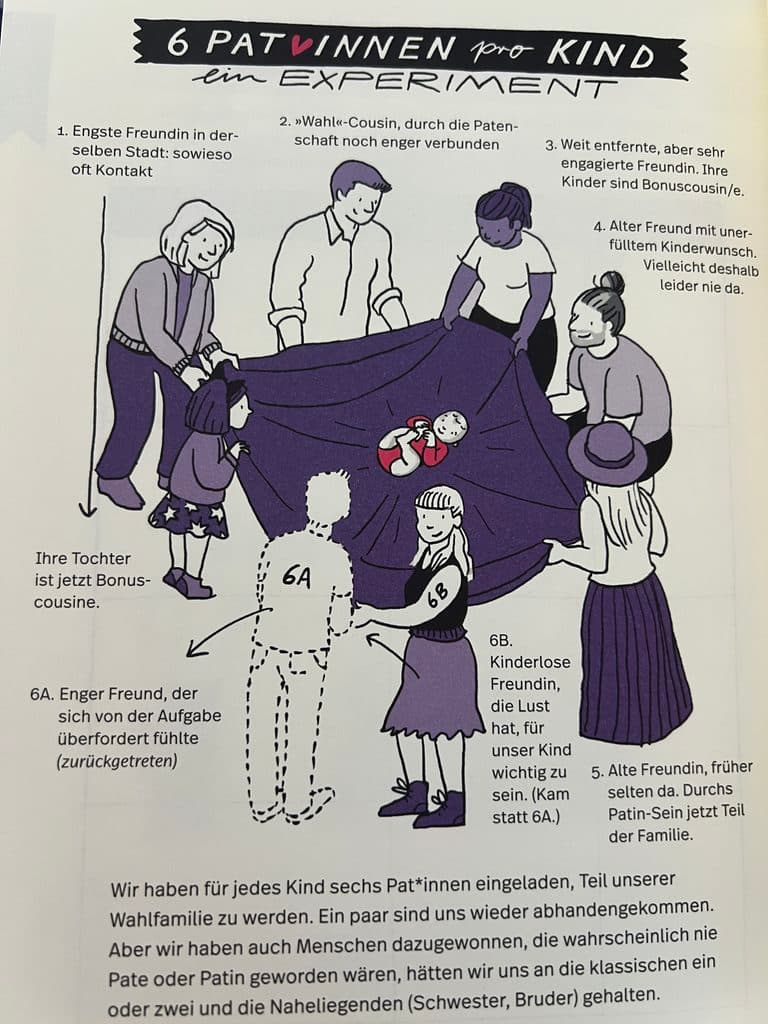
What about money and our time? And how do we build our own “village”? I take on each of these topics in one of the book's seven chapters, with examples and anecdotes, and I offer the solutions that have been scientifically shown to work best.
My mix of text and drawings lets me package these complex topics into digestible, appetizing bites that you can read in two minutes on the toilet if you have to, when you finally get a moment to yourself.
I rarely see a mostly illustrated book on parenthood that makes me feel SO warmly hugged. And that gives me SO many practical tools. Have you heard from readers that you've saved relationships?
That makes me so happy, thank you! Yes, my editor (who has grown kids) actually said the empathic listening exercise from the relationship chapter had “saved” her relationship. And I've heard from several couples that it moved them to tears and that they felt really supported. That makes me incredibly happy, of course.
I also offer a workshop based on the book, a parent prep class, which didn't exist before. People hoping to have kids came to get informed, along with expecting couples and parents whose kids are past the toddler years. And everyone said they felt truly well informed for the first time. And well entertained, too.
What did working on the book do to you? Once you got all of this down on paper, did it change your own life?
It changed my perspective on the norms we grow up with: which of them are actually good for us, and which we can let go of. And on how little families are taken seriously in our society, even though we're the ones responsible for our country's future.
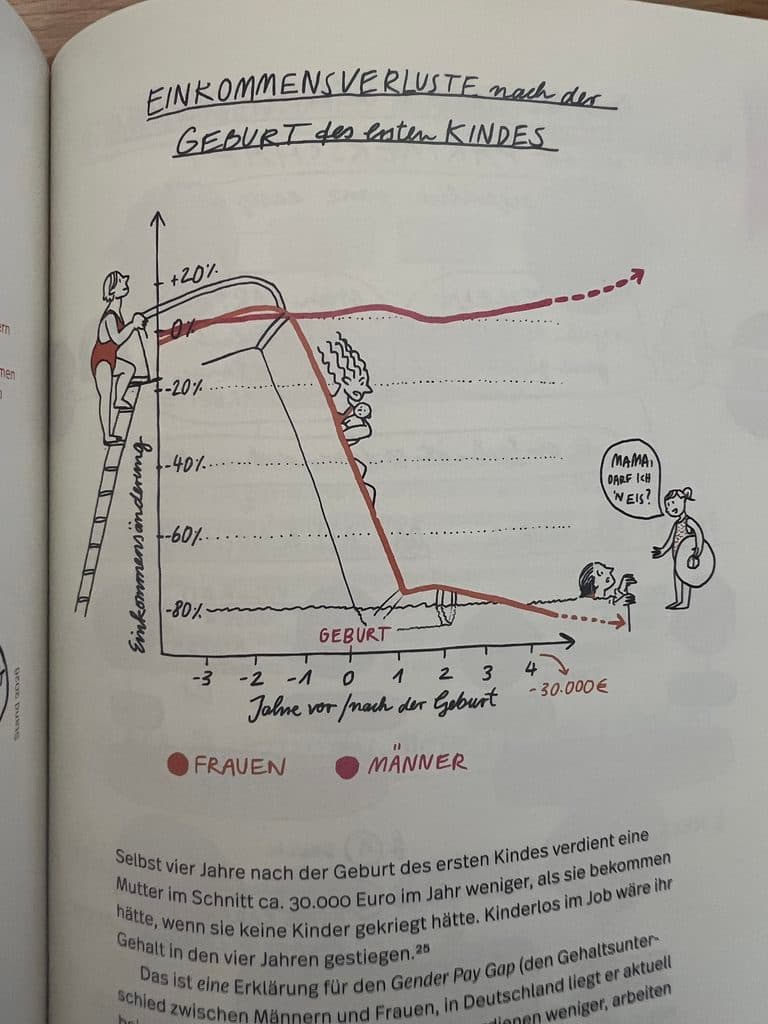
It also changed how I see the way we can strengthen and support each other when we treat raising kids as a shared job, not a private problem. And I have to admit, I was shocked to learn how drastic the effect of motherhood is on women's lifetime income: on average, they lose more than half of it compared to women without kids.
That's why it's so important to me to spread the word about equal financial models and the effects of unpaid care work. Because right now, unfortunately, we still have to push back on this ourselves. But it can be done, if you know how!
With rent and gas prices far too high, Instagram comparison machines everywhere, and letters from the German armed forces landing in the mailboxes of 18-year-olds, what do you want to leave families with today?
Band together! I believe we need each other more than ever, because the pressure on all of us keeps rising. But we're not defenseless. In our democracy, the people who make laws that disadvantage families, cut social programs and culture, and play disadvantaged groups against each other answer to us, not the other way around.
Pushing back pays off, and the more of us there are, the better it works. Of course, as costs rise, it gets harder and harder to find time for volunteer political work, but we can connect, amplify each other's voices, and stand in solidarity with each other, even when we feel we belong to a completely different world. Because we know our shared value to society.
Since times have gotten rougher, I've made a habit of smiling at people with kids, and at women in general, even when they seem like strangers. It helps me see what we share and how we can lift each other up, instead of focusing on the differences. When families win, we all win.
This story first appeared in German on StadtLandMama.