My Husband Died. Two Days Later, I Opened His Phone.
Thomas died on a Saturday night. By Monday, one call to his employer made Christina wonder if she'd ever really known the man she loved for nine years.
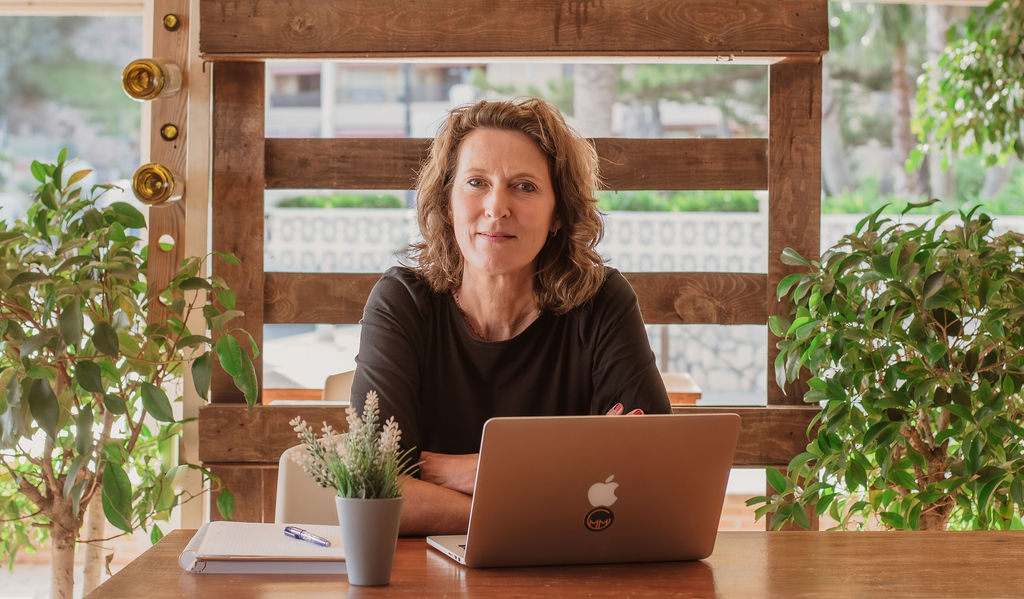
Friends, today is about Christina, who became a widow two years ago. Her son was 7 then and is nine now. Recently my colleague Golli and I, as the TrostTeam, were invited to the podcast “Liebe ohne Filter” (“Love Without a Filter”) in Cologne. Our host, Simone Janssen, found the episode with us so valuable that a few weeks later she asked us to join an Instagram Live. We were there as grief counselors, and women who had lost their husbands were brought in to talk with us.
Christina was one of them. Her husband Thomas died suddenly of a heart attack. On the first day, there was only shock. On the second day, she looked at his phone… and what she found there is something she will never forget. I was so impressed by how she handles this story that I asked her for an interview. Here it is.
Christina also recorded a podcast with Simone, and you really should listen to it or watch it. It's so worth it!
Dear Christina, you met your husband Thomas fairly late in life. How did you two meet, and what did you fall in love with?

We met on Tinder. Back then I put more time into my career than into relationships. I was pretty much a permanent single, and I just never had much luck. With Thomas it was different. He just kept at it. We texted at first, and pretty quickly he asked, “Hey, do you want to just talk on the phone? I'd love to hear your voice.”
Pretty soon he also said he wasn't looking for a pen pal and wanted to see me soon. I was working for a big fashion brand in Düsseldorf, and it was order season, so I told him, “I really don't have any time during the week.” He said he'd just come on Friday and pick me up from the showroom. I fell hard for that persistence.
Thomas was Austrian and I liked his accent. He was also very tall with big hands, and I'd always wanted a guy who could get things done, who was good with technical stuff, who could fix things around the house. I felt really safe with him almost right away. We met a few times, until he suggested we take a trip to Holland together.
That made me a little nervous, but he just took my hand and said, “Come on, you need some fresh air.” And pretty soon he was even looking after my dog Timmi when I had to be at the showroom. He didn't think it was a big deal at all. That impressed me. I thought, wow, this man is serious.
He was such a doer, so reliable, and he gave off this calm, which I find very strange in hindsight. But he really did. He just had a way of being there. I felt like I didn't have to fight for anything, I could just let go, and that was lovely. And at 40! That's how old I already was.
You had a child pretty soon, your son. What did becoming parents do to you as a couple?
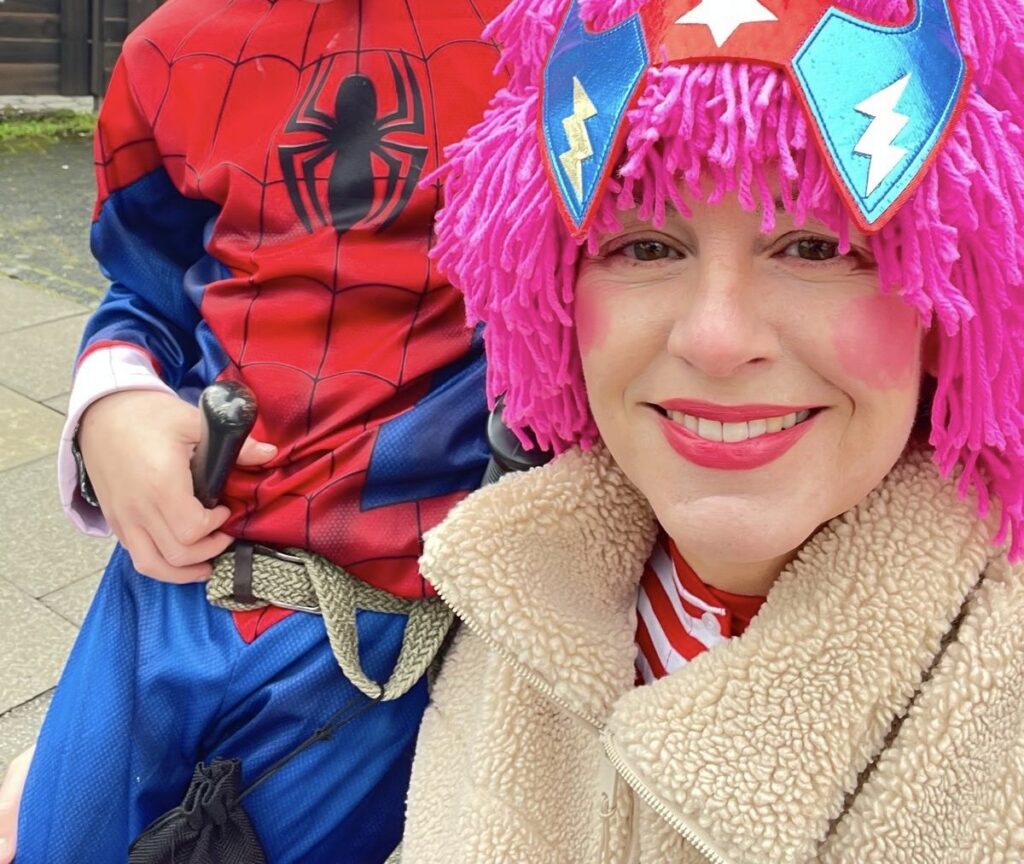
It changed a lot between Thomas and me, and at the same time it made a lot visible. Lennox came very suddenly. Neither of us ever thought I'd be pregnant after just a few weeks. I was already 40, and Thomas had once had cancer, so we didn't assume we'd ever become parents together. We had no idea that this much happiness could happen to us this fast.
When Lennox arrived, suddenly there was something completely new. This huge responsibility, this feeling: we're not just two people who love each other anymore. We're a whole family now. But also less of a couple. We basically got to know each other during the pregnancy, and Thomas grew into his role as a father. He was so proud of Lennox. He was truly his pride and joy, and this child was something very special to him.
I think becoming a father brought out an even softer, more loving side of Thomas. He could be goofy with Lennox, play, clown around, make him laugh. He did everything for Lennox, and the bond between the two of them was beautiful.
For me, becoming a mother changed everything. Before, my job took up so much of me. I was a very independent woman, very much focused on the outside world, and suddenly there was this little person who needed me, who grounded me, who showed me a whole new kind of love. A love deeper than anything I'd known before.
Of course it wasn't always easy. Becoming a parent also means a lot of exhaustion, especially at that age. More responsibility, less lightness. Sometimes you function more as parents than as a couple, but at the same time Lennox connected us. He was our shared happiness. Our greatest joy, our little center, our home.
With Lennox, Thomas and I became a family, and even though our path later became so unbelievably painful, I'm endlessly grateful that Lennox exists. He is the most beautiful thing that came out of our love. Thomas lives on in him: his humor, his way, his warmth.
Becoming parents made us grow up, made us more vulnerable and softer, and it showed me what love really means: taking responsibility, being there, staying, carrying… even when life turns out completely differently than you imagined.
You had nine years together. Your son was 7 when Thomas died suddenly at only 52. What happened?
It was a Saturday night. On Friday, Lennox and Thomas had picked me up from the hospital because I'd had a minor surgery. On Saturday we went grocery shopping and then spent a totally normal day at home. Thomas cooked that evening: my favorite dish, butter chicken. It was really just a normal, lovely evening. Around 10 p.m., Thomas went upstairs early and said, “I'm going to lie down.” That wasn't unusual at all.
Then we suddenly heard a thump. It didn't sound like anything bad had happened, more like a drawer had fallen out or something. I didn't think anything of it. Lennox went partway up the stairs to check, but then came back down.
Thank God (and I can't bear to think what would have happened if it had been the day before, when I was still in the hospital myself)! He said, “Mom, I think Dad's already snoring, I think he's asleep.” When we went up together fifteen minutes later to lie down too, the light was still on and the whole room was lit up.
We tiptoed into the room. We thought he might be hiding to scare Lennox, the way he so often did. What stood out was that our dog walked into the room, turned around, and came right back out. A sideboard blocked our view at first, and then there he was. On the floor, on his side. Completely still. I turned him over, and Lennox climbed onto the bed and just kept his hand over his mouth the whole time.
I was totally confused and dialed 110, the police, instead of 112, the emergency number for ambulances. The dispatcher told me to start chest compressions. I was supposed to stay on the line. “We'll do this together,” they said. It was incredibly exhausting. The man on the phone told me what to do. At some point I screamed into the receiver, “Damn it, where are they, how long is this going to take?” It felt like half an eternity. The man at the dispatch center stayed calm and just kept telling me which streets the ambulance was passing on its way to us.
Then the doctors arrived. And a short time later, another emergency doctor. I went into Lennox's room next door with him. I remember we looked at the children's book “Ein Funkeln im Dunkeln” (“A Sparkle in the Dark”), with Bo the bear, and the page we had open said: “They hugged one last time, and then he was gone.” Moments like that, you only understand later. At some point there was a knock on the door, and the emergency doctor said, “Do you have a minute?”
He said they'd have to call the fire department, because even then Thomas could only survive with machine support, and that he'd be going to the ICU. Then the emergency doctor said, “We're taking your husband downstairs now, and then we'll be in touch.” He asked whether I needed a chaplain. In that moment I thought, “A chaplain?!?” I could have screamed.
I was still thinking: My God, he'll get a few stents, then he'll go to rehab and everything will be fine again. “Just do your job, this isn't about me!” I thought. Looking back, I believe they were already trying to prepare me for the worst. That question still echoes in my head, because it was going to change everything.
My knees went weak. The ambulance stood in front of our house for an awfully long time. By now it was the middle of the night. Everyone was asleep except us. I calmed Lennox and kept saying, “Everything's going to be okay, sweetheart.” He fell asleep, and I was wide awake. I'd be allowed to call the hospital in two hours, but it never came to that, because 40 minutes later I got the call that would change everything.
Thomas didn't make it.
His heart had stopped beating. My life, our life, was no longer the same from one second to the next. I remember every single minute of that night. You don't forget it. It's as if it happened yesterday. Every word. Every minute. Like a movie. At 10 p.m. everything changed. Our home, our Saturday, our life. Nothing was the way we knew it anymore. The before was over.
Two days after your husband's death, you wanted to use his phone to reach his contacts and let them know. What was waiting for you there?

Yes. Thomas died in the night from Saturday to Sunday, and on Sunday our house was like Grand Central Station. My sister came in the morning. She brought carrots and mashed potatoes. My parents came, neighbors, and my best friend cut her ski vacation short. Everyone was here.
On Monday I called my boss to let her know and tried to function. I wasn't really myself, I was in shock. I just took it step by step. And I knew: okay, I have to tell everyone now. I have to tell people, acquaintances, friends, colleagues. People who were close to Thomas. So I took his phone to go through his contacts and messages and figure out who I needed to reach.
The first person I called was his employer. And that call knocked me off my feet. I wanted to tell him that Thomas had died, and he thanked me for letting him know, but said Thomas didn't work for him anymore. I remember I couldn't make sense of it at all. What do you mean, Thomas doesn't work there anymore? Since when, and why don't I know that?
At that point I was already in a state where I could barely grasp that Thomas was gone. And then on top of that came this feeling that there were things about his life I didn't know, that there was apparently something I had no idea about.
I kept going through his phone. First WhatsApp, to notify friends and close acquaintances, and at some point I also clicked on the little Telegram icon and on his email inbox. There was no explanation waiting for me there. No reassuring message, nothing to hold on to, just messages from women. From lots of other women. Past-due notices, collection notices, and a very deep black hole.
That was the second shock, at a moment when I really couldn't have taken another one. I was freshly widowed. Our child had lost his father, and at the same time I was starting to discover things I didn't understand, things that shook my picture of the last few weeks.
It was as if not only Thomas was suddenly missing, but also a piece of the truth. A piece of security, my trust in what I'd believed I knew. And that's hard to describe: you're grieving the person you love, and at the same time you're standing there with questions you'll never get an answer to.
What were you feeling in that moment?
I screamed so many times, not just once, over and over, because I couldn't take it in, because the pain was too much. The humiliation, the grief, the anger. And at some point, after all the tears, all the screaming, all the disbelief, something else rose up in me. A strength that carried me. I remember at some point thinking: Now listen up there! I'm going to show you down here that we will do just fine without you.
Not because I didn't love him. Not because I didn't miss him, but because I suddenly felt: I'm allowed to grow from this. I have a child, and Lennox needs me. That was the moment when pain turned into the will to survive. I was torn apart inside. I loved Thomas. I missed him. I would have wanted him back, and at the same time I was so hurt and so angry about what I'd found. That was a brutal mix.
But exactly out of that came this absolute strength that I hadn't known I had. This feeling: You left us here, but we're not going to stay down. I'm getting back up for Lennox, for our life, for me. And maybe that was also the first moment when I understood, deep down: I'm not only a widow, I'm also a mother, and I'm strong, and I will get us through this somehow.
Did you also have the feeling: I don't even know who I was with?
Very often I had this feeling that I didn't know who I'd actually been with. Who was I to Thomas? And that's very hard to bear. The thought that he was destroying so much, not just in that moment, but retroactively. I asked myself: who was this person really, what of it was real, what might he have done for me only out of guilt, what did I see and what didn't I see?
How could it be that we lived together and I knew nothing about so much? That was brutal, because at the same time I was grieving Thomas, my partner. We weren't married, only engaged. And remarkably, I had always told my mom: I just can't marry Thomas yet, there's something I don't know yet. A gut feeling.
I grieved my husband, Lennox's father, the person I loved. And still more and more things came to light that didn't fit at all with the picture I had of him. And that is exactly what tore me apart inside. There was love, there was longing, there was the shock of his death. But also a deep uncertainty about whether I had lost a person I knew or a person of whom I'd only been shown a small piece. We had been together for nine years, after all.
I couldn't ask him about any of it anymore. That was cruel. I couldn't confront him. I couldn't say, Thomas, explain this to me. Why, since when? What was really going on? What was tearing you apart? I was left with answers I had to piece together myself. And at some point there wasn't only grief, but also a deep feeling of betrayal and helplessness, of “I'm standing here in the rubble and now I also have to figure out what the truth even was.”
That shook my trust in our story, and yet it was our story, and it is our story. Thomas was the father of my child. He was part of my life, part of our family. I had to grieve someone I loved and at the same time process: why hadn't he just talked to me? What was he looking for outside that he hadn't found within himself or with me? What was his life like?
How did you tell your son about all of this?
Lennox is nine, and I haven't told him all that much yet. He noticed that a lot of bills had to be paid, that a lot of people were here, that I cried, that I was sad. In the sad moments, we hold each other. And I tell him things in a roundabout way. I pass on the values that matter to me more than ever: that no matter what, he can come to me at any time. When he's sad, when he's worried, when he doesn't know what to do: I'm always there for him.
I stress values like honesty, how important it is to tell the truth, that you treat your own people well, that you don't lie. I don't want to air dirty laundry. Thomas is and always will be Lennox's hero, the dad who had so much fun with him. Who did everything for him. Still, Lennox is also allowed to know what wasn't okay.
You've also gone public with your story and have a TikTok channel. Some comments said we should please let the dead rest in peace. What do you say to that?
I really do understand that sentence, that you should let the dead rest. At first it sounds like respect. But my answer is: I'm letting Thomas rest, but I'm still allowed to tell my story. Because it isn't only his story. It's mine, too. It's the story of Lennox and me, of the night our life broke apart, of what came after. Of grief, shock, love, betrayal, fear about money, and the attempt to somehow keep living.
I'm not telling it to make Thomas look bad. I'm not telling it because I didn't love him. I'm telling it because I've experienced things that many people stay silent about, because grief doesn't always look clean, quiet, and dignified. Sometimes grief is loud, angry, ugly, chaotic, unfair. Sometimes it screams at me. And I believe that's exactly what we have to be allowed to talk about.
When someone dies, for many people that person automatically becomes untouchable, but for the people left behind, the story doesn't end with death. For me, a completely different fight began after. A completely different story. Letting the dead rest must not mean that the living have to stay silent. I stayed silent long enough, but telling my story has helped me make sense of what I went through.
And if even one woman out there feels less alone because of it, then it was worth it. I can honor Thomas as the father of my child and still talk honestly about what I've been through. Both are allowed to exist side by side: the love, the grief, the disappointment, the anger, the truth, and that's exactly what this is about for me. Not settling a score, but the truth and making visible what can also happen after a loss.
I'm the one who had to keep living. I'm the one who had to catch Lennox. I'm the one who had to sort through the bills, the questions, the past-due notices, the pain, and the open wounds, and that's why I'm allowed to talk about it. Not to deny Thomas his rest, but so that I can find peace someday. And I want to encourage other women to speak out, to let it out, to get help.
Today you look more kindly on what Thomas had going on. Above all, you miss him as the father of your child, as the person you can share your pride with, right?
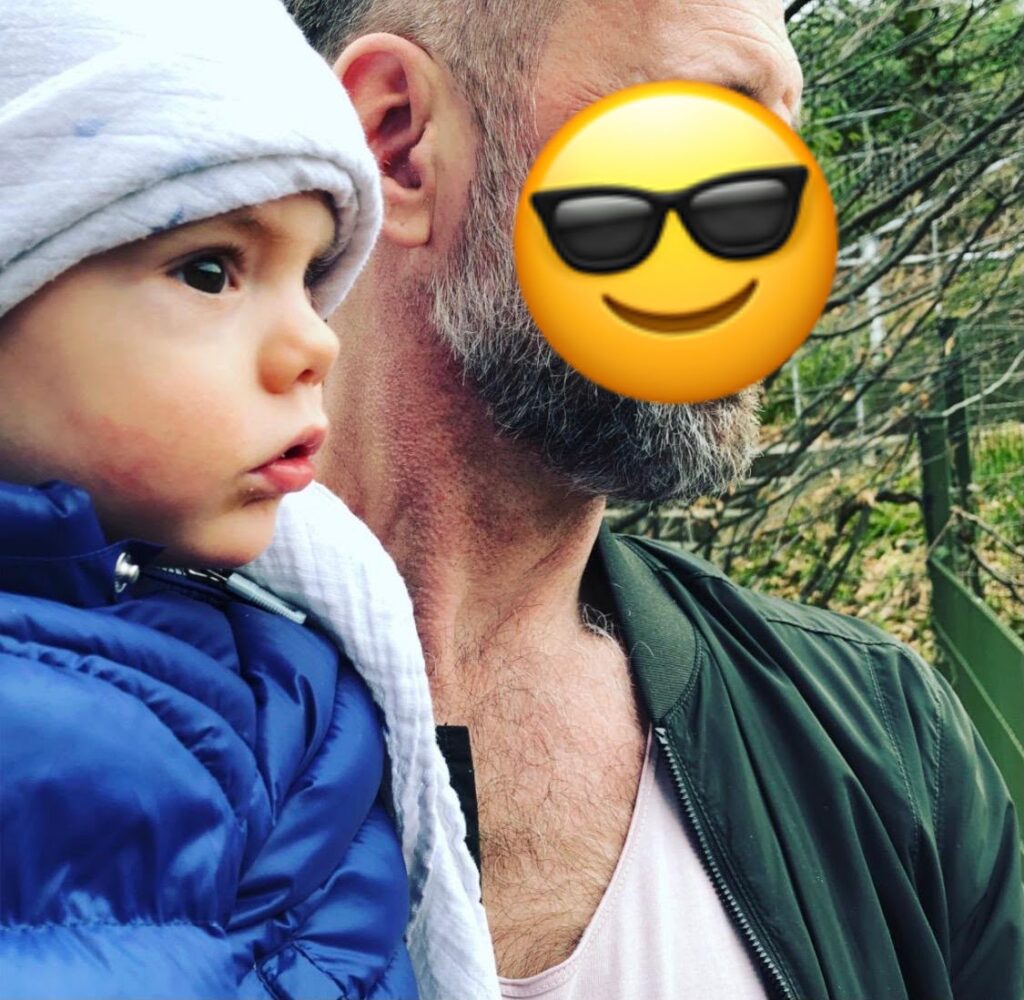
Yes, that's true. Today I look more kindly on what Thomas had going on. Not because it hurts any less, and not because I've understood or forgiven everything, but because over time something softer has come in. In the beginning there was mostly pain, anger, disbelief. That feeling of: how could you do this to me? What was going on? Why did you leave me alone with all of it?
Today I still don't have an answer to everything, but I've stopped clawing at those questions over and over inside. Maybe also because I know Thomas can never answer them. What stays so much stronger today is this: I'm so grateful he gave me Lennox. And I miss him as the father of my child. I miss the person I can share this pride in Lennox with. That shared wonder when Lennox pulls something off, when he grows, when he gets braver, when he rises above himself.
I felt it most strongly recently at a basketball game. Lennox was standing out there on the court and I looked at him and I was so incredibly proud, and right then the thought hit me: Thomas should be seeing this. He should see how big Lennox has gotten, how well he's doing, how hard he works, how much he's developing.
Those are the moments when I miss Thomas the most, not necessarily as a partner, not in all that complicated aftermath, but as a dad. As the person who would have been just as proud as I am, who would have stood next to me. Maybe with that look that says: That's our son!
Having to carry this pride alone sometimes hurts almost as much as the grief itself. Because parenthood is really something you do together. You share the worries, but also these big little moments of happiness, the milestones, the successes, the funny things they say, the moments when you look at each other and you both know: we have a very special boy. And that's exactly what's missing today.
Yes, a lot of it hurt me. There are things I still don't understand to this day, but Lennox is the most beautiful thing that came out of our shared story. That's why I look at it more kindly today. Not because everything was good, but because I won't find my peace in reducing Thomas to everything that came to light after his death. He was more than that.
He was the father of my child, and sometimes that's the person I miss most of all.
This story first appeared in German on StadtLandMama.