“He Didn’t Do This to Me”: A Mom After Her Son’s Suicide
“Lukas didn't do anything to me.” A mom explains which well-meant phrases hurt most after her son's suicide, and what she wishes people would say.
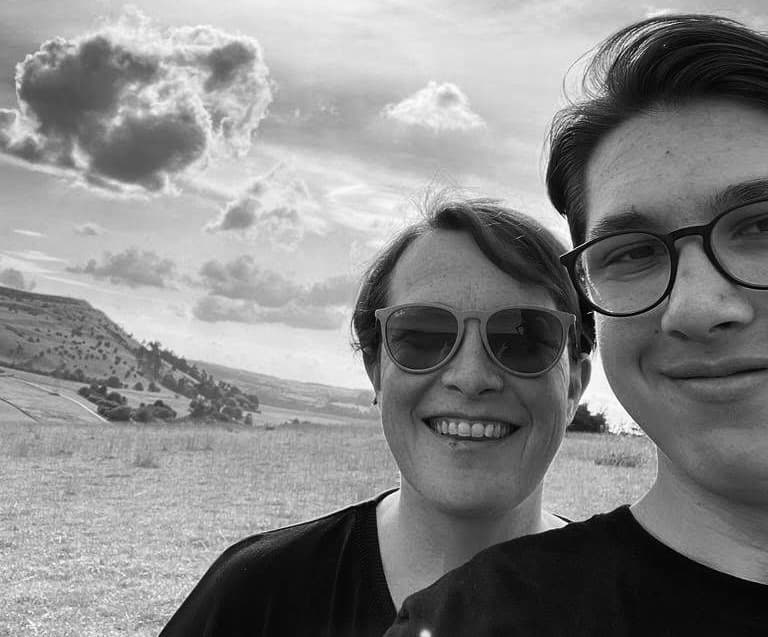
Dear friends, earlier this year I came across Sonja on the Instagram channel of Jugendnotmail, a German email counseling service for teens. She was writing about her life after losing her son to suicide. Her son Lukas died three years ago, at 17. Ever since, his mother has made it her mission to educate people about this, and she's bravely stepping back into her life.
We met in person in Cologne at the end of May and clicked right away. On her left arm, Sonja has the last sentence of Lukas's goodbye letter tattooed, in his handwriting, because he was left-handed. Next to it sits a raven, his favorite bird. Lukas was well integrated socially. He had hobbies and a circle of friends, and he was active as a class representative, until alleged bullying turned his life upside down.
In the interview below, Sonja tells us their story. Please think carefully about when and where you read it, and whether someone could be with you in case your emotions get the better of you.
Because what follows is about suicide, we want to share some important information here. These are German resources, since that's where we live and write from: If you or your child are in an acute crisis, please contact your doctors or therapists, the nearest psychiatric hospital, or the emergency services at 112 (the emergency number in Germany). The Telefonseelsorge, a crisis counseling line, can be reached around the clock, free of charge, at 0800-111 0 111 or 0800-111 0 222. At Jugendnotmail, teens in distress can get free counseling by email. The Nummer gegen Kummer also offers free, anonymous counseling for kids and teens (116 111) and for adults (0800 111 0550).
For context: According to the Federal Statistical Office, more than 9,000 people die by suicide in Germany every year; in 2023, it was 10,304. Among 10- to 24-year-olds, suicide was the leading cause of death in 2023, ahead of traffic accidents and cancer. Eighteen percent of all deaths in that age group were suicides. According to the World Health Organization, for every death by suicide there are up to 20 suicide attempts. The families of these people are affected too. So this is not a fringe phenomenon. It touches hundreds of thousands of people every year, directly or indirectly.
Dear Sonja, you're a mom who lost her son to suicide. How do people react when you tell them that Lukas died by suicide?
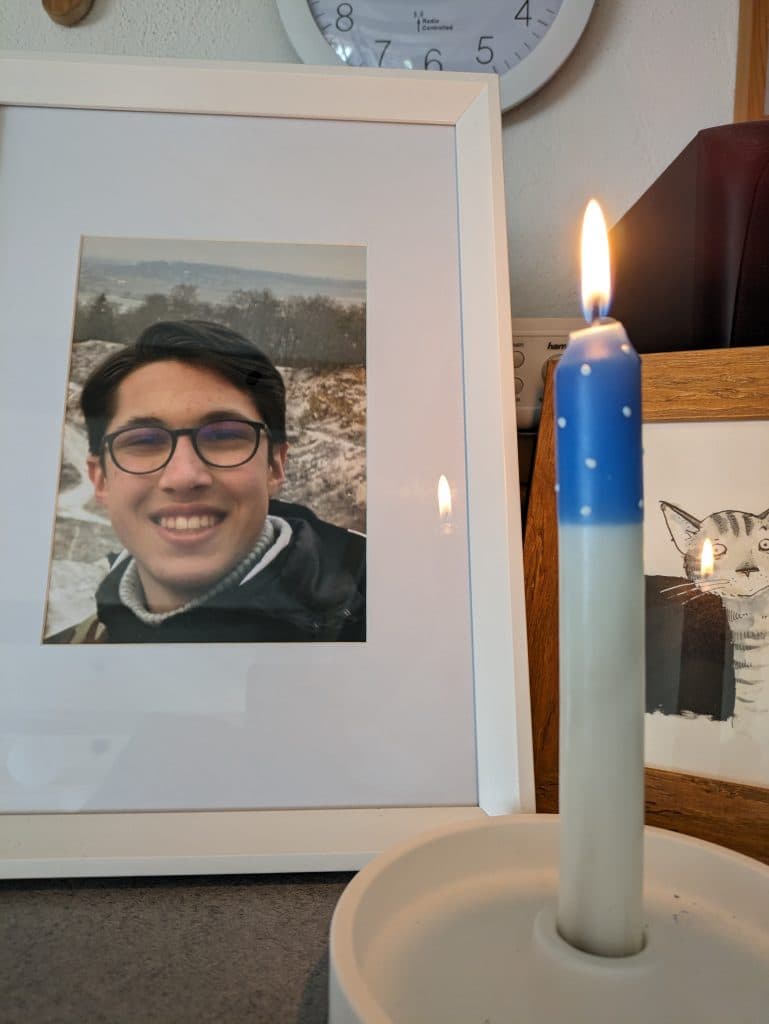
In the first moment, it usually feels like a strange silence has suddenly settled between the other person and me. Like we're separated by a veil. A few people push the veil aside and either hug me or say they're sorry, or “Oh no,” “Oh my God,” “I don't know what to say.” That's my favorite response, because it's so honest!
Nobody can imagine, and above all WANTS to imagine, finding their own child and having to bury them. Nobody wants to imagine losing their child at all. I was always afraid of it, strangely enough, looking back. Somehow, and this may sound spooky, I knew deep down that my special child was a gift for a limited time. That it would be only 17 years, though, I never saw coming.
Some stock phrases hurt you a lot, too…
Yes, because they make you feel like the person in front of you doesn't want to deal with you and your loss at all. And, even worse, platitudes play down my feelings. Educating people about how to treat the bereaved and lowering the barriers is something I've made my mission in this Life 2.0.
The platitudes after Lukas's suicide that hurt me deeply and basically silenced me were things like, “Oh Sonja, he wanted it, and there was nothing you could have done anyway!” I'm his mom. Right after my child's death, I couldn't possibly cope with the fact that I couldn't save him. On some days I still can't! I couldn't help him, and I got there too late to save him; he was already dead when I got home… After that platitude, those thoughts were very present, and the blame I put on myself got even louder.
Or things like “He's better off now!” What does that mean? Was he doing badly with me? I know now what's probably meant by it… But hearing something like that right after my child died felt very hurtful. The worst sentence, though, was “How could he do this to you, I feel so sorry for you!” Lukas didn't do anything to me. He died… I love him, and I have never thought, and never will think, that he did something to me. That sentence turns my son into someone guilty, and he isn't, not at all.
I also find it very bad and intrusive when people ask, and fortunately only a few do, how Lukas died by suicide… Especially with women, there's also that look, a mix of pity and huge fear that, hopefully, this won't happen to them.
Can you say more precisely what bothers you about the question of the how, the method of suicide?
It doesn't bother me on principle. What I do find, well… intrusive is when I haven't talked much with someone about Lukas yet, or when someone messages me on Instagram, and the question already comes up in the very first contact. Lukas died by suicide. Suicide is the cause of death, the worst and last symptom of his illness, depression. If Lukas had died in a car accident, would people immediately ask about the how…? If people understand that, maybe they'll become more sensitive. It's so “intimate.” Although, that's not quite the right word.
Let me try again: Lukas thought it through in an absolute state of crisis; he left nothing to chance. My son is so much more than the way he died, and that's what hurts me about it. He died by suicide, and I was the first to see him. I even compare it to giving birth. My son and me, him so innocent and pure. And I want to decide for myself when, whether at all, and with whom I share the how. Because the method makes no difference to the situation I'm in…
Who was Lukas?
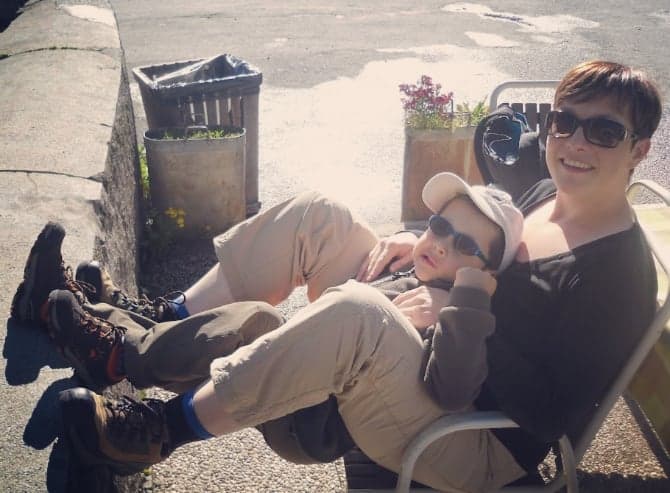
Lukas was wonderful, beautiful. Someone on Instagram once wrote to me: “You can see he's beautiful on the outside and on the inside.” It's like this: One sees clearly only with the heart. What is essential is invisible to the eye. And Lukas was raised to be not at all superficial, and that's who he was.
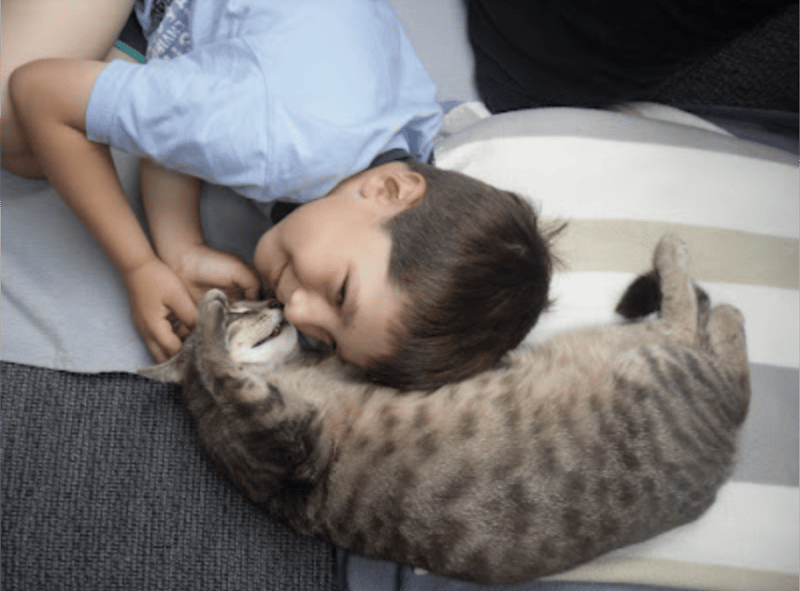
As a baby, Lukas was as sweet as you could ever wish for. He was a much-wanted child and was raised with love. Already in preschool, his great empathy showed. He liked to help, he was good at memorizing things, and he was very curious. He didn't like big crowds of kids. The packed preschool was a torment to him, and he enjoyed the school breaks, when only a few children were there.
Back then, I knew nothing about high sensitivity, sadly. Even preschool teachers often told me he was very, very difficult and touchy. What nonsense, I thought every time. He was simply a boy who wasn't satisfied when you kept him busy with a soccer ball. I was glad when the preschool years were over… and so was Lukas. He was so excited to be able to learn at school. Even as a little kid, he spoke very well, he quickly knew children's books by heart, and our bedtime story ritual was sacred to both of us.
How did he spend his free time?
He didn't care for long playdates with lots of kids at home. He had always preferred girls to boys, so he usually spent hours playing with the girl next door. Even that I had to justify and defend to some moms. For me it was always clear that I respected and supported Lukas's wishes. Since I always worked, my free time was Lukas time. We made it nice for ourselves…
I'm someone who has always taken in moments consciously. Maybe I sometimes feel too much, but it is what it is. Lukas was very ambitious. In third grade he said: “Mom, I want the recommendation for the college-prep track.” (In Germany, that recommendation decides which type of secondary school a child goes to.) I wasn't so sure about that track at all… Maybe my gut was already speaking?
Lukas made it (of course ;-)). He got the recommendation and then went on to the college-prep school, together with his future alleged bullies. At first he struggled, but from seventh grade on he was among the best in his class. He was a class representative and, up to 2022, he still represented his school at “Jugend debattiert,” a national youth debate competition. In his free time, he'd been an enthusiastic judo athlete since age six, later an assistant coach, and he was well liked by the younger kids, the coaches, and the teachers alike.
What about his friends?
He never had to fight for friendships. They just came to him. He had always chosen carefully, because he despised superficiality and quality mattered more to him than quantity. At 16, Lukas decided that he didn't want to go along with his best friend at the time to drinking parties. And we as parents, paradoxically, even tried to talk Lukas into going anyway, because I knew that with that attitude he might end up being excluded.
But Lukas was very clear in his position and stuck to it. By then he had a different, small circle of friends, made up of two boys and a few girls. Lukas was 16, almost 17, a teenager. We trusted him and he trusted us. He enjoyed being able to talk with the two boys about everything under the sun (God included, literally ;-)) and not, after an hour, being down to nothing but girls, drugs, and music.
Lukas wanted to study philosophy and theology. He read Seneca and had Albert Einstein as a poster in his room. He thought about death, life, faith… For Carnival 2022, the costume season before Lent, he went as a cardinal. How bizarre, looking back.
How did his former friends take that?
His former best friend couldn't understand or get over this “brush-off” from Lukas and started to shut Lukas out. First he bombarded Lukas with messages about what a bad friend he was. Lukas was baffled by such childish behavior and said he had explained it, after all.
At that point, he could still smile about it… but then it got more serious: The former friend removed him from every WhatsApp group they were both in and blocked him in every chat. He quickly gathered a group around himself that liked Lukas, but just didn't want to get kicked out of the other boy's good graces. That's how bullying works.
So Lukas found himself facing a large group that was, allegedly, against him. For the first few weeks he managed to handle it on his own. He talked with us a lot and found the others' behavior spineless and shabby. But he said to me: “You know, Mom, now I know what kind of people they are: childish, dumb, and superficial…”
How did the situation change after that?
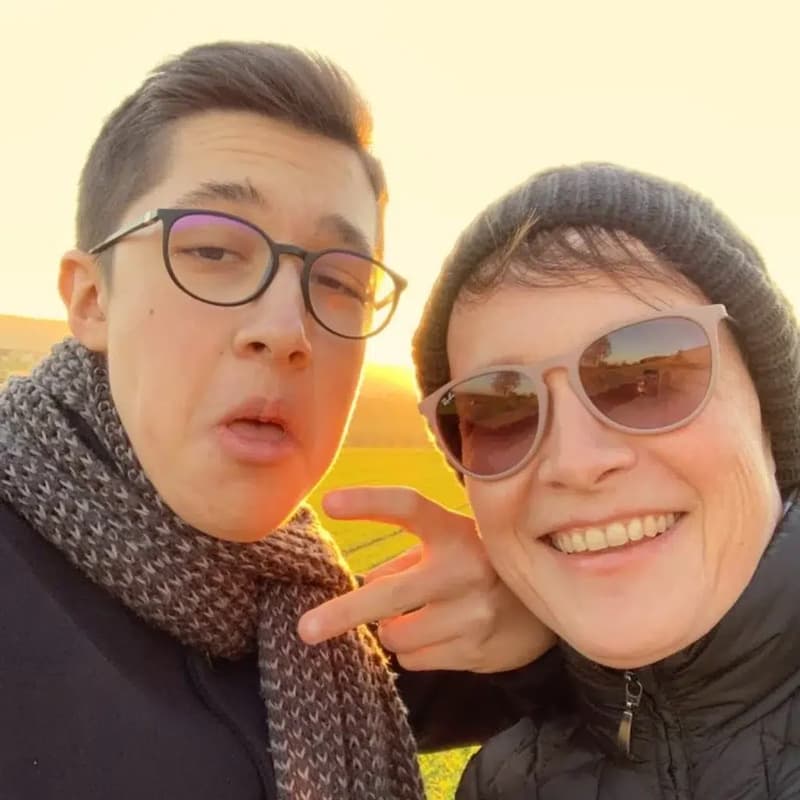
After a few more weeks, he withdrew more often. It was a hard balancing act between “Is this just the teen years?” and “Is Lukas sick?” He never shut me out completely. We started going on lots of walks or drives, and those were always the times when Lukas talked a lot. He always played down the others' behavior a bit, especially his former best friend's. But I sensed, and I knew, that boundaries were being crossed. I think Lukas was so disappointed that he didn't want to admit it.
At the end of November, he came to me and said he'd like to talk with another adult besides me, with our family doctor. Before that, he'd been in touch with the “Nummer gegen Kummer,” the helpline for kids and teens, which was good because it wasn't “face to face” at first. I think that also gave him some confidence that adults could understand him.
From then on, everything went pretty fast, thankfully: A moderate depressive episode was diagnosed quickly. Lukas was still going to school at that point. The first appointment at the child and adolescent psychiatry clinic was in February 2022. Lukas was “glad” to have a diagnosis. It meant so much to him not to be seen as lazy, not to be suspected of faking it. And it was also very important to Lukas to be able to talk openly with the school about his diagnosis.
How did things go from there?
What his teachers thought of him mattered especially to Lukas, so he was glad when I set up a meeting with the principal and his homeroom teacher to talk about Lukas's health. I was sad, of course, that my joyful, empathetic, intelligent, beautiful child was mentally ill. That only happened to other people, I thought. But no, now I learned that it can happen to anyone.
I tried to support Lukas so that he could still make his life plan work, even if it took one or two years longer. For me, the high school diploma was so very much second or third priority, but not for my son. Even thinking about repeating a year of the upper grades was a shock to him.
Did Lukas talk about suicidal thoughts?
We talked about suicide. Not his own, but other people's. Lukas always showed understanding for those who die by suicide, and I didn't find that strange or worrying. He simply thought you had to understand the person who chose this hard step and shouldn't blame them on top of it for something they couldn't bear anymore… typical budding philosopher, really.
On the psychiatry questionnaire, there's the question: Have you ever had suicidal thoughts? Lukas thought that question was silly, because “Nobody can tell me there's someone out there who has never thought about what it would be like to not live anymore.” “Sure, I've thought about it before, too,” was his answer!
How did things go with the psychiatric care?
From mid-February 2022, Lukas was in weekly care and sometimes at the outpatient psychiatric clinic two days a week. The therapist confirmed the diagnosis of depression and suggested excusing Lukas from school for the time being, since school was the place that weighed on him. At first Lukas didn't want that. School, his diploma, his whole future… all of that mattered so much to him.
The psychiatrist said clearly that no more bullying attacks or other hurts should be added now. Lukas kept getting worse. He ate little, was sad, and often needed a lot of closeness. I was home a lot and could work from home. From then on, it was even more important to me that Lukas not be alone.
Then another hurt was added after all…
Exactly. Then the terrible thing happened: a meme on Instagram, posted on March 7, 2022. Teachers had asked Lukas to make a video introducing the school, together with a female classmate. The video got a lot of praise, which was apparently too much for the envious.
In early March 2022, a meme was published showing a cartoon character stepping in a pile of dog poop. The caption read: “Ew, I stepped in shit…” And under that “shit,” the link to the school website and to the video of Lukas and his classmate was embedded. The account still exists today. That was the last straw for Lukas: breakdown, powerlessness, helplessness, loneliness, self-worth shattered…
The school administration was informed immediately, and there was a general talk at school about how to treat each other on social media. No consequences followed for the students in his grade. Lukas went to school for a few more days. He had trust and hope that it would all stop once the injustice was seen. But that didn't happen. Lukas experienced silence and protection for the perpetrators. He couldn't go to school anymore; he was too weak. All of this happened between September 2021 and May 2022.
Would you take us into May, at least in hints?
Lukas died on May 11, 2022. A sunny, warm Wednesday. I was at the office that morning, and shortly before 10 a.m. we texted each other on WhatsApp about maybe going out for ice cream at lunchtime. He wrote that he'd rather not, and I understood. Going out in the heat with depression, with his mother, and knowing on top of that that others were having fun together at the lake…
I understood him and kept working. I remember everything about that day, and often I can still smell Lukas. I finished at 12:30 p.m., drove home, and found my son. I called emergency services, and it felt like everyone was there at once: police, emergency doctor, criminal investigators… With the help of the crisis chaplain, who was right there on the scene (I think he came with the police), I made all the important calls and informed the school, too. The vice principal had to end the call because he couldn't speak anymore. Everyone was stunned.
At that point I was in a fog. I couldn't cry. I stroked and kissed my son. When the funeral director came, the text for the obituary just poured out of me; it felt like I didn't have to think at all. I also quoted Lukas's words in the obituary, the ones that are now on my left arm.
How did things go after that?
A few days after Lukas's death, I sought a conversation with the school, believing that it would push for the alleged bullies to be punished, or at least made to feel consequences, and that bullying and suicide prevention would be put in place. To me, though, it seemed that the priority was keeping things quiet at school.
I didn't seek a conversation with the alleged bullies (there was no verdict, which is why we have to say “alleged bullies”). I saw them at the memorial service for Lukas at school, and they approached me so self-assuredly that I just didn't have the strength. Two of them live very close by. Neither the parents nor the young adults ever offered a word of apology or insight, or even showed any awareness.
When the class of 2023 celebrated graduation, it was absolutely terrible for me. Lukas would have been there, too. We got no invitation to the graduation ball (quite apart from the fact that we wouldn't have gone), but this way we were simply shut out. There wasn't even one flower or arrangement on Lukas's grave… he simply no longer existed. That's what it feels like. And I'm pretty sure that if Lukas had died in an accident or from an illness, his death and his memory would have been handled differently.
How has your daily life changed, and how do you fill your days these days?
My daily life has changed completely, from one second to the next. I can't currently do my job anymore. About seven months after Lukas's death, I went back to work and was glad to have wonderful colleagues. I felt a little bit “normal” again, in a normal daily routine, but it was the wrong path for me. After about 17 months, I collapsed from exhaustion.
I didn't push Lukas out of my mind, and I kept going to therapy, but I could feel how hard I had to push myself during work hours, and also wanted to. Today I know it was about control. I wanted control, at least over myself. I wanted to be a normal woman and mom who works. Nobody asked that of me except myself. But at some point I couldn't sleep anymore, I was totally exhausted, and I couldn't go to the office anymore. Social contact was too much. Since then, I've been unable to work.
In the rehab program I did later, I learned to accept that I simply can't work right now. That was (and on some days still is) a huge hurdle for me. Maybe that's the control issue again…
Where else do you still have limitations?
For a long time I couldn't even go for walks anymore, let alone exercise. Rehab, a five-week stay at a clinic in Germany for mental health recovery, got me moving again, and the positive effect of movement is undisputed. By now I'm out and about regularly again, and I do yoga and Pilates. After Lukas's death, I also simply didn't really know anymore what my needs were, what's good for me, what helps me, what I'm even supposed to “allow” myself and am allowed to. How could I?
I didn't even know anymore who I was or what I was supposed to be doing in this life. It's okay to make it about yourself. That's one of the most important lessons of the past years and months. My days are now filled differently again, with things that help me and do me good. At the same time, I often need a lot of quiet, because I get overstimulated quickly. But when I can, I enjoy company, new people, old friends, art, talking about all kinds of things, and talking about Lukas is always nice anyway.
The amount of energy I need for some things has gone up. Some things I can't manage at all right now. I've learned a lot, and I'm still learning, to accept that. And I want to give people courage, to say that we can get through this.
Does grief come in waves, or is it more like a heavy blanket?
For me it's waves. Sometimes very gentle… sometimes it knocks me flat, I'd say. Like most recently in May. The anniversary of Lukas's death fell on Mother's Day this year, the week after that was my name day (a saint's day many German Catholics celebrate), and two days later was the first communion of my goddaughter, Lukas's cousin. He loved her so much!
After that I was knocked out. Physically, there wasn't much I could do besides breathe. By now I know how to deal with it better. I don't fight it (it makes no sense anyway). I feel, I cry, I read (when I can), or I write on Instagram. My account and the connection it brings help me a lot…
I can let trust in again; for a long time I couldn't. I lost control completely, which I believe is one of the hardest life situations a person can master (hopefully). I'm still learning. The grief of those bereaved by suicide is different. You can't walk up to us and drop a platitude. There are questions of guilt, of why, and the constant attempt to understand the sudden death at all.
Does your grief change over time?
Yes, the path of grief is in constant change. As I said, in early 2025 I spent five weeks at a rehabilitation clinic in Bad Kissingen, and it did me a lot of good. I met people there who had become mentally ill, some after losses, some because of work situations. And also young people who had gone through bullying. The value of that exchange, including outside therapy hours, was enormously important to me.
Besides my psychologist, the most important thing there for me was my “rehab people,” my group. We were all united by deep honesty and real empathy. They were and are simply wonderful people, and the exchange was so valuable. We're still in touch, and I hope we can meet up soon.
That experience was enormously important for me because I had lost so much self-confidence through the behavior of people at the school, parent representatives, and other parents. On top of that, I still sensed the stigma too. I'm the one whose son died by suicide…
So people were speculating about it?
Many people knew very quickly what must be wrong in our home for Lukas to die like that. It was truly harsh at times, how I was treated. Disrespectful, and totally unexpected for me. Nobody should have to go through that. From my rehab time on, it was different: I learned that people like me, that people value my opinion again. We talked about Lukas, quite naturally.
My Instagram account helps me too, and since rehab, something has shifted there as well: I grieve publicly, so to speak, and I think that's absolutely necessary. We have to talk openly about grief after suicide. It's one way of dying, no more and no less. I show myself openly, vulnerable, but also strong at times, and simply approachable. I'm a completely normal woman who also always thought that something like this only happens to other people. Only if we talk about death, grief, mental illness, and bullying can we reduce repeats. Lukas is not an isolated case. It happens, but we can prevent it.
You've changed.
Yes, totally. I was a different Sonja right away after Lukas's death. Now it's slowly starting to happen that I can see this development, this growth, as something good. I think Lukas sometimes nudges things in strange directions that I don't understand at first, but I believe, or hope, that I still have something to do here in this life… and that it should be in Lukas's spirit.
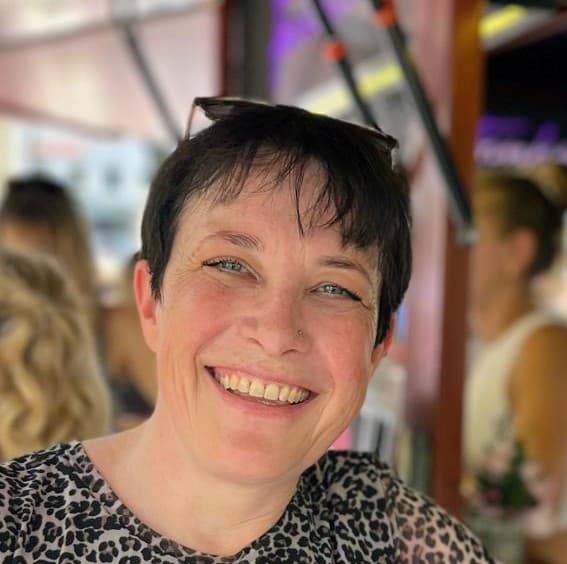
You're raising your voice publicly now, too, and you have a message…
Being public on Instagram brings me a lot of encouragement, and that does me an incredible amount of good. It also shows me how many kids, teens, and families are suffering. Bullying is a problem that must not be hushed up. What I'm doing feels right to me, and I'm sure it's in Lukas's spirit. He felt alone so often. At school there was nobody he could talk to.
Lukas had no suitable person to turn to at school. He couldn't and didn't want to open up there. In my immediate circle, I have no way to draw attention to bullying, responsibility, and suicide prevention. The school also responded with a no to proposals along those lines. The mentality here is still, that doesn't happen. Everyone has everything under control, and kids who talk about hurts and feelings are “just too sensitive.” That's why I'm taking this path, in the hope and with the intention of waking people up.
My account isn't about blind accusation. I want to draw attention to dangers, and every person I can get to think is valuable to me. I want to draw attention to the consequences of bullying and show kids and teens that they can always talk, and that we adults listen and have to be loud. That's the goal I've set for myself.
My account is meant to be a support for people bereaved by suicide, to educate about bullying and its effects, and also to lower the hesitation others often feel around the bereaved. If I can manage that, it would be a great treasure. I believe that if we who are affected take away other people's worry, the world gets a little bit better. I'm a completely normal woman, a mom, Lukas's mom. That's it!
You think bullying gets played down too often…
No child is born a bully. Parents, teachers, aunts, uncles, all of us have to look closely and pass on values. That starts with the smallest kids. It's not funny when the “little rascal” punches his way through daycare and the “sensitive one” is afraid of every single day there. Teachers and coaches are role models, not just instructors. Bullying is, sadly, played down far too often, and that can cost lives. I know that teachers are often under so much pressure themselves that they know what would be morally right but can't act on it, out of fear of repercussions.
That absolutely has to change through school reforms. Our kids are great! We're the ones who make them what they are. Not only our kids and teens have responsibility, but their parents too. Everyone has to be aware of that. We lay the foundation, we give them values to carry with them.
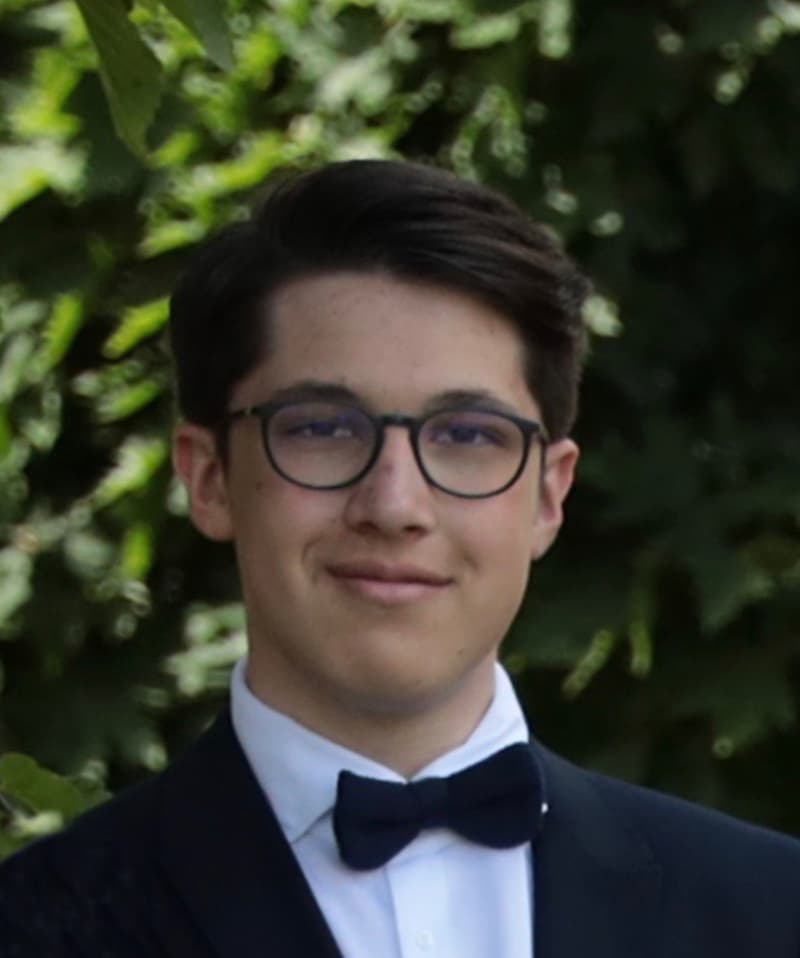
There is no THE bully, just as there is no THE typical bullying victim. Lukas was tall, slim, athletic, intelligent, strong in character, polite, good-looking. I never would have thought that a small group of teenagers could break my wonderful son's self-confidence within a few weeks. Nor that my son, who grew up full of love, would become mentally ill. And nor that my son would die by suicide. But that's exactly how it happened. And I'm giving everything I have so that it doesn't have to happen to so many more people.
This story first appeared in German on StadtLandMama.