
Keeping Kids Safe Without Scaring Them: Advice From a Cop and a Mom
Heads-up: This post contains affiliate links. If you buy something through them, we may earn a small commission at no extra cost to you. As an Amazon Associate, we earn from qualifying purchases.
A little girl didn't go into a store for help because she had no money to buy anything. What a cop and a mom of five want every child to know.
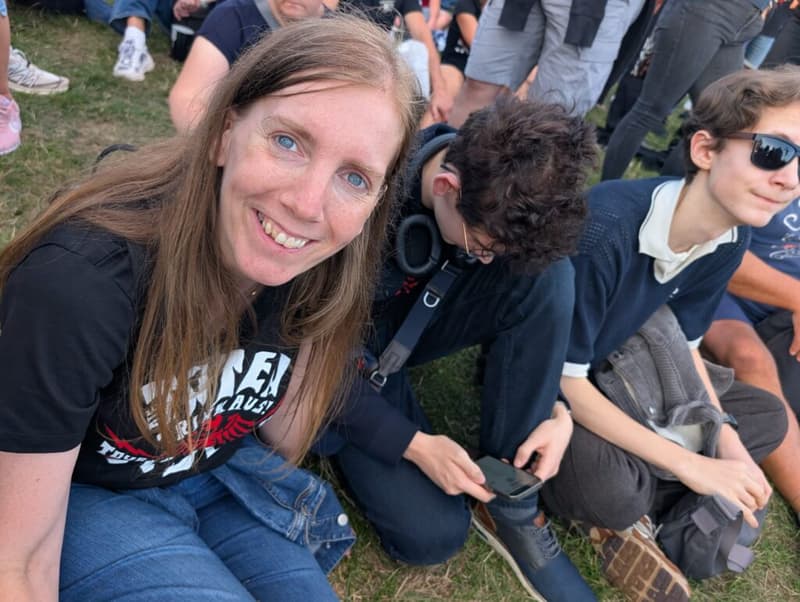
Friends, we all want our kids to grow up carefree and safe, and we often wonder how to make ourselves, and our kids, stronger along the way. In Laila Maria Witt and Jascha Wozniak, police expertise meets everyday family experience. Together they wrote a German-language book, “How to Make Yourself and Your Child Strong: Growing Up Carefree and Safe in Challenging Times,” which covers dealing with bullying as well as getting to school safely.
Laila is a mom of five and runs a widely watched family education channel on YouTube: approachable, grounded in education research, and practical for real life. Jascha spent 25 years with the Berlin police, including as an investigator in the Operational Group for Youth Violence and as a bodyguard with the state criminal investigation bureau. He founded Kleine Helden Deutschland (“Little Heroes Germany”), and through his violence prevention and anti-bullying trainings he has already worked with almost 60,000 kids in schools.
Let's start with the classic: How do I explain to my elementary schooler that she can't go anywhere with a stranger, without scaring her?
Laila Maria Witt: I think we parents are sometimes too afraid of scaring our kids. But fear isn't automatically a bad thing. We're not talking about horror scenarios. We're talking about healthy respect and necessary caution.
Once my child is old enough to be outside on her own, I also have to trust her to understand that not everyone has good intentions and that she must never go anywhere with a stranger. Jascha came up with a wonderful, simple formula for this: “Story plus car equals lie.” As soon as a stranger tries to lure a child to a car with any kind of story, the child knows: don't go.
You talk about growing up with emotional security and about prevention through self-confidence. What exactly do you mean?
Laila Maria Witt: It's really a simple chain of cause and effect: the stronger a child's basic trust, the more trust she can develop in herself. And the more confident a person is, the harder she is to target from the outside. A lot of that is in our hands as parents. In the first years, we reliably meet our child's needs and give her a sense of safety, and once she starts to pull away on her own, we trust her with more and more and allow her more and more.
Parents often do the exact opposite because of old beliefs. A baby is expected to sleep alone or regulate herself, even though her nervous system isn't ready for that yet. And later, when the child is ready to separate and become more independent, we hold her back because we worry something might happen to her.
That can shake a child's confidence in her own abilities: if little is expected of me, eventually I expect less of myself, and that very insecurity can show in how I come across to others.
It also takes a strong culture at home where mistakes are okay, and you argue for a right to talk back. Do you have a concrete situation for us?
Laila Maria Witt: Without even realizing it, we parents sometimes tend to impose our own will on our kids, and I explicitly don't mean situations where kids have to listen to us. Here's a very ordinary example: I bought a beautiful pink jacket for a lot of money, and of course I want my child to love it too.
If she says, “No, I don't like it,” that talking back is something healthy. My child learns: I'm allowed to have a different opinion, I'm allowed to say no, and my no gets heard. Because that's exactly what we want later on: for our child not to do something just because a friend, an adult, or anybody else demands it of her.
What dangers might our kids run into on the way to school, and how can they respond appropriately?

Laila Maria Witt: There's really no blanket answer, because every route to school is different. That's why we advise parents to walk the actual route once, on purpose, through their child's eyes. Where are the spots with poor visibility? Where are there few people around? Which situations could get tricky, and where can my child find help if she needs it?
It's much more important to talk through specific situations ahead of time and give your child simple strategies for what to do than to list every possible danger. That's also a big part of Jascha's training.
Jascha Wozniak (this also answers question 1): Unfortunately, on the way to school a child can also run into situations involving crime, for example if a stranger approaches her, tells her to come along, or even tries to lure her into a car. That's exactly why the classic advice, “Don't talk to strangers, don't go anywhere with anyone, and never get in anybody's car,” isn't enough. Kids need to know what to actually do if it really happens.
I developed a very clear basic rule for this: a child should never try to check whether the story an unfamiliar adult tells is true. A child can't and shouldn't have to figure out whether a stranger seems nice, whether his story sounds believable, or whether he really needs help. That's exactly where predators often try to appeal to the good manners kids have been taught.
They tell stories, ask for help, or create the feeling that the child has to be polite and obedient. A child doesn't have to be. No sensible adult puts a child in a situation where she's supposed to follow a strange adult or go along with him. So the child's job is not to solve the situation or figure out whether the stranger is telling the truth. The child's job is this: get away from that spot and toward other people.
My program has very simple formulas and exercises for this that kids can still recall under stress. One of them is the school formula “Story + car = lie.” It helps a child not even start wondering whether the story could be true. If a stranger tells a story and at the same time wants the child to come to his car or get in, the rule is: don't debate, don't think it over, just run.
Another element is the so-called “Little Heroes Cannonball” from my Kleine Helden (“Little Heroes”) training. Here the child learns not to let herself be pulled along, but to drop to the ground and fight back from there. The point is explicitly not to beat a predator. That would be a completely wrong expectation. The point is to put up a fight, gain a moment, and then run away.
Then there's the 7-second rule: while running, the child should make as much noise as she can, and in those crucial first seconds make sure other people notice and can help. I like to use this image: “When you scream loudly, the spotlights come on in the sky.” The predator is, figuratively speaking, standing in the spotlight, and other people can see and hear what's happening. Someone who stays quiet, on the other hand, makes it needlessly hard for helpers to even notice the situation.
Another important part of the training is learning the difference between good and bad helpers. Kids learn that a predator can use their good manners against them: “Be nice,” “Please help me,” “My cat ran away,” “Come on, I need to show you something.” The child should understand that it is not her job to help a strange adult. And she's allowed to be loud, rude, and relentless when it comes to her own safety.
But the responsibility must never rest on the child alone. Prevention starts before the very first day of school. Parents and kids should choose the safest route together, and that isn't automatically the shortest. It also makes sense to visit stores or other suitable safe spots along the route together and talk to the people who work there. The child should know: if I feel threatened, I can go in here and ask for help. That turns a vague “Be careful out there” into a concrete plan.
So our goal in the book is not to make kids afraid of strangers. We want to give them a sense of security through clear rules and practiced behavior. In a situation like this, a child doesn't have to be polite, doesn't have to argue, and doesn't have to figure out whether a strange adult is “really bad.” She only has to know one thing: I'm allowed to say no. I'm allowed to be loud. I'm allowed to fight back. And I'm allowed to run away.
And what if someone sits down next to our child on the bus or train and makes her uncomfortable? How can she react?

Jascha Wozniak: As kids get older and the trip to school gets longer, buses and trains become a normal part of everyday life for many of them. That changes how we prepare them, too: kids need to learn how to move around safely on public transportation and how to react the right way in uncomfortable or dicey situations.
Five things matter most to us: attention, visibility, orientation, a safe spot, and a Plan B. Kids should be able to take in their surroundings, so, for example, they shouldn't have both ears cut off from the outside world by headphones. At the stop, too, the rule is to stay alert, keep a distance from the road, and not push or shove.
Anyone traveling alone should try to find a regular “anchor spot” where she feels safe and can keep her bearings. On the bus, that might be a seat near the driver. And very important: a child should always know where she is and how she's getting to her destination.
That's why a Plan B is part of it, too: What do I do if the bus doesn't come, if I miss my stop, or if I have to get off unexpectedly? And finally, kids should know who they can turn to when something feels wrong. In a situation like that, the driver can be an important person to go to.
These are just a few of the basic principles. In the book we go into much more detail about how kids can behave on buses and trains, which situations they should walk through beforehand, both in their heads and in practice, and how parents can prepare them so they're safe and strong.
Because here, too, safety doesn't come from only telling kids everything that could happen. It comes from their knowing what they can do if something does happen.
You also give tips for sports clubs. What advice do you have for kids there?
Jascha Wozniak: Sports clubs in particular are important places for kids. They offer community, trust, and close relationships with coaches and other adults. That very closeness is why consistent child protection matters so much. This isn't about treating clubs with blanket suspicion. It's about creating structures that protect kids and, at the same time, protect coaches and clubs too.
That's why we're convinced every club should have binding, self-imposed child protection guidelines. They should include, for example, a clearly named child protection officer, a check of the enhanced police background certificate for anyone who works with kids (in Germany, an expanded police clearance), and unambiguous rules for dealing with closeness and boundaries. What matters is that child protection doesn't just exist on paper but is actually lived day to day in the club.
Another focus is the question: How do predators operate? In the book I describe a six-stage pattern and show typical methods. Just as important is how parents and those in charge should react when there's a suspicion. There's a lot you can get wrong here, which is exactly why it's important to act calmly and, as much as possible, in a legally sound way, and not rush to run your own investigation.
Parents also face a difficult question: How can I tell whether my child may have experienced sexual violence in her club? We address that as well and describe possible warning signs, without automatically treating any single behavior as proof of abuse.
And because predators' strategies often stay abstract, we've also enriched this chapter with real cases from the club setting. These examples show very vividly how predators build trust, push boundaries, and exploit structures. It has a certain true-crime feel, but above all an educational purpose: the cases are meant to help you recognize patterns and so become alert earlier.
Of course, we can only scratch the surface here. The book goes much deeper and connects concrete prevention with predator strategies, warning signs, and options for action for parents and clubs.
How do we teach our kids at least a reasonably safe way to navigate the digital world?
Laila Maria Witt: For me it comes down to two things. First, guidance and trust. My child should know: No matter what happens to me online or what mistake I've made, I can always come to my parents without being afraid of getting in trouble. And second, we have to strengthen life outside the digital world. Kids should experience that real relationships, real adventures, movement, boredom, and real life stay more important and more fulfilling than whatever happens on a screen.
With all that caution, what situations have still surprised you, with your own kids or in your work as a police officer?
Laila Maria Witt: After 20 years as a mom of five and more than ten years in family counseling, here's what I can say for sure: kids keep finding ways to surprise us. They think differently, react differently, and sometimes come up with solutions we adults never would have thought of. Opening yourself up again and again to their perspective and the way they think is a wonderful, sometimes challenging job, and I believe it also keeps us adults a little bit young and flexible.
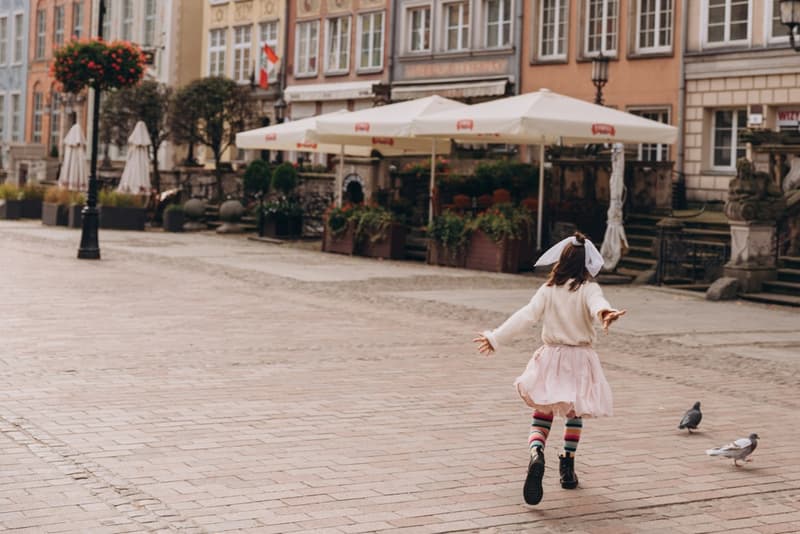
Jascha Wozniak: One experience from my time on the police force has stuck with me to this day. A child was approached on the way to school by a strange man who told her to come with him. She didn't want to and kept walking. But the man followed her. Only after about 165 yards did a mom step in who was walking to school with her own child. The stranger then fled. We were later able to track him down.
What surprised me most, and stayed with me, was the child's answer when I asked why she hadn't just gone into one of the many stores along the way to school to look for protection and help. Her answer: “But I didn't have any money. I thought I had to buy something, and otherwise the cashier would yell at me.”
That sentence showed me very clearly how differently kids see situations than adults do. To us, it's obvious that a child in that situation can walk into a store and ask for help. To this child, that option wasn't obvious at all, because she had learned: in a store, you buy something, and without money you probably can't just stay there.
These are exactly the kinds of thoughts we have to take into account in prevention. It's not enough to tell kids what to do in an emergency. We have to explain these situations to them ahead of time, practice them with them, and explicitly give them permission to break the rules when their safety is at stake.
That's why I say it on purpose: kids need inner permission! You don't have to buy anything in a dangerous situation. You're allowed to go into a store, ask for help loudly, and turn to an adult. That experience showed me, as a police officer and later in my work with kids in my Kleine Helden training, that there can be whole worlds between what adults take for granted and what a child actually thinks.
Police expertise meets family life: What do you most want to leave parents with in the end, to give them courage?
Laila Maria Witt: A strong family and a sense of safety don't come from one single moment. They come from growing together over time. And it doesn't matter where we are right now, whether we've already done a lot right or would do some things differently looking back. We can start fresh every day, building this connection and this sense of safety. It's never too late.
This story first appeared in German on StadtLandMama.