A Former Principal on Why Schools Are Working Against Kids
Heads-up: This post contains affiliate links. If you buy something through them, we may earn a small commission at no extra cost to you. As an Amazon Associate, we earn from qualifying purchases.
Kids are turning to chatbots for comfort because adults are too busy to listen. A former principal on what school has to become now.
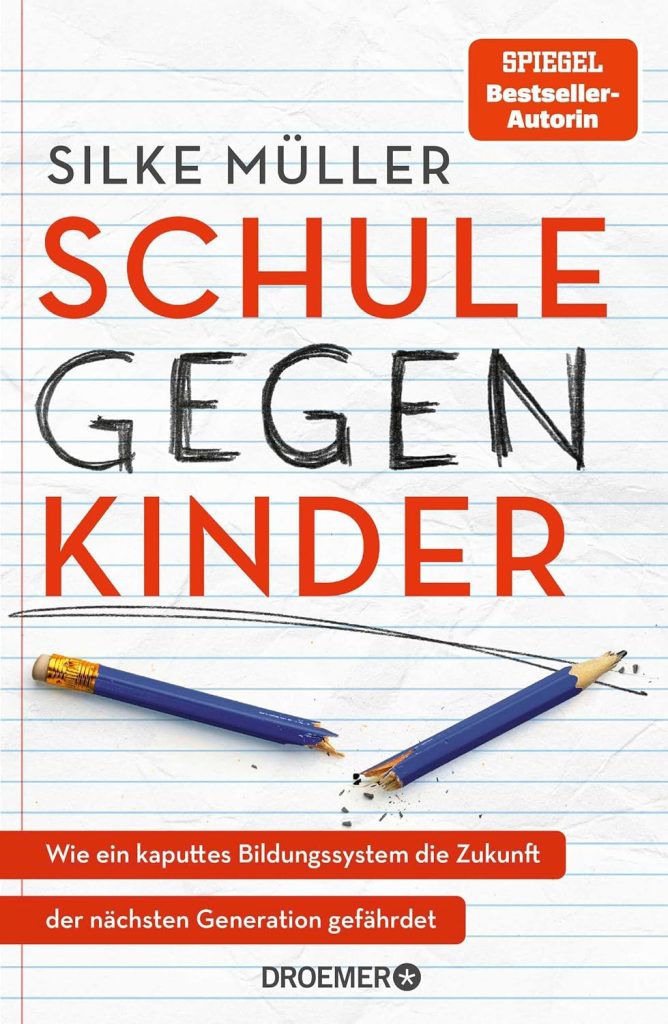
Hi friends, what has your experience with the school system been? Silke Müller, an expert and bestselling author, says Germany's system is standing at the edge of a cliff. She was a school principal for many years, and now she's written Schule gegen Kinder (School Against Children): How a Broken Education System Is Endangering the Next Generation's Future. Our School System Has Completely Collapsed, a book in which she takes on the current situation and lays out radical solutions.
She criticizes crumbling buildings, outdated curricula, unequal opportunities, overwhelmed kids, and burned-out teachers, and she talks about “learning conditions as if we were managing ruins.” She points out that the basic structures still date back to the 19th century: lecture-style teaching, 45-minute class periods, and an early “sorting system” (in Germany, kids are sorted into different types of secondary school at around age 10) that locks inequality in place. On top of that, education is run by each of Germany's 16 states, which means 16 parallel school systems, plus an investment backlog of almost 68 billion euros.
She goes so far as to say that school robs kids of their life chances… and she's calling for a radical rethink. Why? Because the current system is often far removed from the reality of students' lives, because it's unfair, and because the potential of digital infrastructure goes unused.
She wants nothing less than revolutionary teaching methods and visionary ideas for a reform that makes schools humane, fair, and future-proof. Right now, students are posting the worst reading scores ever on the international PISA test. Add to that the mental strain on students and teachers. According to Müller, for every teacher who retires on schedule, two to two and a half quit early out of frustration or burnout, which could leave Germany up to 200,000 teachers short by 2035.
How could this work, in her view? She calls for guaranteed basic funding for ten years, a self-managed block budget for each school, and a clear link between public money and quality goals. At the same time, she argues for a completely new understanding of learning. The rigid set of school subjects should be scrapped and replaced with interdisciplinary, project-based formats. Müller considers exams that only test factual knowledge outdated in the age of generative AI. Instead, she wants assignments where students thoughtfully show how they worked with AI and how they critically evaluated information.
Perhaps her most radical proposal concerns the political structure: education has to be taken out of politics. Müller calls for an education state treaty (a binding agreement among the 16 states), core skills that are mandatory nationwide, and a National Education Council with real decision-making power. And moving from one state to another should no longer become an educational risk. A system that connects across the whole country, she says, is essential.
Ms. Müller, in your book you argue that the school system clings to structures from the 19th century, structures we know harm kids' learning and mental health. How did that happen?
We hold on to them because they're convenient for administrators, not because they make sense educationally. The 45-minute class period was introduced in Prussia in 1911 to line school up with factory shifts, not with children's body clocks. And the fact that we still use the six-point grading scale that the Nazis standardized in 1938 for the purpose of selection is a scandal we push out of our minds. We cling to these grids because they create the illusion of comparability. But we have to decide: Do we want to manage children, or do we want to educate them? For me the answer is clear: We have to leave these structures behind and build new ones.
According to the 2024 IQB Education Trend (Germany's national student assessment), a third of ninth graders fall short of the minimum standards in math, and on PISA we've posted the worst results ever. You warn that we're squandering the only natural resource Germany has: smart minds.
Why isn't education at the top of the political agenda?
Because the truth hurts. We have phony debates so we don't have to admit that our education system is bankrupt. When a third of teenagers in ninth grade can't handle basic arithmetic, we're not talking about a small dip in the statistics. We're talking about young people who will later be unable to complete vocational training in the skilled trades or in industry. We're manufacturing educational poverty, and we can see it coming.
How did we get here?
The problem is homemade: We chase kids through overloaded curricula built around “binge-and-purge learning,” meaning cramming facts for a short time and then forgetting them, instead of fostering real understanding. We test regurgitation while the world out there demands problem-solving. If you can't make sense of word problems, you'll struggle later not just in math but with a lease or a party platform. That's not only an economic catastrophe for Germany as a place to do business, it's dynamite for our democracy.
We need to get back to the basics – reading, writing, arithmetic – but with modern methods that do right by every child, instead of squeezing everyone through the same eye of the needle. You argue for radically clearing out the set of school subjects and introducing “life” as a subject instead, with topics like understanding contracts, finances, or digital self-defense.
What do you say to critics who worry that classic knowledge and achievement will fall by the wayside?
I tell them: Look at reality. What good is it if a child can write a poetry analysis but is stumped by a lease or falls for fake news? In the 21st century, achievement is no longer defined by memorizing facts – machines do that better. Real achievement today means creativity, critical thinking, and collaboration. When we introduce “life” as a subject, we're not lowering the bar, we're raising it to a level that actually matters. We're giving kids the ability to act on their own future.
How have AI and social media changed everyday school life?
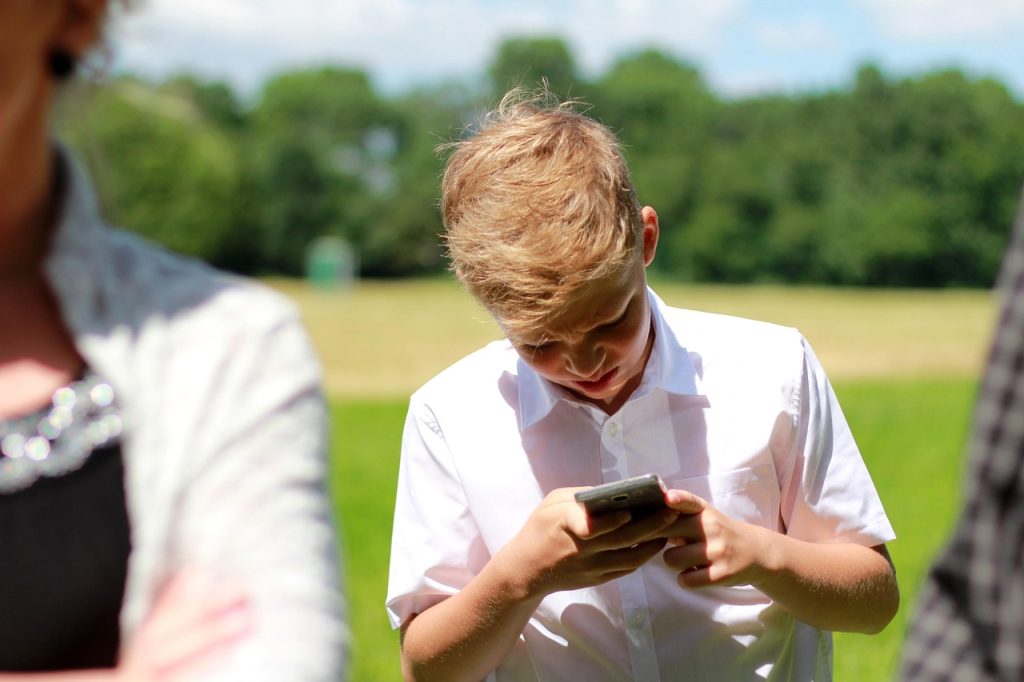
If we're honest, social media and artificial intelligence haven't just changed everyday school life – they've knocked out the old logic of school entirely. We're in a historic moment where everything is tipping. Teenagers spend more than 70 hours a week online. We feel the fallout of nonstop digital noise every single day in the
classroom: Conflicts don't end at the school gate, they get extended online and escalate through cyberbullying, which affects almost 20 percent of students. AI is even more drastic than social media. It fundamentally changes how we understand knowledge and truth. Kids long ago stopped using ChatGPT only for homework, which now gets done in seconds, so the classic homework system is dead. But what hurts me most: Kids are turning to chatbots for emotional support because we adults often don't have the time or energy to listen. We're driving children into digital loneliness.
What do you think this means in concrete terms for schools?
We need a radical new direction on three levels:
1. We have to make school a safe space again. Concretely, that means a smartphone ban during breaks is not a step backward, it's self-defense, so kids can play and talk to each other again instead of swiping side by side. Every school needs “social media office hours,” so kids have a place they trust to talk about what's disturbing them online.
2. We need real skills instead of one hour of media literacy. I'm calling for a set digital day every week, when coding, evaluating sources, and understanding AI are taught as a requirement. Kids have to learn how to write good prompts, check results critically, and use AI as a tool. And of course we have to change the testing culture. If an AI can write any essay, we have to stop grading the end product. We have to grade the process, strengthen oral exams, and use formats that require critical thinking.
3. AI can replace knowledge, but not heart. If machines can take over transmitting knowledge and routine tasks, school has to become the place where relationship-building, empathy, and education for democracy are front and center. In your “roadmap for a better school system,” you call for nothing less than the end of education federalism in its current form.
Do you think politicians are brave enough to hand over authority to a “National Education Council” to create continuity beyond election cycles?
Whether politicians have the courage, I don't know – but they really don't have a choice anymore. In its current form, our federalism is a “catalog of the absurd,” with around 180 different types of schools. No one can explain anymore why educational opportunities depend on your zip code. I'm calling for a National Education Council that sets binding standards and takes education out of politics, so reforms don't get scrapped again after every election cycle. We finally need consistency on the big questions.
This story first appeared in German on StadtLandMama.