No One Will Take My Son: A Mom's Two-Year Search for a Facility
Elijah is 18, needs round-the-clock care, and every facility says no. Stefanie shares what two years of rejections feels like.
Hi, friends. Stefanie's son Elijah has a rare genetic disorder and the highest level of care needs. For two years now, Stefanie has been looking for a suitable residential facility for him, and all she gets are rejections. This is a conversation about parents who are also full-time caregivers, staff shortages, and the constant worry about your own child.
Stefanie, you have a son with very high care needs and another son with Asperger's autism. Tell us a little about your kids.
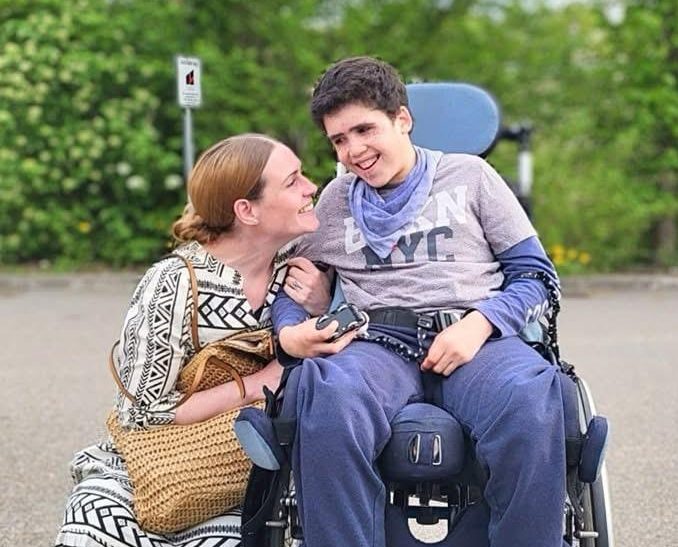
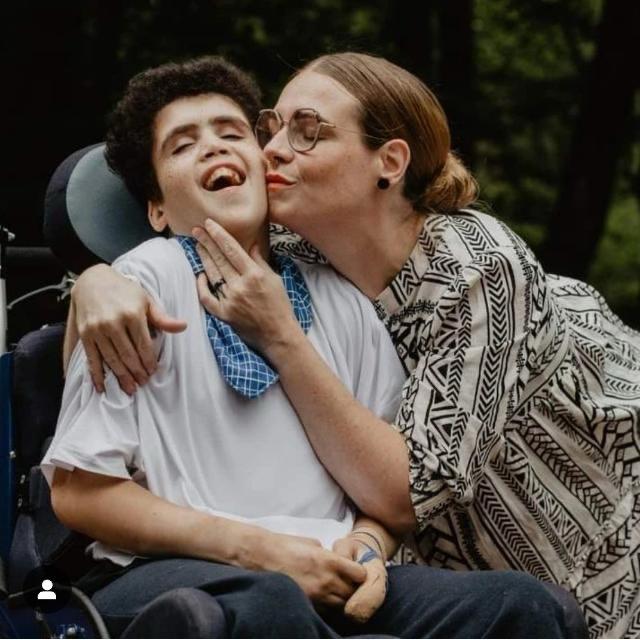
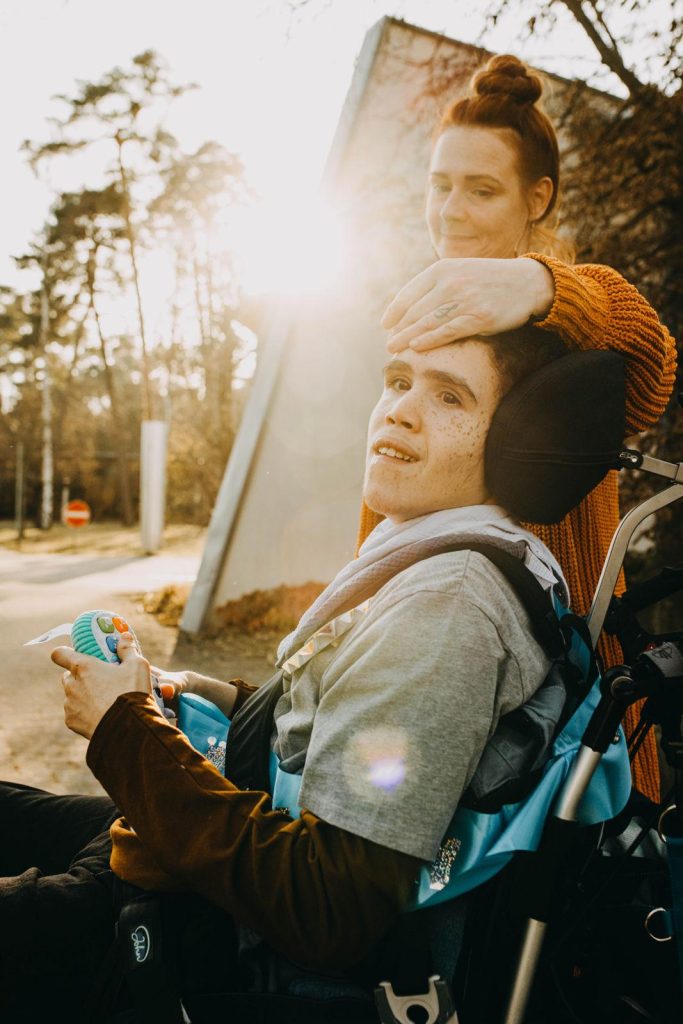
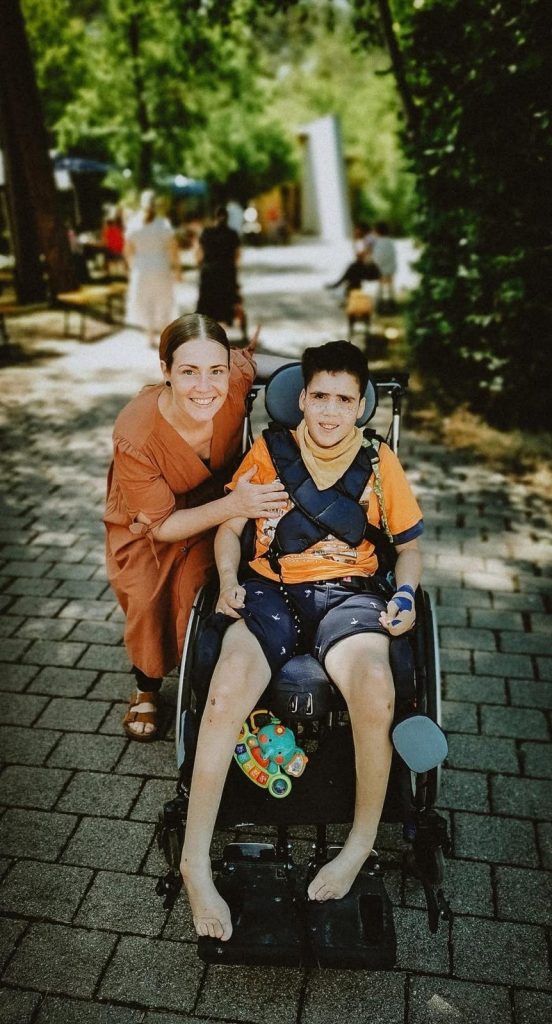
I'm 44 and I have four sons, ages 23, 22, 18, and almost 2. My oldest has Asperger's, and he's needed help again and again, especially in the school system. My 18-year-old, Elijah, has a rare genetic disorder called 1p36. (If you look it up online, you'll find this definition: a rare chromosomal abnormality characterized by pronounced facial dysmorphisms, hypotonia, developmental delay, intellectual disability, seizures, heart defects, speech disorders or a complete lack of speech, and prenatal growth deficiency.)
What does caring for your kids mean for your life?
Anyone who has cared for a child like this knows it's a 24/7 job. I took care of Elijah at home until he was seven, and it was extremely hard, both physically and mentally. A lot of that comes from his very challenging behavior and the complexity of his disability. He needs supervision around the clock because he's also self-injurious, meaning he hurts himself. On top of that, he's incontinent, he's fed through a feeding tube, he needs a lot of medication every day, and he has to be repositioned and moved…
When Elijah was little, I got a lot of medical equipment approved. Over the years, that equipment was increasingly treated like a “luxury,” and I had to fight for so much. The paperwork and organization that come with having a family member with a disability take enormous amounts of time, and it's nearly impossible to manage on top of the actual caregiving. It became clearer and clearer to me that sooner or later Elijah would have to move into a facility, simply because he needs more intensive care than I can give him. At some point I was completely exhausted, physically and mentally, and I still had three other kids to take care of.
So when he started school, Elijah moved into a facility…
Right. He moved into the group home attached to his school. The care there is wonderful, we've been very happy, and Elijah gets very good therapies. He had very kind caregivers who rarely rotated out, which to me is what makes a facility a good one. When parents place a child in a facility, people often try to make you feel guilty, along the lines of: Well, I could never give up my child.
It's so important to me to say that it's more than okay to get help and support. Some kids have such high care needs that you simply can't do it alone. And that's nothing to be ashamed of.
You were lucky with this facility, though you say things have changed there in recent years.
Yes, since the pandemic. You can just feel that the staff are burned out and overworked because of the demands that were put on them during the pandemic. You feel the staff shortage everywhere, even in places where things always ran ideally.
Now you're looking for a new facility. Why?
Elijah is 18 now, which makes him too old for children's and youth services. He has to move into adult care. I don't think that's ideal either, because often the residents are mostly older people, and Elijah really should be around people his own age. The change will be hard on him, too. He's been happy in his facility for so many years, and the people there are like family to all of us.
I knew it would be very hard to find a suitable place, so I've been searching for two years already. I'm just afraid he won't find a spot, because I can't bring him home. We don't have a modified vehicle that a wheelchair can roll into. Our house isn't wheelchair accessible, Elijah is too heavy and too tall for us to carry, and his care takes a huge amount of strength and time.
You keep getting turned down by facilities. What reasons do they give?
Elijah has the highest level of care needs there is. He needs supervision around the clock, he's incontinent, he has a PEG feeding tube, and he's self-injurious. He often screams loudly, can't judge danger, bangs his head on the floor, and bites himself. The facilities simply don't have enough staff to care for him. In adult care, there's often just one staff member for 14 residents, and that doesn't work. Now I only reach out about high-support groups, but even there it's the same: not enough staff, and the districts, which are the regional authorities that pay for this kind of care, keep cutting funding!
What does that do to you and your family?
It hits me very, very hard. What happens to my child if nobody can take him?
What would have to change right now to take some of the weight off you?
There would have to be more care staff, so that kids like Elijah can be looked after properly. In our district, there's a lot of cost-cutting, people who switch into the field from other careers aren't paid well enough, and everywhere you look, someone is desperately searching for staff. I've also toyed with the idea of supported living, to avoid residential care. But that's not easy either. The personal budget, a benefit that lets people with disabilities arrange their own support so they can take part in everyday life, could be cut soon too. The risk is too big, and it's incredibly hard to find personal assistants, because they're in demand everywhere…
What gives you the strength to get through your days?
My kids. We've gotten through so much so far, and I've always been able to accept my children just as they are. My oldest in particular has really come into his own in the last few years. Nobody believed he could do vocational training. Because of the system, there were no other options for him, so he had to work in a sheltered workshop for people with disabilities.
We fought every battle there was with the agency until he was allowed to do an apprenticeship. He finished with a 1.2 average (in Germany's grading system, where 1.0 is the best, that's nearly perfect), and now he's training to become an early childhood educator.
Over all these years, I've also met some really good people. They're like angels who get sent to you and give you so much strength. That's really important to me to say.
If money were no object, which wishes would you fulfill right away?
I'd probably rent or build a wheelchair-accessible home, get Elijah dolphin therapy, and book a vacation. And I'd buy a car the wheelchair fits into, so we could do things together.
What do you wish for Elijah?
First of all, a good place to live. How wonderful would it be to tour several facilities and then go with your gut about which one fits? But we don't have a choice. We just have to hope we get a spot somewhere.
The new facility will probably be far from our hometown, which means I'll see my child a lot less and, for example, won't be able to come along to every doctor's appointment anymore. That breaks my heart, but good care clearly comes first here.
If you'd like to learn more about Stefanie and her kids, you can follow her on Instagram here
This story first appeared in German on StadtLandMama.