
Can't Sit Still? 3 Simple Exercises to Help Your Kid Focus
Maja's pencil flew across the room again. What if focus isn't a willpower problem at all, but a few baby reflexes that never clocked out?
Hey, friends, how focused is your kid? At school, during homework? Do they sit down and power through, or are they easily distracted and fidgety? Most of us know how exhausting these standoffs are for kids and parents alike, when once again it comes down to: “Why can’t you just concentrate?” Claudia is a Montessori educator, an early childhood development expert, and a single mom of four sons, so she knows what she’s talking about. She’s put together some really simple exercises for us that can help if your child has trouble focusing.
Focused Instead of Fidgety: What Really Helps When Your Child Can’t Sit Still
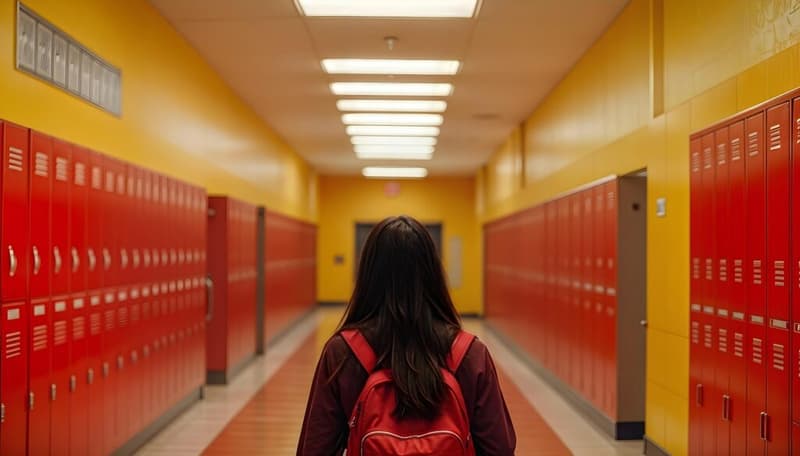
“But how is she supposed to do math if she just doesn’t listen during the explanations?” It’s the third time in two weeks that Maja’s mom has heard this sentence. The math teacher is on the phone. Again. Maja disrupted class badly, the teacher says. She squirmed around in her chair, made clicking noises, and hummed to herself during quiet work time. When the problems wouldn’t come out right, her pencil went flying across the classroom. Then she swept her notebook off the desk and burst into angry tears.
While Maja’s mom listens to the teacher, she looks over at the kitchen table. That’s where Maja is sitting now. Three math problems in front of her. Pencil in hand, a dreamy gaze out the window, one leg jiggling restlessly under the table. They had planned to go to the pool after homework. That’s probably not happening today.
Focus Isn’t a Willpower Problem
Maja feels punished: trouble at school in the morning, trouble at home in the afternoon, and no pool. Her mom is unhappy too. Her cheerful, curious daughter, the one who used to bounce out of bed in the morning with ants in her pants, ready to discover the world, seems to disappear a little more every day. In her place, fights over homework, bad moods, and calls from the teacher have moved into family life. Maja barely wants to go to school anymore. Her mom groans just thinking about the school years ahead.
By the time I meet Maja, she’s already been through a lot: extra support classes, math tutoring, weekly occupational therapy including focus training. Now learning therapy is supposed to be added on top. She tries to picture a cheese dome full of holes that she can sit under to concentrate better. Sometimes it works, often it doesn’t. Maja tells me about the noise in the classroom that makes her restless. And about how all that copying gives her headaches. Trying to concentrate with a headache? Even harder. I can see that.
First things first: it is not Maja’s fault that she has trouble concentrating. It comes down to something that Maja, her mom, and even her teachers don’t have on their radar: residual, still-active infant reflexes.
Little Fitness Trainers Who Didn’t Quite Finish the Job
Imagine you were born with a set of little “fitness trainers” included. In your first months of life, these trainers help you grow from a helpless baby into an upright, walking person. The technical term for them is infant reflexes.
They help your baby reach important milestones: rolling over, holding up the head, getting onto hands and knees, sitting, standing, and eventually walking. Infant reflexes start developing during pregnancy and are hugely important for early motor and neurological development. Every new movement helps the brain build more connections and mature.
By around the first birthday, these reflexes should have done their main work. They don’t disappear, but they move into the background. The fitness trainers see that the job is done. They hang up their towels and head back to the clubhouse. In technical terms, we say the reflex is integrated. Now the child can control movements on purpose: staying seated, holding a pencil, moving the eyes along a line of text, listening, planning, reacting.
If that doesn’t happen, the trainers keep jumping in. Every head movement triggers stretching or bending. Leaning back against the chair turns the hips. What the body does is then not up to the child. To become the boss of her own body, Maja needs support: reflex integration.
Three Exercises to Try at Home for Better Focus
These three are among my all-time favorites. They work right away, they’re fun, and they make focus improve almost immediately. There’s only one thing that matters: do them. Ideally before homework, or as a little movement break between different tasks.
Hook Up: The Instant Reset
When the Moro reflex is still active, a child walks around with an inner alarm going all day long. Hook-ups connect both halves of the brain, activate the parasympathetic nervous system, and help your child shift from an agitated or stressed state into a focused, calm mode. The exercise takes one to two minutes and works anywhere: before homework, before a test, to wind down after an argument, before falling asleep.
Here’s how it works:
- Stand up straight, arms and legs loosely extended.
- Cross your legs.
- Now cross your arms too, so that the arm on top is on the same side as the leg in front. Arm and leg of the same side are in front.
- Interlace your hands, turn them inward, and gently pull them toward your chest.
- If you like, close your eyes.
- Breathe in deeply through your nose (4 seconds), then slowly out through your mouth (7 seconds), supporting the exhale with a soft “ffff.” Repeat 11 times.
- Release the position and repeat the exercise on the other side, with the other arm and leg in front.
It sounds more complicated than it is. By the third time, your child will have the hang of it. Maja does a hook-up before every homework session, and her mom does it with her. Both of them benefit.
Lizard Crawl: Catching Up on the Crawling
This exercise recalls movement patterns from babyhood, long before crawling began. It brings head, trunk, arms, and legs into a coordinated back-and-forth and works on the STNR and the ATNR at the same time. These are the very reflexes that cost Maja so much energy when she has to sit still and write.
Here’s how it works:
- Your child lies flat on their belly, on a rug or a blanket.
- The head turns to the right, with the right cheek resting on the floor.
- On the right side, the arm and leg are stretched out long.
- On the left side, the arm and leg are bent. The left arm is bent at the elbow, with the left hand next to the head. The left knee is pulled up to the side, at about a right angle to the hip.
- Then switch: the head turns to the left, with the left cheek on the floor. The left side stretches out long, and the right side bends.
- Repeat 6 times, 7 seconds each.
The Lizard Crawl links head movement with the rest of the body in a clear, calm pattern. That’s exactly what isn’t running smoothly for Maja yet. It’s especially helpful in the morning, when getting started is hard. Maja likes to do it right after she gets up, still in her pajamas, on the rug next to her bed.
Snow Angels on the Living Room Rug
The spinal Galant reflex likes this exercise. It works right where things get so restless for Maja during math class: the spine and the hips. With every movement, the floor gives the back gentle input, and the reflex gets a chance to let go, little by little.
Here’s how it works:
- Your child lies on their back, on a rug or a blanket.
- Legs are together, arms resting close to the body.
- Now your child opens arms and legs at the same time. The arms glide along the floor up toward the ears, and the legs spread apart. As far as is comfortable.
- Then back to the starting position, both at once.
- Seven slow repetitions.
Important: arms and legs stay on the floor. It’s a push, not a lift. And speed isn’t the goal here. Fast is exercise. Slow is reflex work.
And One More Little Learning Coach Tip
In reflex integration, we like to work with music. Not just any music, but calm, steady music in the so-called alpha wave range, often layered with binaural beats. Many kids find that it helps them get into focus faster and stay with a task longer. You can find a few playlists on Spotify, or our Awesome training music on our website.
I also gave Maja an extra focus hack that has already helped her a lot more than once: the three-finger anchor.
Here’s how it works: when Maja does her homework at home, the focus music plays in the background. As soon as she sits down at the table, she gently presses the tips of her thumb, index finger, and middle finger together on her non-writing hand. Her brain learns: when the music is on, I can learn really well. And: when my three fingertips touch, I’m in that optimal learning state.
Then when Maja is sitting in math class and “activates the three-finger anchor,” her brain shifts into that relaxed, optimal learning state even without music. That way she can recall what she practiced at home more easily at school, and she’s also able to concentrate in a more targeted way in math.
About the author: Claudia Hannemann is a reflex integration trainer, a mom of four boys, and the founder of two daycares and an elementary school. She spent many years leading bullying prevention courses, and today she trains educators in reflex integration at the Awesome Academy, which she founded. In the freely accessible Reflexopedia, professionals and parents can find well-founded information about infant reflexes and their effects on behavior, learning, and development.

This story first appeared in German on StadtLandMama.