He Quit Tech to Make Adventure Open to Everyone
He had the title and the paycheck, but felt empty. Then Frank swapped software for climbing walls, and a boy afraid of heights said, 'Up!'
Friends, I'm sure every one of us has wondered at some point about starting over in a totally different career. But the jitters and the worry about financial security usually win out, and we stay in the job we know. Frank (41) had felt empty inside for years, and last May he actually turned his entire working life upside down. It was a brave decision for the sake of more inclusion, and as he tells us, it has paid off in every way.
Dear Frank, last year you started over completely in a new career. Tell us about it!
I spent more than 20 years in IT, most recently as a senior manager at an international software company. Good pay, lots of travel, long days. Basically everything people picture when they think "career." And still, I was exhausted. Always online, always available, but empty inside.
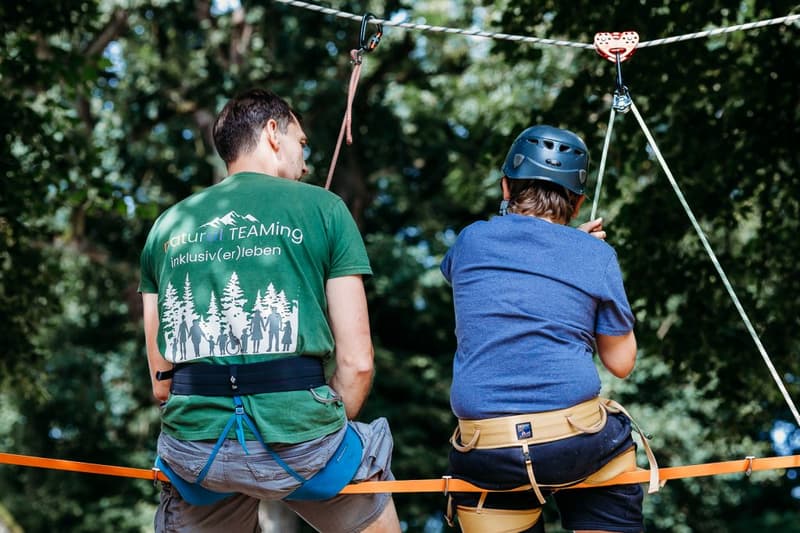
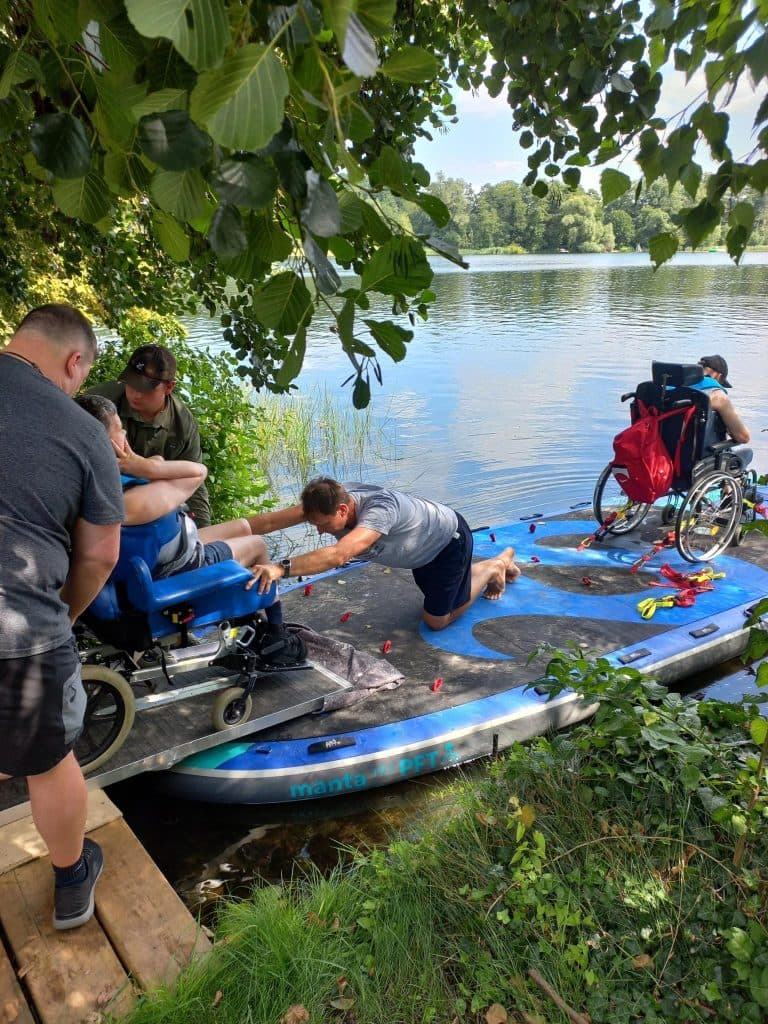
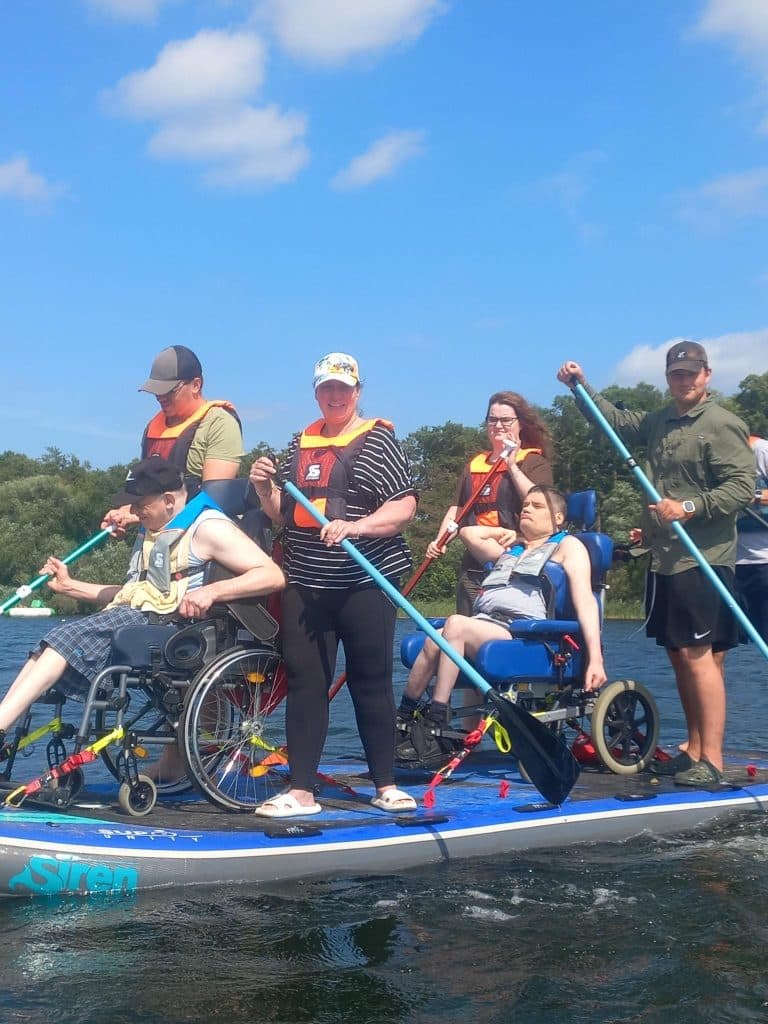
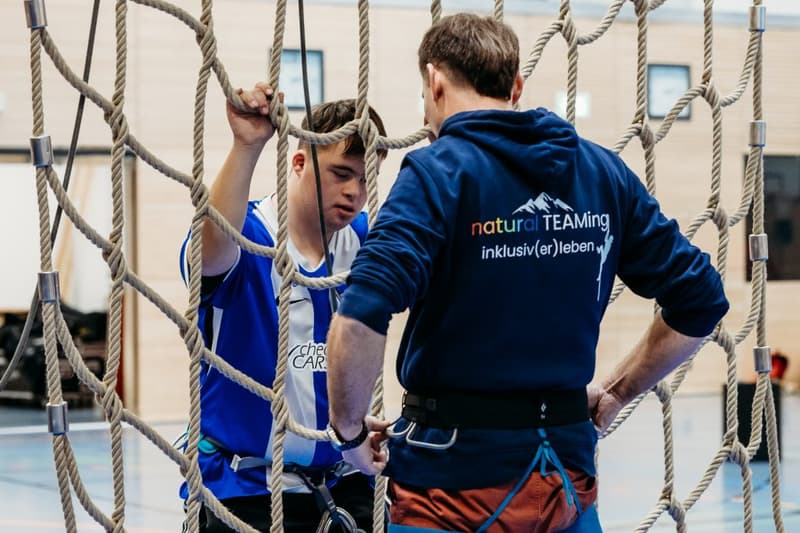
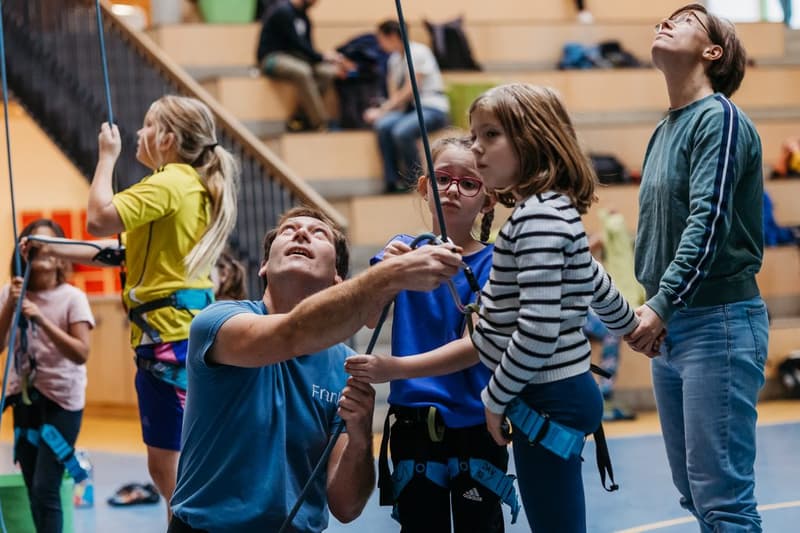
Today I'm an adventure educator who specializes in inclusion. Through my nonprofit, inklusiv(er)leben, I offer climbing and stand-up paddleboarding programs for people with and without disabilities. I also work with school classes, youth groups, and teams on adventure days that aren't about performance. They're about being together.
Giving up such a well-paid job can't have been easy. Was there one moment when you realized, I can't do this anymore?
There wasn't a single moment. It was more like lots of little ones. I was constantly stressed and felt like I had no say over my own life. Even my family got the brunt of it. At some point my wife, Sandra, asked me, "Why do you keep switching jobs every couple of years?"
We made a list: What am I good at? What do I love? What drains my energy? And suddenly it was crystal clear. I wanted to work with people. I wanted to be outside in nature. I wanted to see that what I do makes a difference. So I started training as an adventure educator, and later a distance-learning program in inclusive education, and I knew: This is my path.
How did the people around you react at the time?
Pretty mixed. Some thought I was crazy to throw away a secure job. Others admired me. My biggest support came from my wife and our kids. Sandra always said, "We'll get through this together." Without her, I never would have dared.
How did you come up with the idea for inklusiv(er)leben?
I've been climbing for as long as I can remember. It's my balance, my adventure, my place of calm.
After a motorcycle accident, I was seriously limited for a while. That period showed me how fragile the things we take for granted can be, and how much freedom movement gives you.
Later, I helped out with an inclusive climbing project run by the German Alpine Club (DAV) in Berlin, and I saw how much joy and confidence grows when barriers come down. People who had always assumed climbing was "not for them" were up on the wall, suddenly beaming with pride.
I wanted more of that. More opportunities, more participation, more real connection.
So I founded inklusiv(er)leben to show that adventure is for everyone, no matter what physical or cognitive abilities a person brings with them.
How have you changed, and how has your life changed, since starting your new job?
I'm calmer, happier, more present. I work a lot, but it means something. And my family and friends can feel it. Of course, we earn less now and have to think harder about what we can and can't afford. But in return, I feel like I'm really living instead of just functioning.
How would you describe the state of inclusion in Germany overall? What urgently needs to change?
There are great initiatives, especially in Berlin and Brandenburg. But real inclusion, meaning equal participation, is still a long way off. In Germany, kids with disabilities often go to separate special-education schools, and adults end up in sheltered workshops instead of the regular job market. Those are two separate worlds, and that's exactly what you see in free time, too.
I hope we learn to grow together. I want kids like my daughter (who is autistic) or my cousin (who has Down syndrome) to simply belong, with no special permission and no special role. I want no child standing on the sidelines, whether in sports or in life. And I want inclusion to stop being seen as an "extra" and to be seen as completely normal.
Is there an experience from this past year that touched you especially deeply?
Oh, so many! But three moments will stay with me forever. At our first big inclusive event day at the DAV climbing center in Berlin, we had 120 participants, many with physical or cognitive disabilities, and 30 volunteers. That energy, that sense of togetherness was unbelievable.
Then there was a boy in an after-school climbing club. When I met him, he was a nonspeaking autistic boy who was afraid of heights. One day he got off the bus, looked at me, and said, "Frank! Up!"
That day he climbed the full 59 feet (18 meters). I had tears in my eyes.
And a woman in a wheelchair who only wanted to watch at first on a paddleboard tour. By the end, she was paddling across the lake, laughing, and she said, "I never thought I could do this." Moments like that make me feel I've done everything right.
This story first appeared in German on StadtLandMama.