
When Your Child's Silence Isn't Shyness: Life With Selective Mutism
Her daughter was a little entertainer at home and silent at preschool. This mom shares what selective mutism looks like at 4 and at 15.
Friends, how often do we only see what's on the surface? A child who doesn't talk in public is quickly written off as stubborn or shy. But sometimes something else is going on: selective mutism. It isn't a child choosing to hold back. It's much more of a block. The child would love to speak but can't. One of our readers shares some valuable insight.
Dear friend, your 15-year-old daughter was diagnosed with selective mutism. When did you first sense that your child might be different from the other kids?
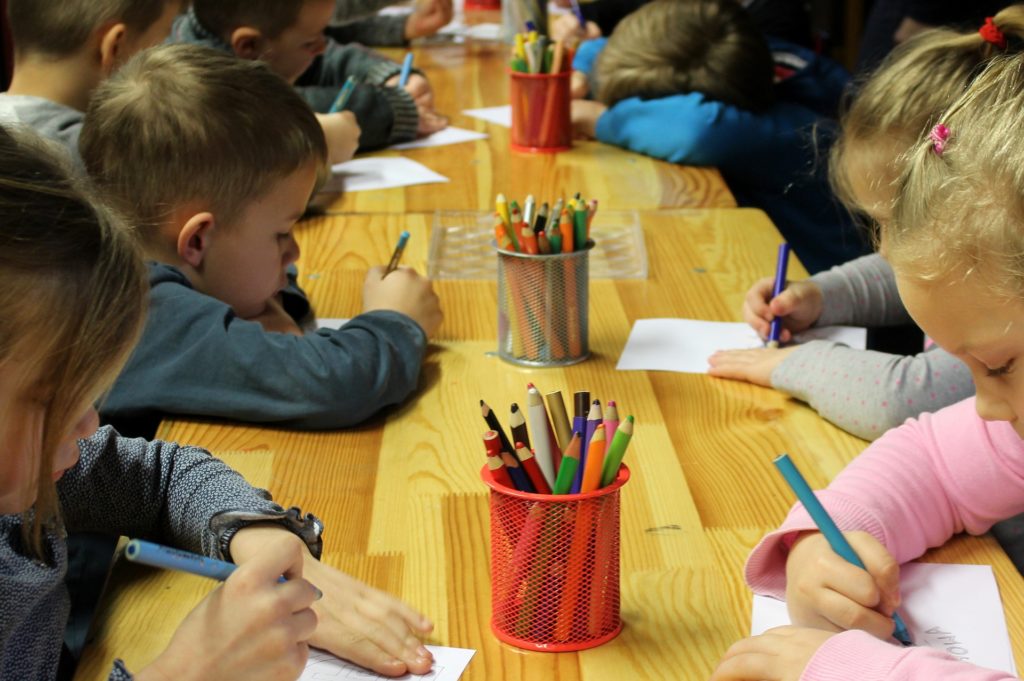
Our daughter was diagnosed with selective mutism at around age four and a half. Her preschool teachers were the ones who told us she wasn't speaking to them at all. That really surprised us, because at home she was anything but quiet. She was more of a little entertainer.
Talking with her friends at preschool wasn't a problem either. As a little girl, she was actually bolder and more outgoing than our older daughter, who has always been very reserved and shy but doesn't have selective mutism.
How long did it take to get a diagnosis, and was it a relief when you did?
After the conversation with her preschool, I started by reading up online, and that's where I first came across the term "selective mutism." The descriptions fit our daughter well. Not long after, she was officially diagnosed, and we were able to start therapy fairly quickly with a speech-language therapist who specializes in this area.
At first, the diagnosis wasn't a relief, because unfortunately hardly anyone has heard of this condition, and you end up having to explain yourself in so many situations. You often run into very little understanding, because the silence gets misread as extreme shyness, or as plain stubbornness, rudeness, or refusing to talk.
Still, the diagnosis was a good thing in that we could start therapy early. As a general rule: the earlier you begin therapy, the better the chances of overcoming selective mutism.
Some people with selective mutism describe a kind of freezing up in overwhelming situations. They answer questions like "Which sauce do you want on your pasta?" with "Whatever," or they struggle to start conversations (saying hello, goodbye, and so on). How does selective mutism show up for your daughter?
That so-called "freezing" never really happened with our daughter, at least not in that form. She's also made great progress over the past few years. By now she can answer questions in most situations, though often only briefly.
What's still really hard for her is making decisions, especially with open-ended questions where there are no answer options to choose from. She's always very unsure what kind of answer the other person is expecting.
That's why closed questions or multiple-choice questions are much easier. Instead of "Which sauce do you want on your pasta?" I'd ask, "Would you like tomato sauce or spinach sauce on your pasta?" Although I already know my daughter doesn't like spinach 😉
For kids with selective mutism, polite phrases like hello and goodbye, and even words like "please" and "thank you," come with high expectations and a lot of pressure to speak. That means more stress and enormous inner tension, which often makes speaking impossible.
That was true for our daughter for a long time, but it's gotten better in most situations. Starting and keeping up a conversation, and the typical small talk, were and still are very hard for her, because for years she couldn't practice them at all, so she's missing important social experience.
Selective mutism usually starts in childhood. Were you able to figure out what might have triggered it for your daughter?
With selective mutism there's very often a genetic component, such as an inhibited temperament or strong shyness, and that really does run in our family.
I was a very reserved, quiet kid myself outside of my family and close friends. The same goes for our older daughter. So there doesn't necessarily have to be a "trigger" in the sense of some traumatic event. More often it's the development of unhelpful behaviors (partly shaped by genetics) that get stronger and more entrenched because of things that keep them going.
One example is avoiding situations that seem difficult. Another is speaking for the child, which I honestly had to work very hard to unlearn.
Selective mutism is known for the fact that people can talk to some individuals but not to others. It's not a lack of willingness. It's more like a block. Who does your daughter talk to?

The willingness was always there. Our daughter often said she wished she could talk to everyone and in every situation. For a long time she only spoke with family members and her closest friends.
At the start of the pandemic, when she was just under 9, she had a major setback, and not only in her ability to communicate. Her overall mental health suffered too.
Besides the lack of social contact, the biggest factor was the sudden loss of the sports she loved. For a while she only spoke with us, her parents, and her sister, and no longer with friends or her grandparents.
During that time she was very withdrawn and had no energy. She seemed very unhappy and even showed signs of depression. After careful consideration, we finally decided to help her out of that dark place with an anti-anxiety medication and psychotherapy alongside it.
A few weeks later, she suddenly started talking to her grandparents again and even began greeting strangers on the street. The real breakthrough came shortly after that, with a four-week inpatient rehab program at a specialized clinic, where she took part in a range of individual and group therapies.
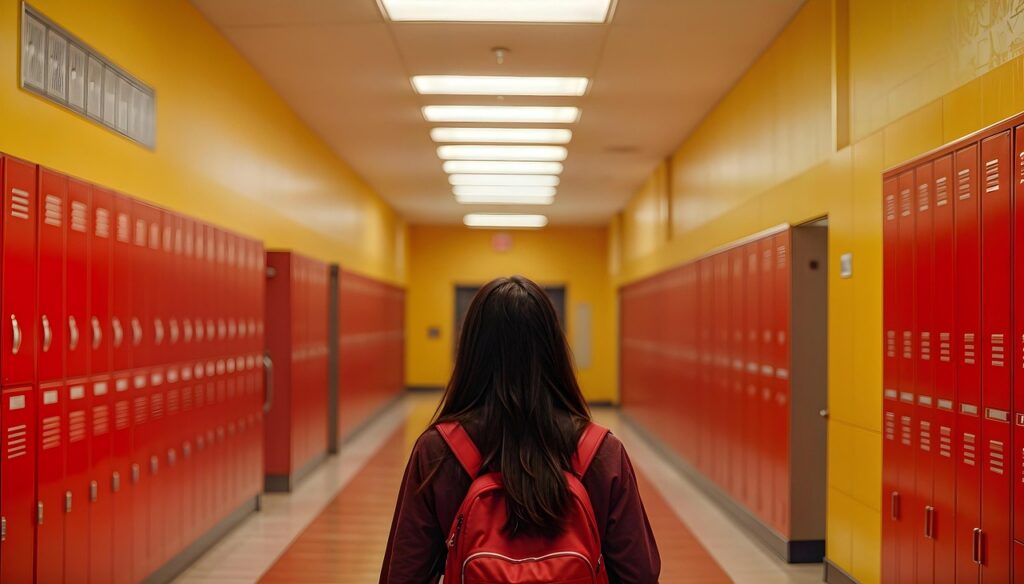
How does it go for your daughter at school? Do you talk openly with her teachers? Does she have a circle of friends?
School has always been a very difficult place for our daughter. We were open and upfront with her teachers about the diagnosis and the difficulties that come with it, and so far we've gotten a lot of support.
Toward the end of elementary school, she was able to talk a little with her homeroom teacher, but only with phrases she'd practiced beforehand, and never in front of the whole class. In middle school, after the four-week rehab, she actually made good progress and even managed to say something in front of the class a few times.
Over the past two years, though, school has become much more stressful for her again, probably because she's entering puberty, and speaking at school just stopped working altogether.
Our daughter's biggest worry has always been how other people would react to her speaking: "It's weird if I suddenly start talking." She did not want to stand out or be the center of attention, no matter what. She also felt that her voice sounded "weird."
In general, with selective mutism, certain places, situations, or people often become tied to the silence. To break out of it, sometimes the only thing that helps is a complete fresh start in a place with no history. She chose that for her sports club and now for school too.
Recently, she switched to a different school at her own request, because things at her old school were completely stuck and she saw no chance of finding her voice there again.
So far, she's handled the fresh start at her new school well. From day one she's been able to talk with her classmates and with her teachers. When asked, she can say something in front of the class. It's only raising her hand on her own that's still very, very hard. But she simply hasn't had any chance to build up that kind of routine in recent years.
Right now, unfortunately, she doesn't have a circle of friends. She knows kids from her soccer club, but she doesn't see them outside of practice. Not having had any speaking routine for the past few years, and the insecurity that comes with that, definitely shows when it comes to connecting with kids her age.
How do you feel as a mom about your child being so silent, and maybe missing out because of it?

It's hard to watch when your own child can't do what she wants to do, and as a result misses out on so many opportunities and good experiences. Of course you want your child to be happy and reach her full potential, not be stuck behind a wall of silence.
Especially when they're young, you automatically take over a lot of things, and often the talking too. But that also means she misses out on important chances to experience her own ability to make things happen. I had to learn over the years that I need to hand responsibility back to my daughter and not take care of everything for her.
You mentioned therapies a moment ago. What kind of help does your daughter get?
She did several years of speech therapy (with a specialist in mutism) and was also in psychotherapy for a few years. The children's rehab program was definitely very helpful, for me as a mom too.
As the accompanying parent, you were thoroughly trained there in how to handle the condition, and you got helpful tips on how to support your child on the way to speaking.
When our daughter was younger, reward charts turned out to be very effective, because they made her more willing to take on new challenges. We worked up to those in very small steps, in consultation with her therapist.
When the wish to speak gets bigger than the fear, and small successes build more and more courage, small but steady progress is possible. But the road is also paved with setbacks, so it's very important to keep giving your child confidence and trust.
She's not in therapy right now, but we're still in touch with her former speech therapist.
Setting the diagnosis aside: what kind of person is your daughter?
At home she's very funny, and given her difficulties communicating, surprisingly quick-witted and good with words. She's always made us laugh and amazed us.
Beyond that, she's very athletically talented and plays competitive soccer. Movement has always been an important way for her to express herself, and in many situations it's given her a bit more ease and confidence.
It's just wonderful to watch her blossom there. Through sports, she's been able to build self-confidence, mental strength, and perseverance despite her difficulties communicating.
She's someone who doesn't always take the easy path but looks for challenges so she can keep growing. So we absolutely believe she'll soon find speaking even easier, and that she can make her big dream come true of succeeding as a professional soccer player.
This story first appeared in German on StadtLandMama.