"It's a Miracle We Survived": A Mom After the Splash Pad Shooting
Eight bullets, a son who lost his sight, and a mom who kept both boys alive. Johanna on the worst day of her life and the love that followed.
Dear readers, when Johanna suddenly popped up in my Instagram feed, I had to message her right away and ask if she'd be willing to tell us more about how a shooting at a splash pad in Michigan on Saturday, June 15, 2024, changed her life and her family's life forever. She had been working there as a teacher at the German school.
At this point, and at the family's own request, we want to give a trigger warning. Johanna and her family got caught in a shooting, and she was wounded. Ten people were hurt, including Johanna and her sons, who were 4 and 8 at the time. Please only read this piece if you feel able to, or if someone you love is with you. CNN reported shortly after the shooting:
“At least two of the victims are children, authorities said. One of the victims, an 8-year-old boy, sustained a gunshot wound to the head and is in critical condition, Bouchard said. A 4-year-old had a wound to the thigh and is in stable condition, he said. Their 39-year-old mother with wounds to the abdomen and leg was also in critical condition.”
Dear Johanna, you, or rather the four of you as a family, went through something that split your life into a before and an after. What was your life like BEFORE?
Our life before: I met my kids' father in 2010. He's American, I'm German. Since my university sent me to the US as part of my PhD, we lived there together for a while. After that, he lived in Germany with me for 8 years.
That's when our sons were born, in 2016 and 2020. He was so homesick that we moved back to the US at the end of 2020. We lived in Rochester Hills, Michigan, one of the safest and best places to live in the whole state. I settled into my new life quickly, even though it wasn't always easy at first. Still, I found my footing.
I was part of both the American and the German community there, and the boys and I had lots of social connections. We lived in a typical single-family house, very suburban. To me it looked like the American TV shows you watch as a teenager.
Everyone around us knew us, because I was out in the neighborhood with the boys every single day. In the afternoons, the neighbor kids would get off the school bus and come over to jump on our trampoline for a while. Or my boys would go swim in the neighbors' pool.
We spent a lot of time outdoors, in the woods, at the lake, on playgrounds. In 2023, the boys' father and I separated, on good terms all in all, and we kept living together and were a good team for our sons. I worked as a teacher at the local German school, which I really enjoyed.
And how are you doing today, in your after?
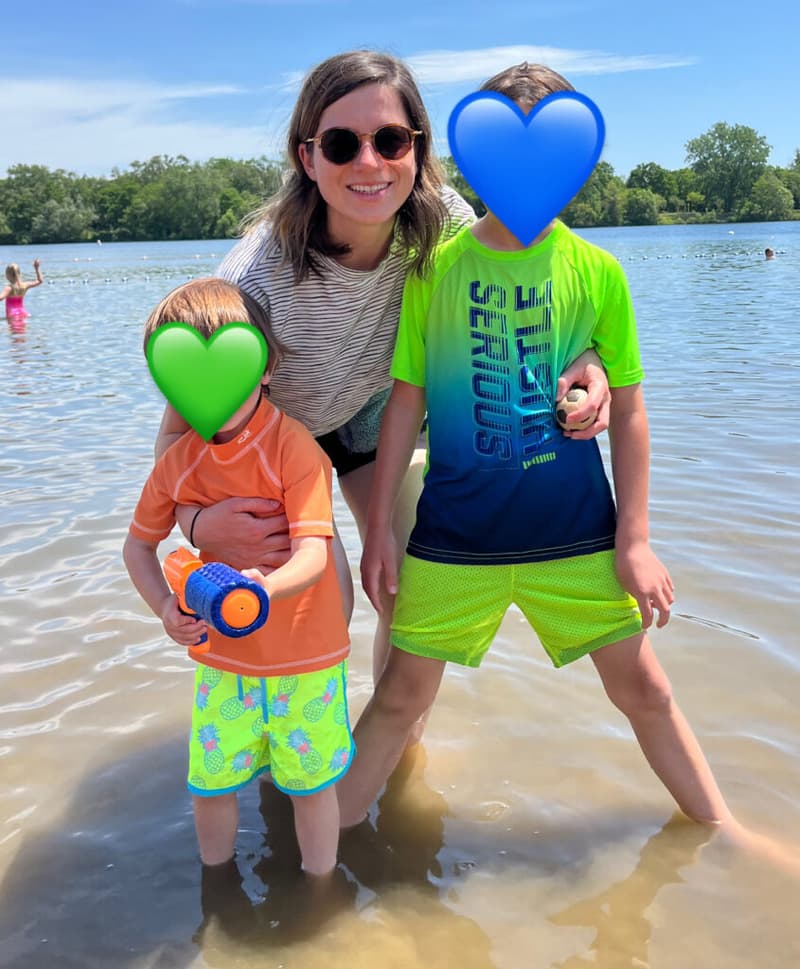
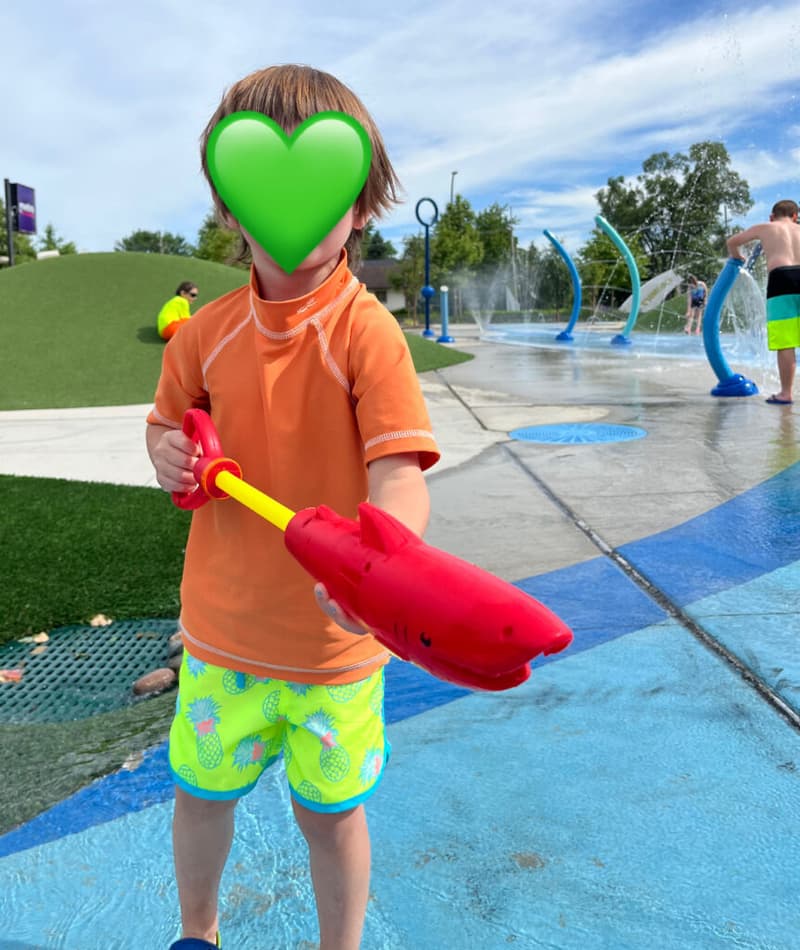
Today the three of us live in northern Germany, right in the middle of my family. My sister lives next door, and my mom is about 10 minutes away. Both are very involved in our lives, which is an incredible help. The boys' father came along too, and he lives about 15 minutes away. The boys see him very often. They're settled in at school and daycare.
The doctors there called us walking miracles, because most of the bullets missed the major arteries and organs. My younger son and I have no physical complaints. My older son, Janek, is now blind as a result of the shooting. But he's cognitively sharp and totally himself.
Local organizations for the blind have given us a lot of support, and we've met wonderful people through them. Physically, we're doing very well. Our oldest's blindness is the only limitation we're left with. Psychologically, I'd call us stable, although the trauma is of course still a topic, and both kids are still in therapy.
Can you tell us what happened on the day everything changed?
TW: For anyone who finds this hard, from here on there are explicit details about the day of the attack.
June 15, 2024, started out as a totally normal Saturday. We got up and played in the yard because the weather was so nice. The ice cream truck came around and the boys got ice cream. We ran a few errands, and the boys picked out some new clothes.
Since the next day was Father's Day, we had gathered up all the gifts for the boys' father and planned to wrap them after dinner. Shortly before dinner, we wanted to head out for a little walk, the way we so often did.
I asked my boys if they'd rather go to the splash pad or the other direction, to a different playground. They both said, “Splash pad!” and off we went. That was around 4:30 p.m. local time. I pushed my little one in the stroller, and my big one rode his scooter next to us. After about a 10-minute walk, we got to the little splash pad in our subdivision.
The kids played in the water for a bit. I sat down at a table and watched them. I also texted back and forth with my best friend to plan something for the coming school year. After a little while, the boys got hungry and wanted snacks. They sat down with me, I unpacked the snacks, and we chatted.
What happened next took only a few seconds. All of a sudden, we heard shots from behind us. At first I thought of fireworks, but a split second later I felt myself being hit in my left lower leg. Then I knew immediately what was happening.
At that same moment, my older son turned his head toward the shots and started screaming because he saw the gunman. I jumped up right away and grabbed both of my boys. I had the little one on my left hip and the big one in my right arm.
I tried to run with both of them. In the process, I was hit by a total of 8 bullets, in my shoulder, back and abdomen, legs, and fingers, and my little son was hit by one bullet in his leg. We didn't get far. After a few steps we fell to the ground, because my legs were broken.
I saw my two children sitting next to me, one on my right, one on my left, stiff as boards and white in the face. I tried to get up again, but I couldn't. My legs gave out like jelly. The whole time, more shots, and I didn't know where they were aimed.
My thoughts and my eyes were only on my two boys. I knew right away that my little one would never be able to get up on his own. I had just one thought in my head: Maybe I can save my big one. I looked at him and yelled, “Janek, RUN!” He didn't react at all. He was completely frozen in shock. I screamed again: “JANEK!! RUN!!!” Then he turned onto his wrists and knees to get up.
What happened next?
In that moment, a bullet hit his right temple. If he hadn't moved, the shot would probably have gone into the back of his head and he would have died on the spot. My big boy fell to the ground and stayed there. My little one had seen everything, and I was holding him. We lay motionless on the ground and played dead. The shooter then kept walking and shot 7 more people. Then he fled.
I lay on the ground screaming, “Help! Help! I was shot!” Neighbors came running and gave first aid. One neighbor called the kids' father right away. Just a few minutes later, the first police officer was there and secured the scene. A few minutes after that, the ambulances arrived. It all happened incredibly fast.
The boys' father arrived at the same time as the ambulances, completely beside himself, of course. I was getting weaker and weaker and could barely talk anymore. The paramedics took us straight to a hospital very nearby. I was still able to answer questions about myself, my blood type, and so on, and I asked the doctors to put me under now, because the pain had become unbearable.
I heard them say, “Alright, we'll put you under now.” Then my surgeon called out to the other doctors that he needed two units of blood and two bags of fluids. I still had the thought, “This is going to suck, big time,” and after that, everything went black.
How do you remember the first hours and days afterward?
I can't remember the first few days, because I was in a medically induced coma for 3 days. It really was all black. When I woke up, I was still on a ventilator and couldn't move. I was also restrained. All I heard was the voice of my nurse, who explained that I now had to pass a test, breathing on my own, so they could take the tubes out.
Later I found out that I failed the test twice and they had to put me back into the coma. The third time I passed, and I do remember that consciously. Then they took me off the ventilator. I remember just finding it awful, those tubes in my throat and not being able to move.
I was incredibly thirsty. Little by little, I was allowed to drink something, and I managed to open my eyes. The first 2 days were absolute chaos. I slowly started to speak. They asked me whether I remembered anything. I remembered everything and just wanted to get to my kids.
What happened next at the hospital?
The boys' father was there right away, and the first thing he told me was that both of them were alive, thanks to me. Doctors and police officers were constantly coming and going, and at every hour of the day and night, someone was in my room. Because of the gunshot wounds, I could only move my right arm a little, nothing else.
I remember that I could hardly speak, I was so weak. That I asked the orthopedic team whether I'd ever be able to walk again. That so many doctors and nurses told me I was a hero, while I felt so weak, like a failure.
When the nurses tried to get me moving a little and sit me up slightly, I immediately passed out again. That first night, I couldn't close my eyes without being right back at the scene. I heard the shots, saw my children, heard the screams.
That night I also had a medical emergency. My pulse was so high that a team of about 10 doctors and nurses ran into my room with the crash cart. After a few days, I was at least stable enough to have visitors for a short time.
My sister and my mom, who had gotten on the next plane the very night of the shooting and didn't know the whole flight whether we were alive or not, came by briefly. My kids' father came by. My little son was able to see me for a moment.
I wanted to get to my big son, who was lying in the pediatric ICU, suddenly blind and without his mother. So I practiced and practiced until I finally made it into a wheelchair. According to my family, after they took him off the ventilator he was responsive, stable, and not crying. He was talking. When I came into his room for the first time, he completely broke down.
He cried so hard and just kept saying, “Mommy! Mommy! Mommy!!!” And then over and over: “Why can't I see?” That is my worst memory. There were many more days after that when I was wheeled over to him and he had emotional breakdowns. I sat with him, told him how much I loved him, sang to him. That calmed him down.
I was there for my little one as much as I could be, too, but it wasn't easy, because I was so injured myself and had many more procedures and surgeries ahead of me. The whole American family, lots of friends, my German family, everyone was there. The women in both families stepped in as stand-in moms when I couldn't.
The whole time, hundreds of people from the community gathered to pray for us. People prayed outside my older son's room day and night for a week. There was just so much going on at once: police officers questioning me, therapists being flown in from all over the country, so many tests and procedures, and always the question: Will my son be able to see again?
What were your biggest worries?
I didn't worry about myself at all. I knew I'd need time for all the broken bones and injuries to heal, but that I could be my old self again physically. I found out right away that my little son was okay, at least physically, and that he would “only” have to wear a cast on his right leg for 7 weeks.
But we didn't know how things stood with my big son, who was brought out of the coma at the same time as me, or a bit later. We didn't know what cognitive damage he had or whether he'd ever be able to see again. So my thoughts mostly circled around him.
When he started to talk, the doctors asked me how his German was and what cognitive impairments he had. I said everything was the same as before, except for his vision. He was very fragile emotionally, but cognitively just as sharp as before.
The doctors could hardly believe it, since the bullet had gone through his brain. But after several tests, they agreed with me. I heard many, many times that it's an absolute miracle that we both survived, and that he didn't suffer any cognitive impairment.
The blindness stayed, though. He went from 100% vision to 0% in one second. That's still insane to me, even though he's so strong and resilient and handles his fate so well.
When did it hit you: Wow, this isn't a movie, this is really happening to us, or really happened to us?
That whole first stretch felt half real and half like a movie. The days flew by, especially at the beginning, and at the same time felt incredibly long. It's honestly hard to explain. Your sense of time changes a lot after trauma.
But to be honest, I still sometimes wake up and think: “WHAT happened to us?? We were SHOT??? And my son is BLIND now? Excuse me?” So sometimes you still think: Where's the stop button, and how do I get back? By now, even those thoughts have become normal for me.
How did people around you react? You also gave a TV interview (watch it here)…
Everyone was completely beside themselves, both in the US and in Germany. We lived in a very good, safe place, so even the police said they never would have expected something like this to happen there. In Rochester Hills, all hell broke loose. A TV news helicopter circled over our subdivision for the first few days.
Reporters rang doorbells all through our neighborhood because they wanted to know who the family was that had almost died. Our neighbors all kept quiet. A huge outcry went through the whole community. For days, hundreds of friends and strangers gathered outside the hospital to pray for us. Vigils were held for us in different congregations, too.
We had a special team of police officers, therapists, and other crisis workers who were assigned just to our family and really didn't leave our side day or night. The boys' father was on the phone a lot with the sheriff and the mayor. President Biden's office called to wish us a speedy recovery.
An American family member set up a GoFundMe, and thousands of people donated. We got an endless number of letters and toys for the kids, the community left food on our doorstep every day, and on and on. In Germany and Austria, too, so many people prayed for us and donated, and we got so many packages from our friends in Germany.
It was just overwhelming how the community on both continents showed up for us. We were, and still are, completely moved by it. That's why, after a few weeks and on the advice of the police, we sat down with the TV network ABC for a first interview. We just wanted to say thank you, but we didn't personally know so many of the people who had been there for us. So the police organized the interview.
What did the psychological help look like?
Right after the shooting, several trauma therapists were made available to us and our family, including therapists who had already worked with victims of other mass shootings. A very well-known trauma therapist was also flown in from Arizona, mainly to work with the boys' father.
The crisis intervention team was also there for us and our families day and night. The therapists started working with us while we were still in the hospital, and they were there for us at any time after that. We had a few crisis emergencies where we called the therapists, sometimes in the middle of the night, and they were always there.
The trauma therapy included both EMDR and talk therapy. Personally, I worked with two therapists until a year after the shooting. One therapist also offered group therapy for all the moms who were wounded in the shooting.
The city also set up a resilience center that is still open today. Besides therapeutic help, they offer workshops, discussion groups, programs for kids, therapy with dogs, the chance to get together with police officers, and more. The center is open to the whole community, and the staff still check in regularly to ask how we're doing and whether they can help us with anything.
Do you feel anger? What about the other members of your family?
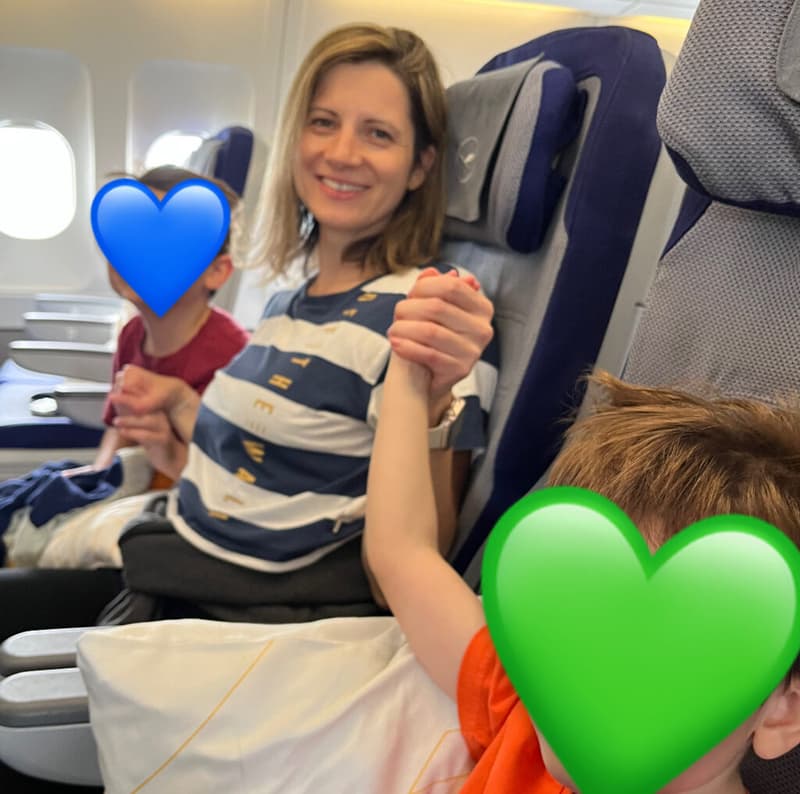
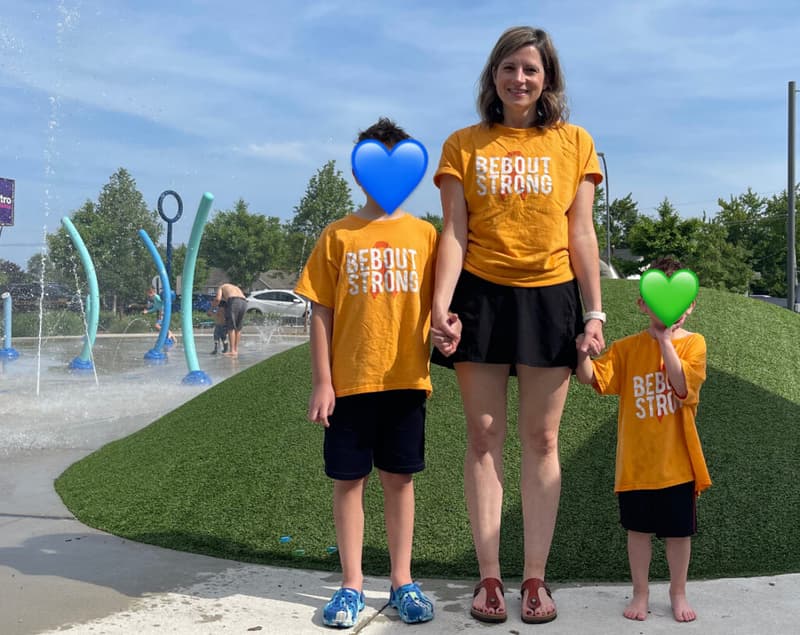
I feel anger very, very rarely. More often I feel sadness about what was done to my children, that someone wanted to kill us, and that my son is missing such an important sense because of it. That feels so unfair to me. There was a lot of anger among our family members, but mostly shock. People just couldn't grasp what had been done to us, and then came an incredible sadness and dismay among our family and friends.
At the same time, there was an endless amount of love, help, and compassion from every side. My big son was the first to forgive the shooter. That was about 3 months after it happened, and it came entirely from him. I was totally surprised, and he said it almost in passing. I told him that he doesn't have to forgive the shooter and that he can always change his mind. He answered, “No, I forgive him.” And that's how it has stayed.
He let it go completely. Because he could, I could let it go, too. It was a little ripple effect. My little one is still very sad that his big brother was shot and is now blind. He just can't understand the unfairness of it.
For me personally, since the shooting I've noticed that I can feel so many emotions at once: shock and grief, gratitude and joy. Often I feel all of it at the same time. At first that was totally confusing. By now I'm used to feeling such opposite emotions at once, and I allow it. My kids and I put it into words again and again.
We're very open about the whole thing, anyway. All feelings are okay and are allowed to be named, felt, and worked through, and of course I'm always there to guide my kids. We keep coming back to this: Two things can be true at the same time. We can be sad and/or angry, and it's so unfair that my big boy is blind now. And at the same time, we're happy that we didn't have a funeral, and we're allowed to feel joy and still love our lives.
Personally, I'm just endlessly grateful that we're all still alive, that my big son is still himself despite his blindness, and that we get to face all of life's highs and lows together. Grateful that we were rescued so quickly. That we received so much help and love, and still do. That we get to celebrate a second birthday.
Sometimes I'm even grateful when the kids scream and fight, because we came so close to everything being silent. There's still so much life and love in our home and in our lives, and you can only be grateful for that. And in the end, the thought keeps coming back: Yes, this was a life-changing experience that will stay with us forever, and the worst day you can imagine.
But this one event, this one person who wanted to kill us, will NEVER define our lives. In our lives, evil will never win, only love will! My boys keep saying: “He will NEVER win. WE win!!!”
You recently started sharing your story and the shooting on Instagram. How did you decide to do that, and how have the reactions been so far? Is it also a kind of small support group for you there?
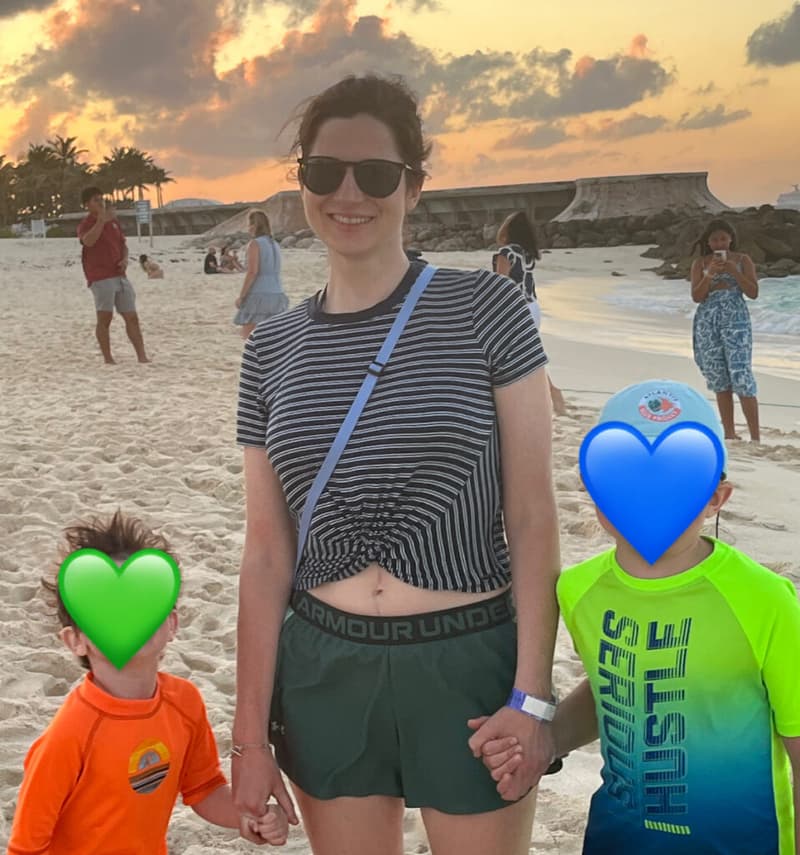
There are actually several reasons. Since the shooting, I've heard again and again that our story is inspiring, that the way we're handling it gives people courage, and how resilient and strong I am. At first I didn't really understand that, because I wasn't thinking at all about the best way to deal with our fate. I just got into action pretty quickly.
But after hearing countless times that I could help so many more people if I made our story, and how we've dealt with the crisis and its aftermath, public, I started to think about it. Working through the trauma with family, friends, therapists, and the community, I also noticed that we're all stronger when we stand together and support each other.
In my trauma therapy, I learned that resilience can also grow through talking with others who've been through something similar and through knowing you're not alone. That's why I simply want to encourage more people who are in a crisis right now, who are just coming out of one, or who have been through one before.
Another goal of mine is to write our story down someday, in whatever form, among other things to a) work through it all once more, b) have something written down for my kids later, and c) once again, help other people.
The Instagram account is a first attempt to organize my thoughts on all this. I'd say the reactions are 99% positive, caring, and supportive. Of course there are always a few hate comments, but unfortunately that's familiar from other people who share their stories publicly.
From victim blaming to accusations that I'm bragging about my story and trying to profit from it, it's all in there. But like I said, that's only a very small number of comments. The vast majority are very positive.
Several podcasts, blogs, and TV networks have already asked about working together. I've said yes to far from everything, because I also have to see how each request fits with processing my trauma and with my time and energy.
What would you like to pass along to everyone who (luckily) hasn't had to go through something like this?
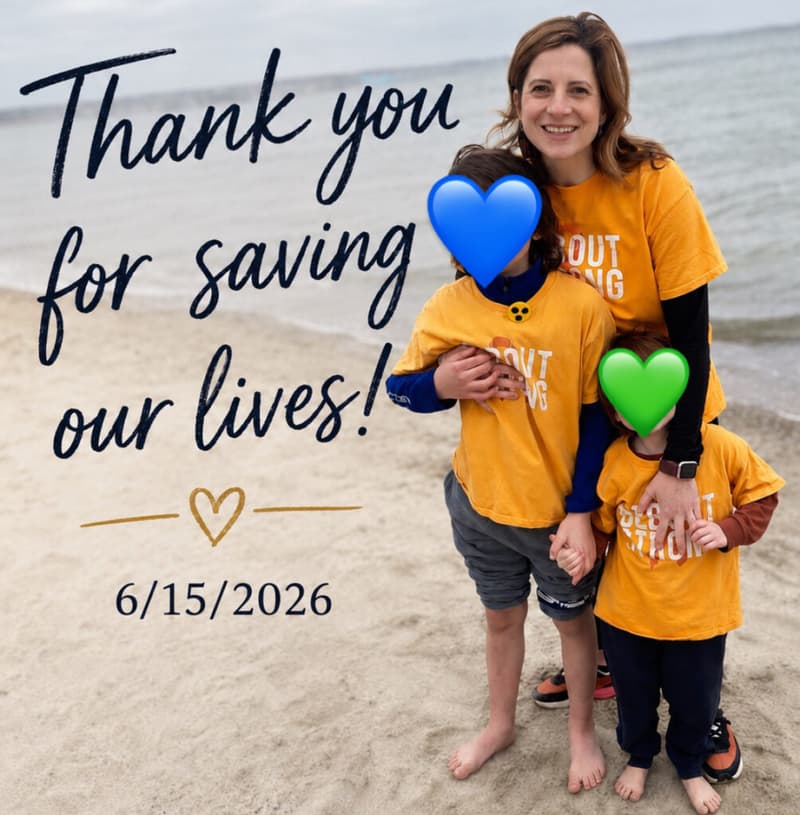
I've had so many wonderful experiences with the people I've told about this. Very few have judged or compared. Many have simply listened and asked how we're doing. That's really lovely. One of the most important things I've taken away for us is that two or more things or feelings can be true at the same time: Grief and gratitude are allowed to exist side by side.
We experienced such a flood of humanity and help, and we still do. I'm deeply touched by that. Even though it was the worst day of our lives, what followed gave us back our faith in people and in humanity.
This story first appeared in German on StadtLandMama.