Raising Kids in Three Languages (Mostly by Accident)
Heads-up: This post contains affiliate links. If you buy something through them, we may earn a small commission at no extra cost to you. As an Amazon Associate, we earn from qualifying purchases.
Her son came home thrilled about a song about the butt. It was a hippo. A linguist mom on raising three-language kids by accident.
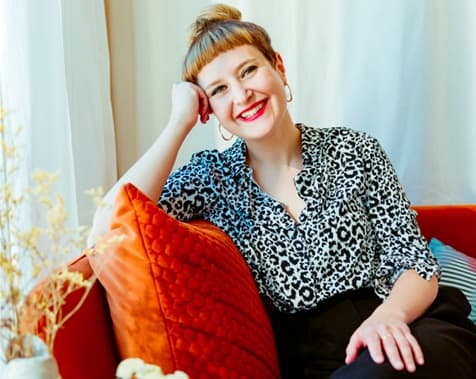
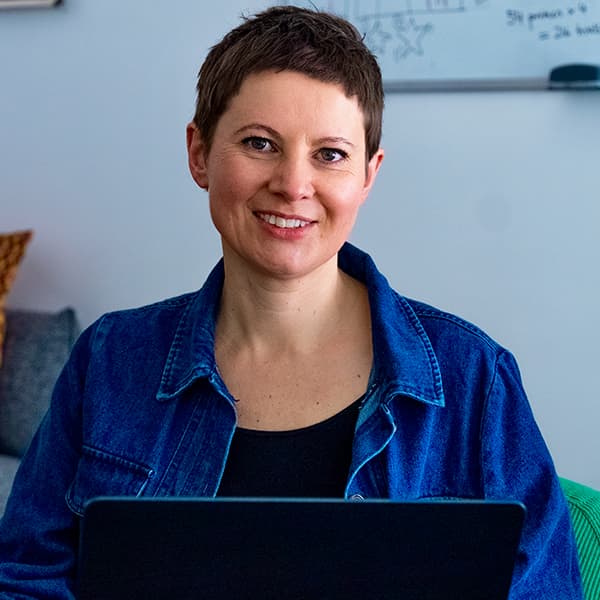
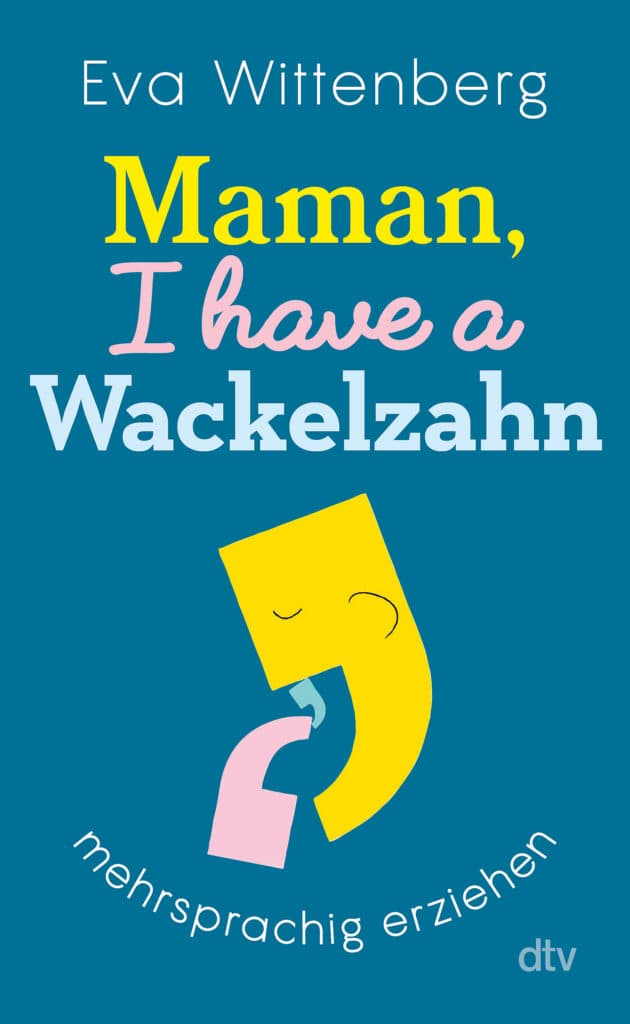
Friends, raising kids with more than one language makes for some seriously weird moments at home. Eva Wittenberg could tell you stories all day. Her kids are growing up trilingual "by accident," in fact. But she doesn't just live the language mix at home. She's also a linguist. In her book Maman, I have a Wackelzahn (Wackelzahn is German for "loose tooth"), she combines her own experience with what the research actually says.
Eva, your kids are growing up trilingual. Which languages, and how did that happen?
My sons speak German, English, and French. I was in the US for my PhD, and that's where my sons were born. So German and English were pretty much a given. I spent a few years as a single mom in California, and then I met my current partner, who's French.
During the pandemic, we ended up in France for a year, so on top of English and German they learned French. Now we live in Vienna, and our kids speak English, German, and French. Mostly all jumbled together!
You say the kids were planned, but raising them multilingual wasn't 😉…
Right, for us multilingualism was kind of an accident, but that's true for a lot of families. You don't always get to choose which country you study in or find work in, or who you fall in love with. I never thought, "When I have a baby, it's going to be a multilingual one!"
But there are parents like that, too: monolingual parents in monolingual surroundings who decide to raise their child with more than one language, often with English. My book is about those families as well. It covers what you can expect from planned multilingualism and which questions you should ask yourself.
In your house, does each person stick to their own language, or do you mix it up, so that you speak one language with the kids one minute and another the next?
Like many families, we mix it up wildly. But sure, my French partner speaks more French and I speak more German. English is still our shared language, the one everybody feels comfortable in.
While I was writing the book, I literally had nightmares about the endless language strategies described in the research. If you're not an expert, it's overwhelming. So my book also tries to hack a path through that jungle.
Parents are often advised to consistently speak their own native language with their kids: one parent, one language. We know by now that this often works well, but not in every family. Why that is, and how to find the right strategy for your own family, was a topic that really mattered to me.
Before this book, I hardly thought about the question myself. I always felt that a language mishmash like ours is enriching and fun, and as I found out, the research backs me up.
Do your kids have favorite languages? One they like speaking best?
Oh, I think they all enjoy speaking each of them equally, depending on the situation, what they're talking about, and who they're talking to. But it's clear that they don't all enjoy reading in every language equally! That's because they only learned to read in school in English and French. When we moved to Vienna, their German was great, but mostly spoken. So they had to play catch-up with written German, and with spoken French.
That happens to lots of kids. Either they start school knowing only Italian or Polish from home, or the family moves and school suddenly happens in a new language. School is a really important topic here, and in the book I try to raise the most important questions and gently prepare readers for possible stumbling blocks.
What's the funniest thing that's happened recently because of all the languages in your family?
Multilingualism is always funny, honestly. This was a few years ago, but during our first week in Paris, my son came home from school absolutely thrilled: "The teacher taught us a song about the butt!" It turned out the song was about a "hippopotame," which is a hippo… My book is full of moments like that, from my family and from others.
I think it's important to enjoy these stories, laugh about them, hold on to them, and see them in a positive light, not as proof of "bad" language skills. Stories like this simply come with every multilingual family!
You're also a linguist and a professor of linguistics. How do language signals turn into thoughts and pictures in our heads?
That's the million-dollar question! We don't actually know exactly how our brains store and process language. It's an insanely complex question that theorists, psychologists, and psycholinguists, which is what I am, are all working on.
I'm basically a plumber of communication. A plumber looks at where the water is coming from, where the pipes lead, and which pipe connects to which valve. In the same way, I look at where the sentence that's gushing out of you comes from. Which word is linked to which other word, what in our memory does it draw on, and how exactly do the meanings mix there?
So we want to understand the language system in the brain. And to understand it, we run experiments in my lab, the way a plumber tests different pipes. We don't shut anything off, but we measure our participants' reaction times or their brain waves, depending on which grammar they hear or read.
That lets us trace pretty well which linguistic constructions call up which pictures in the mind. And that information in turn helps us understand the system as a whole.
There's a rumor that multilingual kids often start talking later. Is there anything to it?
It really is just a rumor. Kids are so different in how they develop. When people say kids start talking around age one on average, that's only an average, and often not even that, just a typical age.
But there's huge variation. I know a multilingual baby who said a first word at seven months, and I also talked recently with a colleague who didn't say his first word until he was three and a half.
Every child develops differently, even though the sequence follows a certain logic. It makes sense: no mouth motor skills, no babbling. No babbling, no syllables. No syllables, no words. But the pace is different for every child.
I think parents know their child best. At some point, parents of late bloomers usually start to worry and ask the pediatrician. In most cases the developmental "delay" is just normal variation. And multilingualism has hardly any effect on that variation, and if it does, it can go either way: earlier or later.
What are the benefits of multilingualism for kids?
What a lot of people have heard about is the literature on the "cognitive advantage," the idea that speaking two languages gives you a holy trinity of mental superpowers: 1. Strong attention control: who am I talking to, how, and what's appropriate in this situation. 2. Excellent inhibition control: I have to stay in one language and not switch, even if the word that comes to mind isn't in this language but in another one. And 3. Cognitive flexibility: sometimes I HAVE to switch, even if I don't want to.
All of that together is intuitively good for the brain, which is why learning languages is also recommended to a lot of older people. But these advantages aren't always measurable, and we now know that the picture looks very similar when people speak both a dialect and the standard language.
What matters more to me are all the social benefits kids get from multilingualism. The list is long: the more languages you speak, the more friends you can make. Multilingual kids also learn that they have to adjust to other people to be understood. Learning more languages often comes more easily to them. And they get a completely different window into at least one other culture, history, and possibly identity.
What challenges do you run into day to day when it comes to the different languages?
Our challenges are ones that many families share. Sometimes multilingualism can feel lonely and exhausting, for example when not everyone in the family understands every language. When my partner and the kids are speaking very fast French and I don't understand a thing, what does that do to us? Or take a friend's situation: Nonna and Nonno only speak Italian and can't understand their grandkids when they visit Germany, because the kids speak a blend of German, Italian, and English.
I also think about questions of identity: How do my kids feel? German? American? French? Austrian? And does it even matter? Tied to that are challenges around the emotional side of language: How do we scold each other and say "I love you," and how can we do that so everyone in the family can follow? Could I maybe even use our multilingualism strategically to settle conflicts calmly?
Apart from that, and not really fairly, I've also been spared many of the challenges that can weigh heavily on other families. I've never met anyone who said, well, French is nice and all, but why aren't you teaching your kids Turkish, Arabic, or Polish?
Turkish, Arabic, and Polish are wonderful languages too, and you could argue that we need them more in everyday life. Whether I become a teacher or a lawyer, a baker or a police officer, shouldn't we speak the languages that many of our fellow citizens speak? But Turkish, Arabic, and Polish simply have less prestige than French. I discuss that in my book: What are languages worth?
What should parents of multilingual kids pay special attention to?
It always depends on the situation, of course, but basically I'd say: Be clear that raising your kids multilingual is your decision, not theirs. That means the little ones may not feel like learning several languages at all.
So it's important to ask yourself: What's our goal? Do we want our daughter to be able to read Dante in the original, or is it fine if she can just send her aunt in Rome WhatsApp messages in daring Italian spelling? Depending on the answer, you'll have to put together your own family language policy.
Second: more is better, but quality matters too. An hour of Italian YouTube every day will do less than a quarter hour of FaceTime with that aunt in Rome twice a week. Either way, kids need the chance to really dive into a language bath. The more of that, the better.
And finally, I advise all parents to approach the topic seriously, but with a relaxed attitude. Multilingualism is a gift you give your children, kind of like a gift card they'll be cashing in for years. Whatever ends up sticking, multilingualism enriches the family, sharpens the feel for language, and opens doors. And those doors stay open, whether or not you ever master the Italian passato remoto.
This story first appeared in German on StadtLandMama.