ChatGPT Is My Teens' New Best Friend (and I Had No Idea)
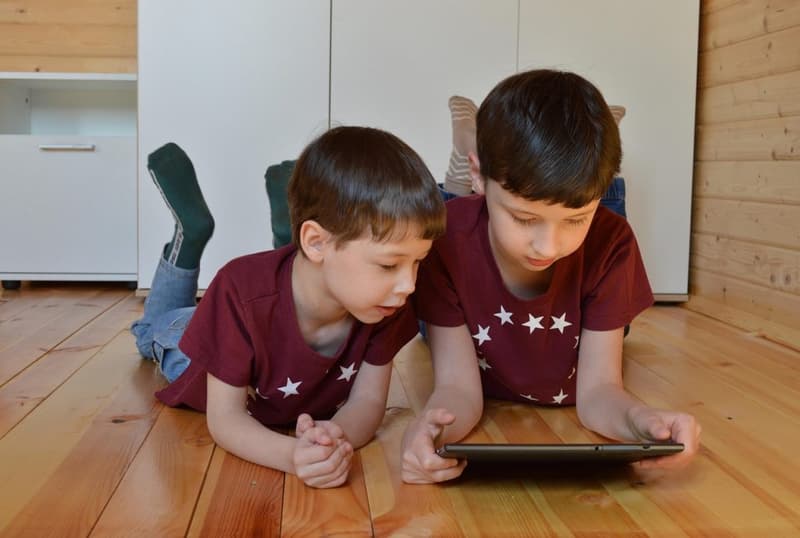
My boys plopped down on the couch and started talking. What I learned about Chatty and their schoolwork? I had no idea.
Okay, friends, let's talk about AI in the teen years. Sometimes it's hard for us parents to keep up with how fast everything is moving. Until a little lightbulb moment a few weeks ago, I honestly had no idea how HUGE a role “Chatty” (the kids' nickname for ChatGPT) and all the other supposedly all-knowing AI tools already play in our kids' lives.
It was such a nice evening. The week had been packed with work, their dad was away on a business trip, and at some point the boys just plopped down next to me on the living room couch. Instead of staring blankly at a screen, they started talking, and out of nowhere we had the best conversations.
How, when they were little, they tried to drive their music teacher up the wall. What they were scared of. And that at least one of them fairly often crawled into their big sister's bed. I knew nothing about any of it, and we laughed so much and got lost in memories.
AI in the Teen Years
At some point the talk turned to homework. One kid in their class had been leaning hard on ChatGPT for homework from day one, and the teacher obviously saw right through it. So he'd ask, extra pointedly, “So, (name), what does ChatGPT have to say about all this?” Instead of making a fuss, he just poked fun at it (best teacher ever!).
Then it went further. The boys told me that some teachers are now thinking about getting rid of homework altogether because it no longer makes sense. Everyone gets help from their little AI app assistant, and it's so good that it's getting harder and harder to tell whether someone wrote something themselves or not.
And call me naive, but I hadn't thought about that at all. Our boys said things like: they honestly don't know how they got through life before AI, and that it has changed everything for them, too. I truly had no idea!
Could AI Level the Playing Field?
They have it make practice tests for studying, and every unfamiliar word gets run past their digital helper. You know how I feel about all things digital, and I don't see it only critically. So I immediately thought: couldn't this also level the playing field for kids whose parents can't help with homework, or don't know how to explain photosynthesis?
And don't kids learn to stay curious when something really interests them, feeding the machines so they can find out absolutely everything about their favorite topic? And don't we still learn something along the way? The fact that our boys are now graduating from a bilingual track at school (so they'll earn a diploma with a strong English component) definitely isn't thanks to my amazing English skills. It's because their favorite TikTokers are American, and the language just soaked into their bones.
And yes, yes, yes, I see the dangers too, and I understand the debate over whether there should be an age limit. And yes, I also think human qualities and achievements should never be replaced by AI. But if we find a way to handle it…
… so that these little apps that predict and calculate answers for us become a kind of assistant in our lives, one that helps us build knowledge or saves us time we can then use more meaningfully, then I do find that pretty fascinating. Or think about how often you tell your kids, “Ugh, I have no idea right now.” And then you can quickly look it up together.
We didn't have any of that growing up. At my kids' age, my general knowledge was definitely much smaller than theirs. Definitely! They use it to help themselves learn, and they know every capital in the world and every airport, too (don't ask me why that interests them, but I could not have given them a single answer). I was talking to my mom about it recently, and she said, “Wow, the time we spent digging through dictionaries back then, just for one word.”
I was afraid of AI for a long time myself. I only started using it two or three months ago, it feels like, and I can already tell how much relief it can bring. Not because ChatGPT now writes my emotional columns about the teen years (you'd notice, I promise), but because sometimes I need inspiration for a new project and I have it spit out three options that just give me an idea (which usually ends up being something totally different, but that little nudge can be so helpful).
Or when I have it summarize a text, or ask: Hey, can you pull out three key takeaways from this huge study? And then I can keep working from there. Myself. With my own brain. Just with a nudge from the outside. If we can get that across to our kids, that their thoughts are irreplaceable, that their brain still has to keep running, but it's okay to let a little help push them to look beyond what they already know, then it can be pretty great.

I recently talked with a teacher about his colleagues' thoughts on abolishing homework altogether because it no longer makes sense. I said out loud that the only way left to check how much a kid really knows would be tests, and he disagreed.
“During tests, they stash their second phones in the bathrooms.” “Second phones?” I asked. The trend is even moving toward a third phone, he said. And no, that's where I'm out, too. I love using all these possibilities to expand our knowledge, just not to opt out of thinking for ourselves. I think we can agree on that… right? (Of course we had cheat sheets too, but at least we wrote them ourselves, and in the process we actually got the gist and learned it.)
P.S. This text was written entirely without machine AI inspiration. Just like every text on this blog so far, by the way. And that's going to stay that way, because this is about real life and real experiences and feelings, not purely factual knowledge transfer.
This story first appeared in German on StadtLandMama.