
Your Anger Is Allowed: A Mom's Letter to Her Daughter
Heads-up: This post contains affiliate links. If you buy something through them, we may earn a small commission at no extra cost to you. As an Amazon Associate, we earn from qualifying purchases.
She learned to swallow her anger until it boiled over. Now one mom writes to her daughter: don't make my mistake.
Hi, loves, what can we do as parents when the world feels more chaotic by the day? How can moms and dads pass courage on to the next generation? With "Sei mutig, gerade jetzt" ("Be Brave, Especially Now"), Nathalie Klüver has written a powerful call to action for mothers who want to make a better future possible for their daughters. She lays out what makes women stronger in hard times.
In eleven emotional letters, Nathalie Klüver writes to her daughter, your daughter, our daughters. She shares what so many parents feel: fear and anger in the face of the crises of our time, but also hope and strength. Her new book translates world events into the personal, connects facts with social analysis, and offers concrete ideas for everyday life. For example, how female anger can turn into confidence, and how we can give our kids a strong stance to carry with them.
This isn't a book about complaining about the state of the world. It's a fresh start that shows what kind of courage we can hand our daughters. Alongside the letters to her daughter, Klüver puts things in context, honestly and emotionally, with facts, historical background, recent psychological studies, and tips for putting it all into practice. It's inspiring and empowering for anyone who wants to give the next generation a future to look forward to. We get to share her mother-daughter letter about anger with you here.
Be brave, especially now!

My dear J.,
I'll admit it: your anger sometimes pushes me to my limit. When it bursts out of you, that huge rage, that feeling of being treated unfairly. Some days it's almost like a volcano, an emotional storm that pulls me in, too, and sometimes leaves me feeling helpless. When you scream and cry and let all your feelings out, I sometimes have to take a deep breath and collect myself. And yet I know it's good to let the anger out. To feel it, instead of gritting your teeth and turning the aggression inward.
So I hope you can hold on to your anger. I hope that even when you're older, you'll let yourself be angry and allow yourself to feel it. Don't make the same mistake I did.
You see, I learned to suppress my anger. To turn it into sadness, or into anger at myself that I quietly swallow. Until I hit my limit, and the tears start rolling and won't stop. Or I turn into a passive-aggressive grump who keeps that act going until the person across from me (usually it's your stepdad who has to take the heat) loses patience and gets angry at me. Here's the pattern behind it: I make him angry until he makes me angry, and then I can finally let out what I was feeling all along.
Sound complicated and ridiculously roundabout? It is, believe me. It takes an incredible amount of energy. And everyone's nerves. Not recommended, that much is clear.
You're wondering why I don't just allow myself to be angry right away? Because I'm afraid of not being liked or of upsetting the other person. It's not worth ruining the good mood over, I tell myself.
Or I worry that others might think I'm bitchy or difficult. And who wants to be bitchy and difficult?! So I swallow my feelings. But trying to suppress feelings is pretty pointless. Sooner or later they break out with full force and can't be controlled. And they definitely can't be steered into anything constructive. It's like cooking pasta: if you don't lift the lid every now and then and let the steam out, everything boils over and you have to scrub the whole stove afterward.

I wasn't always like this. I still remember slapping my annoying seatmate in biology class in fifth grade because he just wouldn't stop talking and I couldn't hear the teacher. She liked neither my explanation nor the slap, and gave me a punishment assignment. Okay, the slap probably really wasn't okay. But that was one of the last times I showed my anger in public. I learned this: angry women get called bitchy. And nobody aspires to be bitchy.
So I save my flipping out for the really extreme meltdowns, which sometimes get set off by something tiny, the famous straw that breaks the camel's back. Then I completely lose it and there's no stopping me.
You're pretty good at flipping out, too. Maybe that's what the two of us still have to work on: turning our anger into something productive instead, expressing it in a "socially appropriate way." But I'm optimistic we'll get there. What I definitely don't want is for you to suppress your anger. To ignore it. Or to turn it into sadness, the way I do most of the time. Never unlearn how to feel your anger and speak up about the reasons for it.
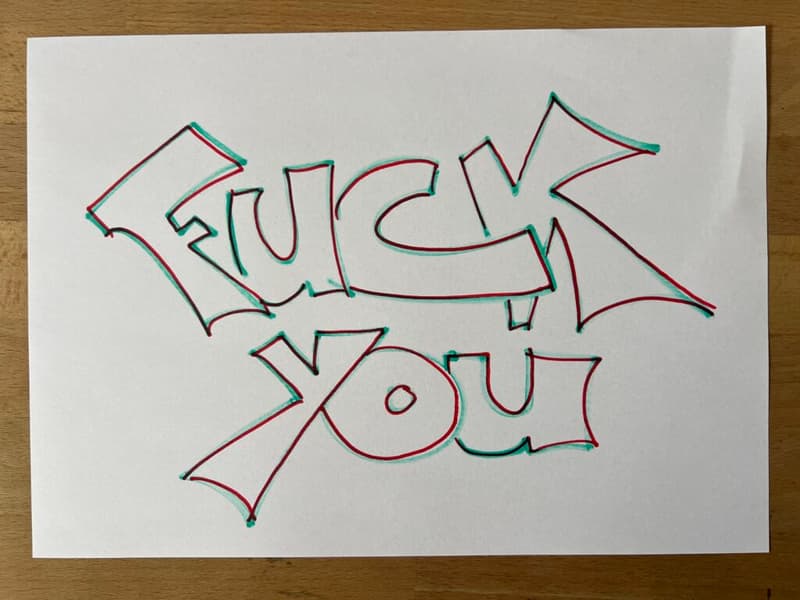
My dear J., you're allowed to be angry. You're allowed to be inconvenient. Because anger shows you what matters to you. Anger is a signal that something is going wrong. That there's an injustice. Or that one of your needs is being ignored. Anger is a kind of inner fire: if you learn to handle it, that fire can warm you and give you the energy to change the things that make you mad.
There are plenty of reasons to be angry. Personal ones, but also ones that have to do with society. You can set boundaries, and I'll tell you more about that elsewhere. If you're angry about injustices or wrongs in the world (and trust me, there are sadly more than enough), then your anger is the engine for change. There are no revolutions without anger. Putting the frustration and the injustice into words and saying your anger out loud is the first step toward changing things.
And you know what, my dear J.? Anger isn't just a signal, it can also be a source of strength. You know this yourself, that strength you suddenly have in a tantrum, right? When you effortlessly hurl things across the room that you could barely lift otherwise? You can use that energy to set your boundaries clearly, in a peaceful way, instead of destroying things or throwing them around.
But you don't have to be any less angry! Just socially acceptable about it. (The slap I gave my seatmate in fifth grade wasn't exactly that.) Anger can help us see clearly what really matters. As long as we're not blind with rage. Anger that you actually feel and live through loses its destructive power and opens the way for something new.
For you, sweetheart, that means, for example: when you're so furious that you feel like breaking something, pause for a moment and breathe in and out. And then, fine, punch a pillow, but not your brother's stomach. Think about how you can turn the force that anger sets off in you into something else. Maybe a picture or a story? A piece of music? Sit down at the piano and pound those keys as loud as you want, or grab your pencils and draw like crazy. Let the anger out by shaping it into something creative and new.
And don't let anyone tell you that women always have to be gentle like the princesses in fairy tales, like Cinderella, who puts up with all the humiliations from her stepmother and stepsisters without a word of complaint. I never liked those stories, because what they tell you about being a girl isn't what I wanted for my life. Those fairy tales try to convince us that we're not allowed to push back, that we should be good and modest, and that then the prince will come, choose us, and make us happy.
These are old stories that have been told to women for centuries to keep us small. Mostly men made them up. It's time to clear out these outdated ideals and stand up with confidence for our needs, our rights, and justice. Even if that means we get really, truly furious now and then. We're not responsible for making sure everyone is okay, and we certainly don't always have to be sweet and nice. Remember: not every bit of anger has to explode, but none of it should be smothered.
With love,
your mom

This story first appeared in German on StadtLandMama.