
Canned Ravioli for Dinner? Nora Imlau Says Ditch the Guilt
Heads-up: This post contains affiliate links. If you buy something through them, we may earn a small commission at no extra cost to you. As an Amazon Associate, we earn from qualifying purchases.
Pajamas all day, extra screen time, canned ravioli for dinner. Nora Imlau says none of it is a moral question.
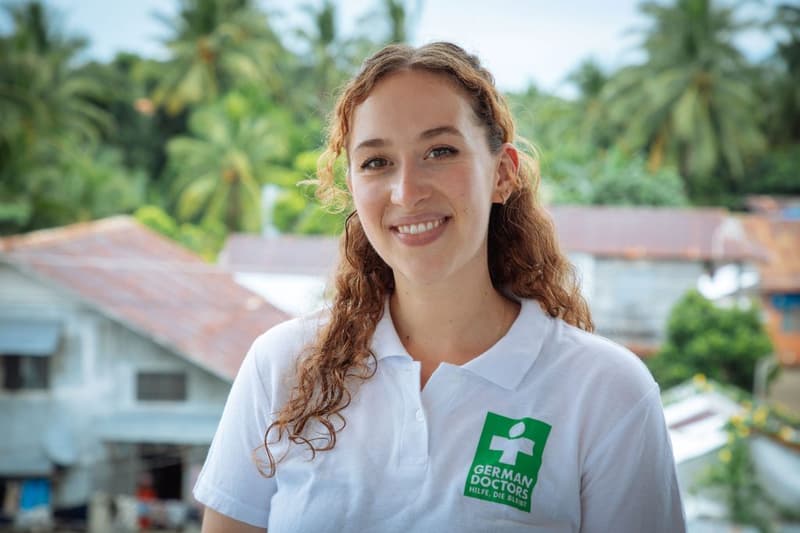
Friends, we honestly don’t know how Nora Imlau does it, but no two of her books are alike, and readers find real aha moments and genuine relief for their everyday lives in every single one. Her new book, Was Familie leichter macht (roughly, “What Makes Family Easier”), comes out at a very particular moment in Nora’s life: almost two decades after her first child, she’s expecting her fifth baby. Of course we wanted to hear more.
Dear Nora, things sound pretty wild at your house right now. Your oldest is moving out, your fifth baby is on the way, and your new book baby just arrived… does your head ever spin?
Oh, absolutely. It’s all way too much at once to really process. But there’s something kind of magical about everything happening at the same time: this is what a rich, full life feels like!
The book is called Was Familie leichter macht, and one chapter is devoted to your famous saying, “morally neutral.” Can you explain it quickly for anyone who hasn’t heard it?
Happy to. The idea of moral neutrality comes from KC Davis, an American therapist who noticed in her work that a huge number of people are weighed down by the heavy moral meaning they attach to even the smallest everyday decisions.
For example, we often feel guilty when we pull our clothes straight from the laundry basket instead of the closet, even though it hurts absolutely no one. But we’ve absorbed the idea that good people fold their laundry neatly and put it away in their dresser, so we feel like we’re doing something wrong when we can’t manage it. Davis says: where you keep your clean laundry isn’t a moral question, it’s a practical one. Whatever works for you is allowed.
I took that idea and applied it to modern family life, where we’re constantly feeling guilty too, whether it’s because the kids got to watch TV longer again or because it’s canned ravioli for dinner tonight. None of that hurts anyone as long as the big picture is solid, so it’s all morally neutral as well.
Looking at resources and ways to lighten the load in a practical way, without piling on moral baggage, can help families focus on what really matters in daily life with their kids: treating each other with warmth and appreciation. How we treat our children is not morally neutral at all. For me, there are very clear moral standards there, like nonviolence and equal dignity.

One reader who was interested in your new book wrote to you that she worries it will say what so many family books say, that it takes a village to raise a child, when she doesn’t have a village…
Yes, that’s such a popular standard tip in so many parenting books: Build your village! Accept help! Don’t try to do it all alone! And in principle, that’s a good impulse. It’s just that a lot of families simply don’t have a supportive village and ultimately have to get through everyday life on their own. And then it really stings when everywhere you look, someone is telling you to just rope in the grandparents.
That’s why it was so important to me to collect ideas for relief in this book that don’t depend on a supportive social network, things parents can do on their own, including, for example, single parents who can’t count on the support of another parent.
You say some parents hold themselves to ideals that are too high and feel very insecure about parenting. Where does that come from, and how can you encourage them?
I think it’s good to have high ideals, but we have to be careful not to break under our own expectations. We’re a generation of parents who have soaked up an incredible amount of knowledge from developmental psychology and brain research and want to apply it to our own parenting. But in doing so, we quickly fall victim to our own perfectionism, which our achievement-driven society has drilled into us. That’s why it’s so important to learn not to turn valuable knowledge into rigid dogma.
Modern science can help us see children’s needs with fresh eyes, but when it comes to meeting those needs, we are absolutely allowed to be imperfect. That’s built into us by evolution and is certainly not an individual failure!
You say, “A securely attached childhood and canned ravioli for dinner are not a contradiction.” What other permissions do you have for us?
Oh, we’re allowed to do so many things as families that often feel forbidden because we’re stuck in old beliefs. We’re allowed to spend whole days in our pajamas and let our kids have more screen time than is officially recommended. We’re allowed to push back against pushy demands, whether they come from our kids’ school or from the grandparents.
We’re allowed to dress our kids in the morning while they’re still in bed under the warm covers, or let them sleep in tomorrow’s clothes from the start. We’re allowed to be soft and gentle and loving without worrying that we’re spoiling our kids or raising them to be dependent. And at the same time, we’re allowed to protect our own boundaries, to say “no” and “stop” and “wait, I don’t want that,” and to ask our kids to handle some frustration. What matters most is that the relationship is solid and our child feels and knows: here, I am accepted, safe, and loved unconditionally.
You urge us not to put moral labels on our own sources of strength either. How do we get rid of (or at least get a better handle on) that damn mom guilt?
In our very achievement-focused society, we tend to judge even our free time by whether it produces something. So exercise, which is good for the body, counts as a morally superior hobby compared with, say, playing video games. And when moms sew or bake in their free time, they feel less lazy than when they sleep or watch their favorite show. But our breaks are for rest, not for more self-improvement.
Of course we’re allowed to go for a run or bake a braided sweet bread on our breaks if that really makes us happy. But we’re just as free to do nothing at all, or scroll on our phones, or listen to audiobooks, or do whatever relaxes us, and we’ve used our break just as well. The whole point of downtime is that it doesn’t have to serve a purpose. That’s why every leisure activity is equally morally neutral.
You say, “Food is just food,” and that getting kids to sleep doesn’t have to turn into a bedtime battle… if you could push a button and make one thing easier in your family, what would it be?
Right now, I’d love to push a button and make every sibling fight disappear, because they just take so much out of me. At the same time, I know kids are learning crucial conflict-resolution skills through them. So for now, I’m still peacemaker and referee rolled into one.
I’m also very interested in the chapter on hobbies with no strings attached, because I keep seeing kids being pushed in one direction or another and expected to “perform”…
Yes. Just as it’s hard for us to see our own free time as morally neutral, we often judge our kids’ hobbies by how they look from the outside. We’re proud when our child learns an instrument or does well in a sport, and we’re quick to feel embarrassed about hobbies like gaming, nail art, or, say, reading dark romance.
Behind that is a whole set of assumptions about what counts as a worthwhile way to spend free time, and it can put a lot of pressure on families, because kids can tell when we eye their passions and interests with suspicion or flat-out reject them. They quickly feel rejected themselves. That’s why it’s so important that our kids get to have hobbies with no strings attached, simply because they make them happy, no matter how respected or unconventional they are.
In the book you also write about love and the parents’ relationship as a couple. How can that lead to more ease in everyday life?
The romantic relationship between the parents is where most families begin, and it’s the foundation of our family life, at least at the start. Then the question is: can we keep that love alive and nurture it through the stress of daily life, or does it get lost in the whirlwind of demands?
It matters to me to show that it’s not selfish to give your relationship real importance and actively care for it, even in the chaos of life with a baby or toddler, even if that sometimes leads to some frustration for your child. It’s so precious when kids get to see their parents nurture a loving, respectful relationship. And a well-tended relationship can give you so much strength, especially in hard times. It’s such a valuable resource.
So in my book I’ve put together what parents can concretely do to hold on to their love in everyday life. At the same time, I stress that not every relationship is worth saving. If put-downs and contempt are part of daily life, or the love has been lost for other reasons, it’s very important not to stay together just for the kids. Leaving an unhappy relationship can be a huge relief for children, too.
What do you wish for families overall, for more calm in their everyday lives?

I wish families the courage to go their own way, the one that fits them and their child or children. We need to realize that an incredible number of parenting recommendations start from a standard kid and standard parents. But we’re so different from one another: in our gifts and talents, in our limits, in the way our brains and nervous systems work.
So we also need very different strategies to shape our family life in a way that feels good for everyone involved. That means we often have to free ourselves from assumptions about what a child absolutely must be able to do at what age, and what we as parents absolutely must do or not do.
And instead, look closely: where is our child really at? What’s right for this one-of-a-kind person at this stage of development, and what resources can I personally spend to give them what they need? That’s how we find our own individual ways of being a family. And that can bring a lot of calm and relief.
This story first appeared in German on StadtLandMama.