Dear all, sometimes we don’t understand our children when they’re having a tantrum… and you know what? Often they feel exactly the same! They don’t understand themselves either. That’s why it’s so great when we can approach the subject through children’s books, when the children recognise themselves in them and we as parents can learn just as much from them, as in Oops, I’m Angry by Christopher End. How he managed, as an adult (with grown-up children of his own), to empathise with children’s anger, and what tips he has for us parents when things escalate again.
Dear Christopher, you’ve written a book about children’s anger – are you an angry sort yourself?

I get angry quickly in the car. That’s where I practise. But generally speaking, anger is a relatively new feeling for me. For a long time, I couldn’t really feel it – let alone express it. By nature, I tend to be a people pleaser. Maintaining harmony, keeping everyone happy.
I had to learn to show my anger. To say: “This far and no further.” Some people are still surprised today when I speak my mind. And I realise: I often need to recognise my anger even earlier. Show my boundaries sooner – not only when I’m already seething inside.
How did you manage to put yourself in a child’s shoes to really shift your perspective, so that children can recognise themselves in your stories?
That actually came quite easily to me. For one thing, I’m good at empathising with children. For another, I’ve worked with families for many years. I know how children tick – how quickly they feel things, how vivid their imaginations are. There’s also a bit of me in Mattis (the protagonist from the book). He dreams a lot, goes on adventures in his mind – and sometimes doesn’t realise what Mummy wants at that moment. And just like that, a conflict arises. I know that feeling. And it was precisely this mix of imagination, intensity and misunderstanding that I wanted to tell the story of.
As a father, how did you deal with your children’s anger? Did it perhaps even surprise you at first?
Our first child was very self-regulated. I honestly thought: I’m doing everything right. Then came the second. Emotionally intense. That taught me humility. There was a moment I remember very clearly. I was in a conflict with my child – and suddenly I thought: “Bloody hell. I never wanted to be like this as a father.” That was a turning point. Not because I did everything perfectly from then on. But because I took responsibility.
How did you then learn to deal with it better as a parent?

I consistently applied what I had learnt in my therapy and coaching training: accepting others. Providing emotional support. Regulating myself. And examining and changing my own inner patterns. That was the game-changer. Not technique. But inner work. And that is exactly what I pass on today.
Many parents get very stressed themselves when their child has a tantrum. Especially when other people are around, as they then quickly feel embarrassed. Do you have any advice for such situations?
Firstly: it’s understandable if this stresses you out. You’re not alone in this. Anger is the emotion that causes most parents to start doubting themselves. And then there are the judgemental looks from others. The shop assistant. The father-in-law. Comments. Expectations. This increases the pressure enormously – and as the pressure rises, our ability to regulate ourselves diminishes.
A practical tip: Take a mental step back. One client imagined herself sitting with her child under a glass dome. Shielded from stares, comments and judgements. It sounds simple – but it helps the nervous system not to feel under further attack. Only when you feel safe can you provide security.
How do mums and dads manage not to take their children’s anger personally (even if it is explicitly directed at them in the situation), but to see: ‘My child is in distress right now and needs to let something out’?
There are three levels. Firstly: understanding. Knowing: my child is in emotional distress. It’s not directed at me. Secondly: regulation. I learn techniques to calm myself down in that moment. And thirdly: inner work. Why do I actually feel so quickly under attack? What is being triggered within me? When we look at this level, something fundamental changes.
You say that anger is a good thing in itself. What do you mean by that? And how do you then channel the energy that arises in the right direction?
Anger is our boundary guardian. It signals when something important is being touched. It gives us the energy to stand up for ourselves. When a toddler shouts “No!”, that is development. They are learning to assert themselves. If we train children out of their anger, we also take this power away from them.
I hope that my children will be able to say ‘No’ later on. When something is forced upon them, a glass of schnapps they no longer want to drink. When they come under pressure – for example, in a relationship. When they feel: I don’t want this.
Then I hope they can keep their anger in check. Not as an unbridled outburst – but as a clear, conscious boundary. And we get there by taking our children’s ‘no’ seriously. That doesn’t mean they always get their way. But their anger is allowed to be there. And conflicts are resolved within the relationship. That’s how the child learns: my anger is important – and I still remain connected.
What helps you personally when you get angry?
I practise sensing my anger sooner. Saying ‘No’ sooner. Or ‘Yes’. Clearly. Without hurting anyone. I’ve suppressed my anger for long enough. Today, I want to guide it – not let it guide me.
_________________________________________________________________________________________________
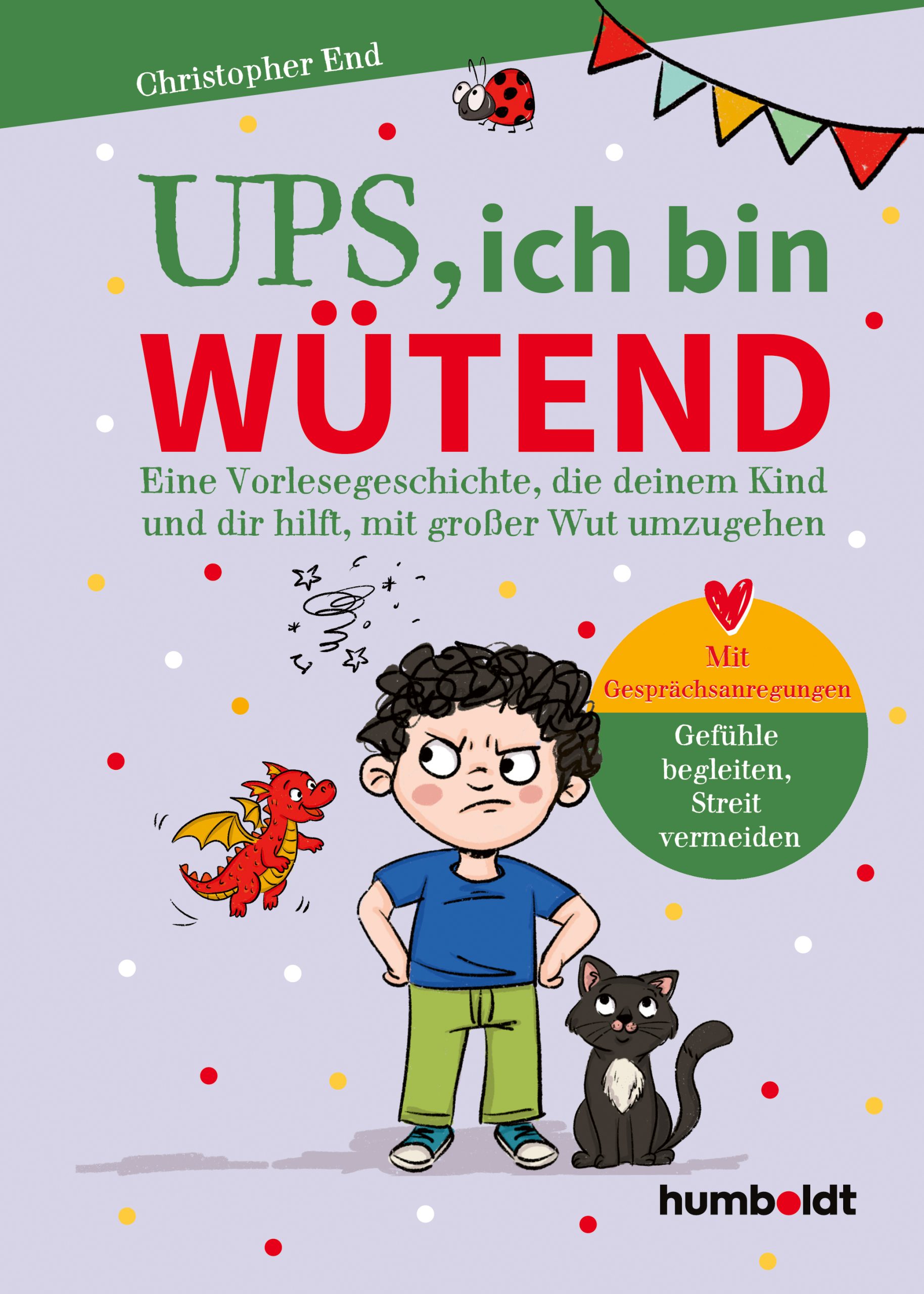
Oops, I’m angry. A read-aloud story that helps you and your child deal with intense anger. To understand and support a child’s anger – learning to accept, name and safely express strong emotions. To support outbursts of anger, change entrenched behaviour patterns and resolve arguments. A read-aloud story and parenting guide in one book!
What’s it about? Mattis is having a really rotten day. First, Mum interrupts his spaceship battle, then there’s a row with Zara at nursery. That’s SO STUPID! When everything goes so completely haywire, Mattis can get really angry – so angry that he doesn’t know what to do with himself. But luckily there’s Antonia, the wise nursery teacher, Mathilda, the yoga-loving neighbour with a real secret trick – and parents who dare to admit their mistakes.
Anger is one of the strongest emotions in childhood, and sometimes it becomes so overwhelming that children can barely cope with it. Stomping, screaming or crying because it all becomes too much – this poses major challenges for families. “Oops, I’m angry” is a child-friendly story to read aloud that shows what anger feels like and why it happens. Children experience that their feelings are taken seriously and are not “wrong”.
The story guides a child through typical situations in which anger arises and makes it clear: anger is a signal and is allowed to be there. Children learn to recognise their feelings, find words for them and realise that they are not alone with their anger. This provides relief, a sense of identification and the first steps towards self-regulation.
With empathetic conversation prompts, the book helps you understand your child’s anger, stay calm and find ways together to soothe strong emotions. You’ll discover practical strategies for setting boundaries lovingly whilst maintaining a secure relationship.
“Oops, I’m angry” is aimed at families with children of nursery and pre-school age who wish to deal with strong emotions in a relationship-focused and practical way – for greater understanding, fewer escalations and a healthy approach to anger.