Dear readers, it’s always so good to hear from those who love a child whom outsiders label as particularly difficult, unteachable, or even a system-breaker. Here we tell the story of a family for whom there was a happy ending after all.
Your eldest child will soon be 11. At the age of 8, he was classified by the school as ‘uneducable’ and sent to be home-schooled. What led up to that?
The decision was preceded by a very long ordeal – for our son, but also for us as a family. Ever since pre-school, he has been extremely conformist at school. His natural behaviour often rubbed people up the wrong way, so he tried to be as inconspicuous as possible. To the teachers, this made him a quiet, easy-to-manage child. At home, however, things looked very different: there he regularly had severe meltdowns and was often very unhappy.
We repeatedly raised these issues with the paediatrician and during parent-teacher meetings, but we weren’t taken seriously. Because he was so well-behaved at school, people didn’t believe us and tended to tell us we were overwhelmed. I then researched the issue myself through books, the internet and podcasts, and found a way to guide and support him effectively at home. Without professional help, but relying on a mum’s gut feeling.
At the start of Year 3, his behaviour changed at school too. We suddenly started receiving regular messages saying he was misbehaving. He often didn’t even know exactly what he’d done wrong. After a few months, he was being sent home more and more often.
At the same time, we tried to arrange a psychological assessment, but this proved very difficult. It was only through the cantonal educational advisory service that we managed to get an appointment with a child psychologist relatively quickly. She confirmed many of our observations. The school would have preferred an ADHD diagnosis, but this was not confirmed. An autism specialist was also consulted, as our son displays characteristics that lie on the borderline of the spectrum but are very common in children with a high IQ.
Nevertheless, the school was hardly willing to make any adjustments. A classroom assistant was refused on several occasions. Instead, he was often placed alone in a side room so that he could work there. For him, this meant social isolation and it reinforced his feeling of being ‘different’. Over time, he realised that he was being sent home whenever he disrupted the lesson. Out of desperation, he began to use this behaviour deliberately, because he could hardly bear the daily school routine any longer.
Shortly before Christmas, his teacher rang me and said they had run out of patience and could no longer cope with him. He was eventually sent home early for the holidays. After the holidays, it took just one day for the school to declare that he was no longer capable of being taught and had to be exempted from lessons.
This came as a huge shock to us – also from an organisational point of view, as I was working. Ironically, we were even allocated a support worker, who, however, did not help him, but merely prepared weekly plans for home schooling.
What exactly was given as the reason for his being deemed uneducable?
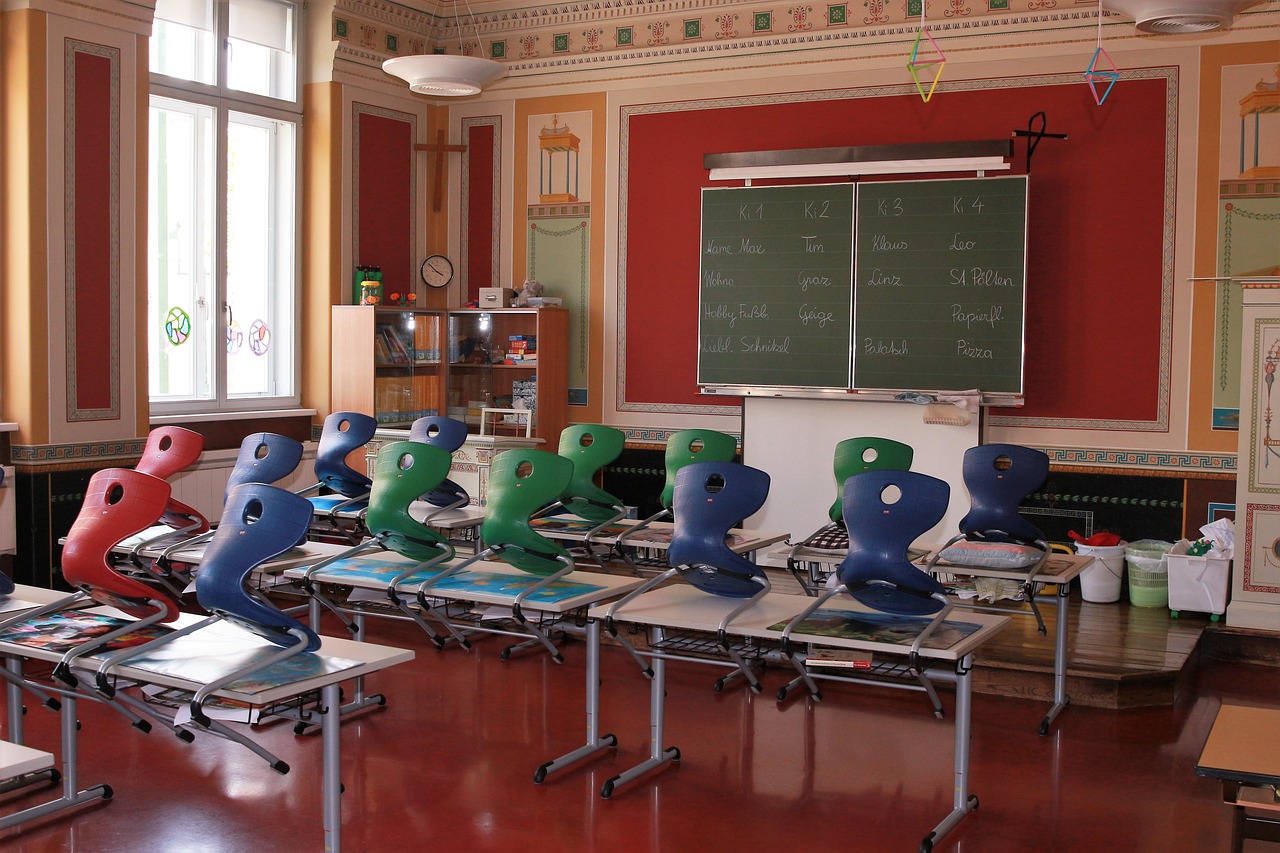
In the end, he refused to take part in the lesson at all. At times he lay on the floor, stared at the ceiling, crawled around the room or spoke in baby talk. He was simply completely overwhelmed and no longer knew what was actually expected of him. At the same time, he had of course also learnt that he was allowed to go home if he caused a major disruption. So his behaviour was, in part, also an attempt to escape this situation, which was unbearable for him.
Can your son understand the decision? And can you yourself?
My son couldn’t understand it at all. He saw the whole situation as his fault. He even told a friend that he had a disability and therefore had to go to a special school.
Later, he told me that the teacher had threatened him, saying he would otherwise have to go to a special school far away or to a care home. For him, it was therefore clear: there was something fundamentally wrong with him.
I can understand that his behaviour was ultimately difficult for the school. What I cannot understand is that so little was done to help him. Had he had a classic learning difficulty, he would probably have received support. But as he understood the material without any problems, the school saw no need for action. They simply expected him to pull himself together and ‘behave’.
You say he was already showing signs of depression at the age of 9. How did that manifest itself?
He had suffered from severe self-doubt from an early age, but during this period it became extreme. He cried very often and every evening, slept poorly and kept wishing he could simply be ‘normal’ or on another planet where there were people like him.
It was particularly hard for me to see that he was starting to change at home too. He used to live out his fantasy world there, telling stories out loud and playing. Suddenly he stopped doing that and withdrew more and more. He read a lot, often lay in bed and took hardly any pleasure in things that he used to enjoy.
Once, in tears, he said he thought he’d been born with ‘brain damage’ and wasn’t someone people could like. He was just nine years old at the time.
You then found a new school for your ‘system-breaker’. How did that come about?

We eventually moved over 600 kilometres and found a new school in my home town. It uses mixed-age learning, small groups and individual learning plans. Right from the first meeting, we felt we were being taken seriously. The headteacher reacted to his behaviour with complete calm and treated him without judgement. For me, that was a huge difference.
On his very first day, he was assigned a teaching assistant. After just a few hours, the school told me that they could hardly make sense of the reports from his old school – the child they saw before them did not match the reports provided by the old school at all.
For our son, it was a completely fresh start. He suddenly came home from school happy and looked forward to lessons in the mornings. The school later even suggested that he stay at primary school for an extra year to build his self-confidence and prepare well for secondary school. We found this decision to be a real benefit and it did him a world of good.
The teaching there is so wonderful and personalised; I could mention so many more things. Above all, they approach everyone individually in a non-judgemental and calm manner and accept the children just as they are.
Does he still have fears today because of these experiences?
For quite some time, he had very strong fears of loss. He was terrified of being separated from us because he had previously been threatened that he would otherwise have to go to a care home or a school far away. This meant he would panic if he couldn’t find me straight away. Things have improved significantly since then, though. He goes to the library or his chess lessons on his own again and can also stay at home alone for short periods.
Do the people around you take your concerns seriously?
I now only tell the whole story to a very select few. Often, there is a lack of understanding. Many believe a child simply has to ‘get through it’. I also hardly ever talk about the subject of giftedness anymore. It is a very misunderstood topic. Many react with a lack of understanding or immediately compare their own children. Yet a very high IQ does not automatically mean advantages – it can bring just as many challenges as a disability.
You have two other children. How are they coping with the situation?

For our middle son, the situation was difficult at times because he bore the brunt of his older brother’s frustration. On top of that, he is very sociable and makes friends easily wherever he goes – something his brother often wishes for.
We therefore made a conscious effort to separate their activities more and give each child their own space. That helped a great deal. Our youngest daughter is rather quiet and well-behaved. We take great care to ensure she doesn’t hold back too much.
How do you feel about the future?
At the moment, I feel hopeful again. Our son is finally allowed to be himself and is enjoying school again. At the same time, we remain somewhat cautious, as for a long time we felt our concerns weren’t being taken seriously. That’s why, as a precaution, we’re in touch with a family counselling service, and our son attends regular sessions there.
What would you wish for yourself and your children?
I would hope that our school system as a whole becomes more sensitive to children’s individual needs. Every child learns differently, and there really needs to be much more scope for individual approaches.
For our son, above all, I hope that his transition to secondary school goes well – and that he never has to feel like he’s wrong again. He’s doing really well at the moment, and I very much hope that things continue this way.