Breast Cancer, Three Kids, and a Mountain of Paperwork
Heads-up: This post contains affiliate links. If you buy something through them, we may earn a small commission at no extra cost to you. As an Amazon Associate, we earn from qualifying purchases.
She got the call in the car and could only say “Okay.” Alu on telling her kids, a marriage under strain, and fighting for everything else.
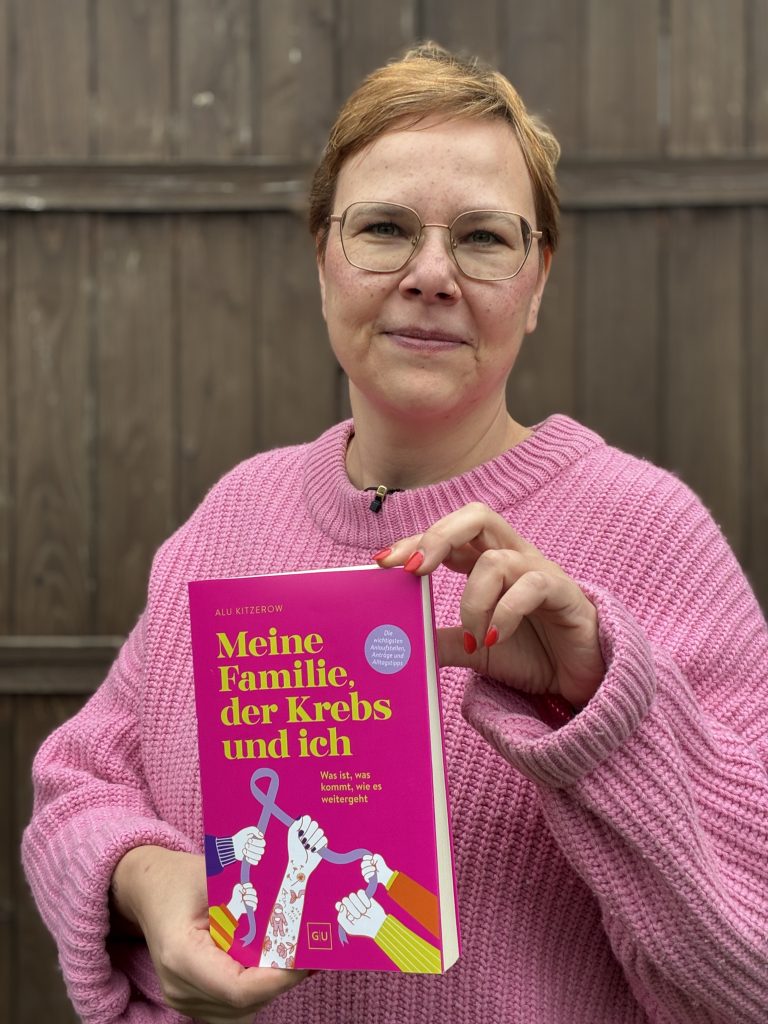
Hi friends, when Alu (you may know her from Blogfamilia, and surely from her blog grossekoepfe.de, which she writes with her husband) got a breast cancer diagnosis as a mom of three, the ground shifted under her feet. What did it all do to her, to her marriage, to her friendships and her family? She has now written a book about it. It's called Meine Familie, der Krebs und ich (“My Family, Cancer, and Me”). It's a firsthand account of the power of sticking together, and of what really helps. Here, she gives us a first look at what was going on inside her.
Dear Alu, you're a working mom of three, and you got the breast cancer diagnosis. What went through your head right then? Was there a lot going on, or nothing at all?
I got the diagnosis over the phone in the car, so you can imagine how composed I was, and how blindsided. First I thought, “Shit,” and then, “And now this, too.” I couldn't say anything except “Okay…” and I just kept repeating it. I think I was in total shock.
How did your husband and your kids take the news?
My husband was sitting next to me when the call came. We both drove home first, and then I lay down on the couch. I didn't know any details yet. Only “cancer,” “come to the hospital the day after tomorrow,” and “urgent” stuck with me. After that I just told the kids briefly that there was something in my body that didn't belong there and that we'd have to wait and see. Then I called my sister and asked her to come RIGHT NOW. And she did.
What's your current status?
At my stage I'm not considered cured. I'm a high-risk patient with two different types of tumors in one breast and lymph node involvement, and after all my treatments I wasn't able to reach what's called a PCR. So tumor remnants were still found in my lymph nodes.
My oncologist once said to me, “If I don't see you here again in the next five years, then we can talk about you being considered cured.” I could reach that date in July 2027. Unfortunately, I've also developed a related condition that is very rare and requires a lot of medication that I'll depend on for the rest of my life. It also makes cancer more likely to come back, so it is and remains, sadly, precarious.
When you look back today on your first fears after the diagnosis, how would you describe them?
If I had to describe the diagnosis, it's dark. It's like a picture frame that at first seems stretchy like rubber and then pulls tighter and tighter around you, holds you in place, boxes you in, and gives you one clear direction. It's tight, angular, and it stinks like those rubber bands you use to hold a lunch box shut. Again and again you try to stretch the material, but it doesn't work.
Was there anger, too? A loud “Why me?”
The why stayed with me for a long time at the beginning. In those very first conversations, the oncologists also tell you what the causes might be: alcohol, smoking, an unhealthy diet, being overweight. Aside from being slightly overweight, none of those applied to me. But I've carried a few extra pounds since I was a kid. So I asked myself: Was that it? Had I not taken good enough care of myself?
But that guilt and shame get you nowhere. You have to put them down. Cancer can hit anyone, heavy or thin. Athletic or not. I just had bad luck and, as I found out later, a genetic defect that strongly raises the risk of breast, thyroid, and colon cancer. My grandma and my mom both had cancer, too, in some cases more than once.
The anger, though? That's there. It feels something like this: Until a moment ago you were walking along one side of a river and everything was great. But with the diagnosis, you get shoved across a bridge that collapses behind you. From now on you only get to look at the other side, the beautiful, carefree side of the river, from far away. There is NO going back. From now on you have to stay on the side with the bumpy rocks, and all you can do is wave across.
What carried you through treatment?
My family and friends helped me enormously. So did the realization that I'd had a truly wonderful life up to this point. What luck I had. I've lived, loved, and laughed. That basic attitude, and with it writing down #3goodthings every day, carried me. We always think it has to be the big things in life, but the small things count so much more. So: let go and trust the team of doctors.
You also write about closeness and distance in your marriage. When were you especially close? When did it feel especially far apart?
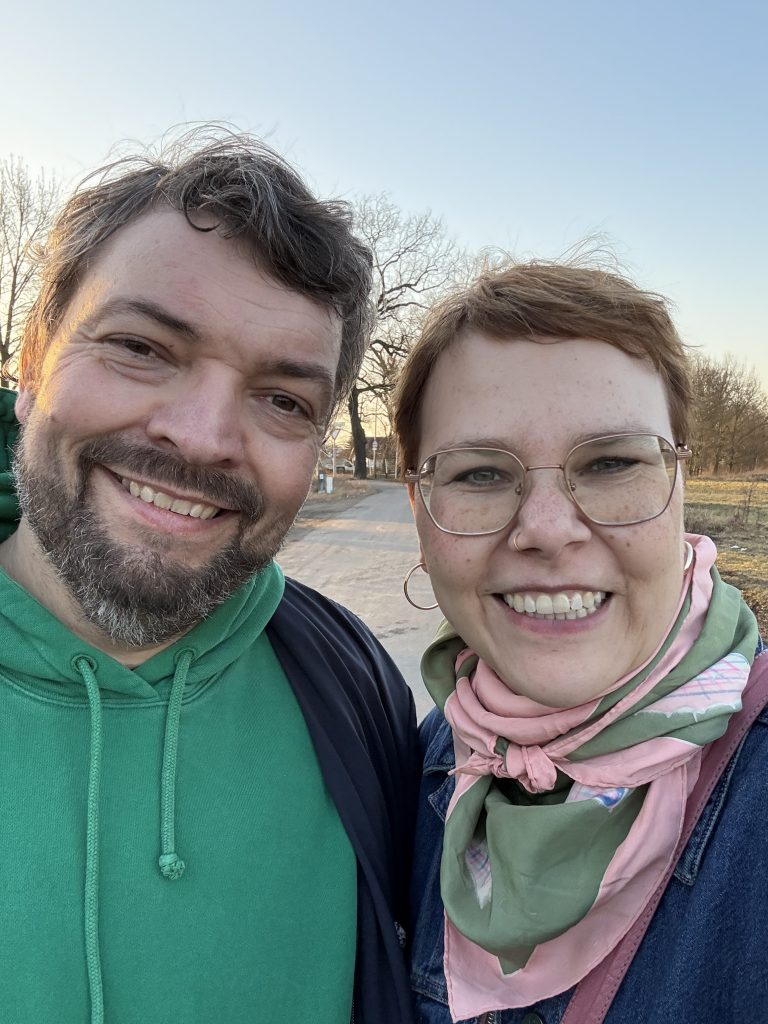
A diagnosis like this turns your relationship upside down, too, of course. A couple that was in a good groove suddenly becomes one person who needs care. Your partner has to take on an enormous amount, is under heavy strain as well, and on top of that is afraid of losing you. And you change completely, physically.
First I lost my hair, my shape, and then my breasts. I had to get used to all of that physical stuff first, and intimacy fell by the wayside for a long time. At the same time, we went on walks on so many days and talked about what we really want from life and what maybe doesn't work for us anymore. We hadn't had that much time together, or held hands that much, in a long time. It brought us closer, and neither of us lost the other.
You didn't just face the emotional rubble of the illness, but the bureaucratic rubble, too. What urgently needs to improve for people going through this?
You really don't expect that on top of fighting for your life, you'll also have to fight for everything else. Severe disability status (a formal designation in Germany)? A care level, which determines what nursing-care support you get? Help so you can send your kids on a school trip? Places for everyone to talk things through, and so on and so forth. I really, really hope that digitization in medicine will finally move us forward on this.
You're constantly lugging your binder around, proving everything, and having to beg for help over and over. Why can't some things just happen automatically? Why do I have to keep laying myself bare, on paper, and why is it all so complicated? You're doing everything you can to not die, and in the evening you're filing papers or scanning in applications. Crazy.
How did your illness affect your job and your finances?
In Germany, sick pay from your health insurance ends after 78 weeks. After that comes unemployment benefits or Bürgergeld, the basic income support. Those applications are complicated, too, they put you back in the position of begging for help, and that's extremely exhausting. For example, I went back to work pretty quickly, and then my numbers were so bad that my oncologists had to put me on sick leave again. So my early start didn't get me anything.
In the end we cut everything way back, and it was only with help that I managed to get through another two years of chemo pills. Now I work 20 hours a week and receive a partial pension, and at work I say a very clear STOP when I've hit my limit. Almost all additional projects have fallen away.
There's a term, “traumatic growth.” Is there something where you can say: yes, I really grew through this difficult time, and that's different today?
My friends say I seem much more grounded. I think a lot of the time that I've developed a “screw it” mentality. Small things often don't bother me anymore. I just don't care. I want to be happy and live now. I don't really have long-term travel plans, or bucket lists.
I'd rather set realistic goals and then actually follow through on them. Recently, for example, I got my rehab sports certification, which allows me to teach classes. I want to support cancer groups in water aerobics. I've been part of a group like that myself for two years, and I love it.
When one of the trainers dropped out, I was asked, and I decided to do a three-month training course through the disability sports association. I'm very proud of myself and my body for pulling this off together, and that from now on I can help support other patients as a volunteer after their diagnosis.
When you let yourself go to a place of gratitude, what's the first thing you think of about these last challenging years?
I think about how grateful I am to still be here. I think about how proud I am of my family and myself. And I'm proud that I wrote this book. It was and is a labor of love for me, and I hope it will be a big help to many patients, family members, and caregivers.
This story first appeared in German on StadtLandMama.