
Parenting as a Team When You Don't Agree on How
Heads-up: This post contains affiliate links. If you buy something through them, we may earn a small commission at no extra cost to you. As an Amazon Associate, we earn from qualifying purchases.
“You always undercut me.” A couples therapist on why parenting fights keep repeating, and the invisible work moms carry that nobody sees.
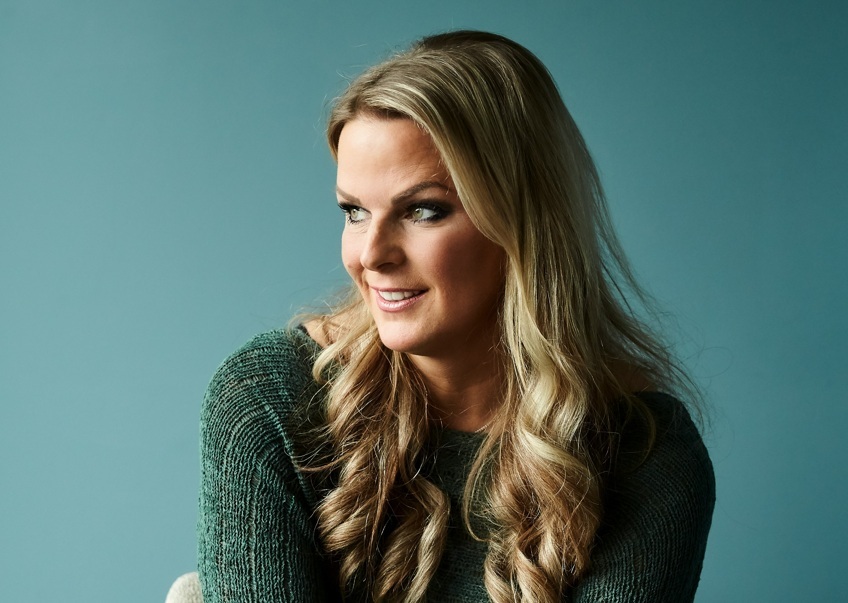
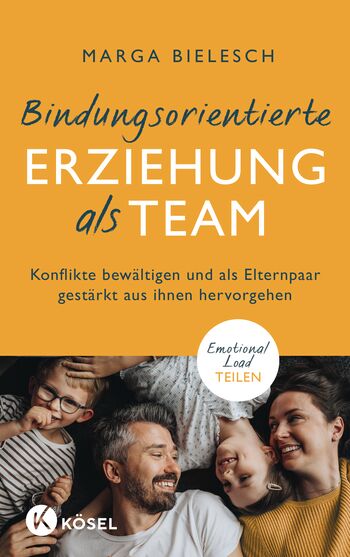
Hi, friends! How can parents work through conflict and come out stronger as a couple? Marga Bielesch explains it in her book “Bindungsorientierte Erziehung als Team” (Attachment-Focused Parenting as a Team), and she does it beautifully in today's interview. She's a couples therapist and has had her own practice since 2015.
She owns SPRECHZEIT in Weimar, Germany, a therapy practice for speech, attachment, and relationships with a team of several staff members. In 2018 she founded THEKLA®, an accredited private educational institution and brand that offers attachment-focused training, for example for couples and family counselors, along with attachment-strengthening play and attachment-focused course programs. She lives in Weimar with her family.
Marga, “You always undercut me.” Do you hear lines like that from couples in your sessions? These accusations?
“Oh, yes, I know them well. And the topics that go with them:
- Am I handling this, or are you?
- It's because of you that our kid is so impossible.
- Do I actually have three kids?
- Don't yell at our child like that.
- You never say anything!
I hear these sentences all the time in couples therapy, when parents fight about how to raise their kids. When parents want to guide their children through life in a way that strengthens the bond between them, there's often a lot of struggle. Most of us didn't have role models for it. Different upbringings, communication problems, and our own baggage mean the same issues keep coming up, the ones that chafe and have to be hashed out.
Parents today who want to raise their kids as equal partners and with a focus on attachment are often the first in their families to do things differently. They're real cycle breakers. And that inevitably leads to friction.
At the same time, there are plenty of couples living traditional roles. Even there, things are often lopsided: according to studies, moms are more likely to carry the mental load and the emotional load. They dig deeper into parenting topics, listen to podcasts, read the books, and take on responsibility for caregiving. That can be exhausting and overwhelming, especially if you feel like you're the only one responsible.
And then there are couples whose ideas about parenting are far apart. For example, when one person says, “A swat on the bottom is fine,” or “Punishment is part of it,” or “Kids are little tyrants, they have to obey, and we need to crack down more.”
If the other person wants to guide the child with attachment in mind, that of course leads to massive conflict in the relationship. When both are willing to dig in honestly, many issues can be resolved, but not all. Physical, psychological, or emotional violence is non-negotiable and off the table!
So two parents are sitting in front of you. One says, “You're way too strict with the kids,” and the other says, “Well, you're way too soft.” How can a couple get out of that?

That's a good question. An important first step is reflection: Why do I see the other person as too strict or too soft? Maybe one of you is extra strict because the other is very lenient. Or one of you comes across as soft because the other reacts so harshly. It's worth taking a closer look at your own experience of being parented: How did I grow up? What did I take with me? What am I maybe unconsciously rebelling against today?
Attachment-focused parenting needs a shared agreement between both parents. That means both consciously say, “Yes, we want to guide our child through life in a way that strengthens our bond,” and share the same basic outlook. But many couples have never explicitly agreed on this. They kind of slid into it and, without ever saying so, made a sort of “parenting contract” with each other, often with very different ideas of what was in it.
That's why it's important to sit down together on purpose and write this “parenting contract” again from scratch. It can say: We want to guide our child in a way that strengthens our bond. We're a team. We share the responsibility.
From that starting point, you can work through specific questions one step at a time: What are our shared family values? What is a hard no for us? How do we react in situations that overwhelm us? What is our shared approach to parenting? What matters most is that both of you take responsibility, not working against each other but with each other.
You say moms and dads also need to do some real work on their own life stories to understand why they handle their shared child so differently. What do you mean by that?
Yes, it makes a big difference whether I grew up with warmth and affection or not. Our different life stories, meaning what we experienced as kids and how our parents raised us, often carry over into our own parenting without our noticing. Unless we consciously reflect on them.
That's why mothers' and fathers' backgrounds and upbringings matter so much. They need space in the conversation and an awareness of them so that you can understand each other. Couples can negotiate these differences with each other, rather than throwing accusations like “You're way too overbearing.”
It would be more helpful to say, for example:
- “I don't want it to go like that.”
- “We need a different strategy here.”
- “I'd like to try a different way with you.”
Or:
- “How can I support you when you're overwhelmed?”
- “What do you need when it gets to be too much?”
- “How can we act as a team?”
Another important point is “dyadic coping.” In other words, how well do parents manage to work together under stress? How's the communication? Do they stay warm and supportive? Or do they yell at each other, throw blame around, and work against each other instead of with each other?
It's in the tough moments that you see how much of a team a couple really is. The findings of the study “Parental Competencies and Parenting Conflicts” show that the better a couple's dyadic coping, the fewer parenting conflicts they have.
So you need good communication about values and attitudes? And about things like: How did your parents treat you, and what felt good or not so good?
Yes, exactly. Parents should really take the time to sit down and talk it through in concrete terms: What did you experience growing up? Which values were central in your family, for example belonging, openness, respect, maybe also obedience or discipline? Which values felt good, and which didn't?
And then the key question: Which family values do we want to carry into our own family?
In my book I have a good exercise for this that couples can use to talk through these questions step by step. It's about figuring out which values from our families of origin we want to keep. And what additional values matter to us?
For example:
- Feelings are allowed.
- We guide our kids at eye level.
- Community and sticking together.
- Honesty and trust.
- Warmth and equal worth.
Taking time for this on purpose is hugely important. Because this is exactly where parenting conflicts so often start. And most couples, and I see this again and again in my couples therapy, have never talked about it. That's exactly why parenting gets so hard.
Say one partner fills their love tank mostly through good conversations, and the other through hugs, cuddling, and affection. Can that lead to differences you can't get past?
I'm very clear on this: No, those don't have to be differences you can't get past. It's fine for them to be completely different. What matters is something else: conflicts have to be resolved. Let's be honest, it becomes a problem when there are conflicts and nobody talks about them.
When they simmer under the surface. When you don't say what bothers you. When, for example, you wish your partner would treat your child differently than they actually do. In moments like that, you understandably have little motivation to respond to the other person's needs.
And if I constantly feel like I have to defend my child because I see my child being treated unfairly and worry it isn't good for them, then I'm hardly going to be able to put my partner's need for closeness and affection first.
So to answer your question: the needs for how the “love tank” gets filled can be totally different. That's absolutely legitimate. It gets difficult when couples don't have good strategies for resolving conflict.
Your plea is that parents should act as a team when raising kids. We shouldn't just respond to our children's needs, but to our partner's too, so that all of this works. How do we do that?

If parents want to keep their relationship in view while raising kids, then of course it's just as much about the partner's needs. Putting the children's needs at the center is great. It's the foundation for a warm, loving childhood that strengthens the bond. But it's just as important to look at your partner: How are they doing? And also: How am I doing?
Voicing your own needs, responding to your partner's needs, and finding good solutions together is essential. Parenting is also very much about sharing the responsibility for caregiving.
For example, with questions like: How do we decode our child's behavior? How do we react to the next tantrum? What do we do when doors get slammed, or when our child can't settle down at night or is scared? Do we respond with warmth and love, or with the harsher, old-school approach?
Getting informed about this, reading parenting books, bringing in current research, or talking with other parents can be very helpful. Often this research falls even more heavily on the moms. When that gets some relief and dads get more actively involved, it's hugely good for the relationship.
Then it's about, for example, the mother's need not to carry the responsibility for caregiving alone, because it's simply too much. And it needs to work in the other direction too: maybe the partner sometimes feels unsure and asks how he can respond better. That deserves support too.
Or there are completely different needs: if one person really loves order, while for the other the main thing is intense time with the kids, that need can't be ignored either. It doesn't help to let the house go completely with the argument, “The kids are more important.”
Yes, kids are very important. But so are your partner's needs. This is where the adults have to show up with the right attitude: take responsibility, stand up for each other, be warm and present, and keep both the kids and the relationship in view.
What do you think of radical generosity, the “I'm happy for you” approach: I don't just allow my partner the weekend away with friends, I cheer for it. I don't just allow the full night of sleep, I celebrate it… That works, but probably only if both people follow through equally, right?
Well, radical generosity sounds great. How wonderful is it when I can wholeheartedly give my partner something, step back for once, and be honestly happy for them? I think it's wonderful, but it has to be equal.
What can you do when, in the end, most of the emotional work still falls to one person? What words are there for that? For this: I create a pleasant atmosphere, I check on the emotional balance, I speak up when I notice changes, I read up on all kinds of topics…
Emotional load is a huge topic. It describes the invisible emotional burden that, in many families, falls mostly on moms. That includes responsibility for caregiving on the emotional level: How is the child doing? Why are they sad? Who referees the sibling fight? Who notices self-doubt and brings it up?
But also: Who makes sure there's a good atmosphere in the family? Who looks after everyone else's feelings? And who also keeps an eye on the couple's relationship? All of that is invisible work. Emotional work. And so it's also an emotional burden.
In many couples, this burden is still unevenly divided. That's why you need transparency: What exactly does emotional load actually mean? What does it include in everyday life? Your partner should be able to understand what you mean by it. And then it's about relief. That can be small steps. What matters is that the responsibility for caregiving is shared.
I'll be honest: this is a big topic. You can't pack mental load and emotional load into one conversation, let alone settle them there. You can't expect everything to run differently after one talk and the invisible work to be divided fairly all on its own.
It's a process. A topic that has to be discussed, negotiated, and adjusted again and again over months. For that, you first need a good basis for communication. A couple has to be able to talk with each other openly and honestly.
Only then can the next step be making mental load and emotional load visible, and after that developing fair solutions. That takes time. It takes work on the relationship. And it takes the willingness to stick with it. That's the only way real relief can come about in the long run.
What's your closing message for couples with kids who want to stay happy while raising them?
That's a lovely question. Couple relationships want to keep growing, and that's often underestimated. If everything stayed the same forever as it was at the beginning, it would get boring at some point. And boredom often turns into distance or breakups.
Relationships need growth. That also means both partners keep growing. And that's a good thing: it strengthens you, it brings things to life, it brings joy.
When it comes to parenting, especially attachment-focused parenting, you need that growth. You need to negotiate, talk issues through together, and resolve conflicts. For that, good strategies for resolving conflict are crucial, as are shared values. What matters is staying in the conversation, not throwing blame at each other, but bringing things up constructively to find good solutions.
Because equality, in parenting too, doesn't just feel fair, it feels connecting. And in the long run it makes you more content.
So here's what I'd say to parents: Stick with it. Don't get discouraged. A lot of problems and issues can be solved. Not all of them, but many. Tackle them. Stop hiding. Drop your guard. Get support if you can't make progress on your own.
This story first appeared in German on StadtLandMama.