Dear readers, I have a very sad story to tell you today, because a year ago our reader lost her eldest daughter, who was six years old, in an accidental death. It was a tragic accident in the middle of everyday life, something that really only happens very rarely, but which each and every one of us is probably really afraid of. So please only read this if you feel like it. We were very touched by Kitty’s courage and openness in telling us about it and we thank her so much for her trust.
Dear Kitty, you are mum to four children. Why don’t you start by telling us how you live
.
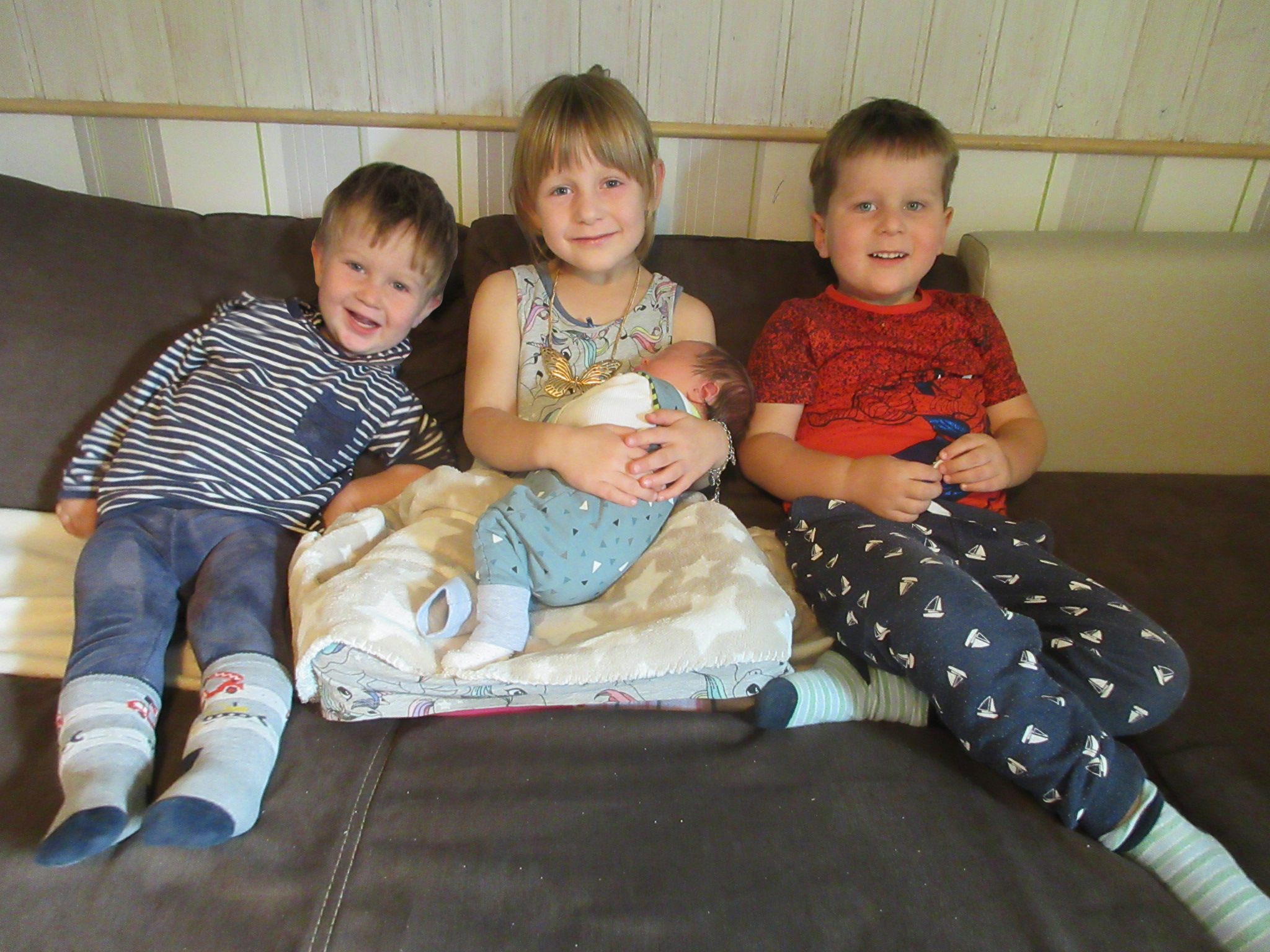
My husband and I live with our two sons (5 and 3 years old) and our daughter (1 year old) in a small village in Thuringia. I grew up here and returned here after studying for a few years. My mother also lives on the property, right next door in the neighbouring house. We know pretty much everyone in the village.
Our favourite thing is to be outdoors and in nature, especially in summer we are often in the garden until the evening. Over the last few years, we have redesigned it to suit our own ideas. Between fruit trees, flowering shrubs and colourful herbaceous borders, vegetables grow, chickens cluck and bees buzz – just as you would imagine an idyllic country setting. The children have plenty of areas to play, dig, slide and run around. They grow up here freely and carefree, are allowed to try things out and show great interest in their environment.
You had four children. In November 2021, your eldest child, your daughter, died in an accident. Can you tell us about that day?
My husband was at our neighbours‘ for the slaughter that day, as he did every year that weekend. Our older daughter (6 years old at the time) actually wanted to go to the indoor swimming pool, but unfortunately the two older children were in quarantine due to a coronavirus case at nursery school.
We spent the mornings together in the garden until I went into the house to cook lunch. The youngest child (3 months at the time) was sleeping peacefully in the pram, the two older ones were playing together in our willow dome (a kind of hut made of branches) and Grandma was raking the leaves with the little one right next to her. A short time later, she came into the house looking distraught and pale and asked me to call an ambulance. At first I didn’t know what had happened and ran straight out into the garden.
There I saw our older daughter lying unconscious on the ground. She had slipped while climbing around in the willow bushes and caught her scarf on a small branch stump when she fell. Our older son had alerted Grandma, who initially rescued her. When our daughter didn’t come round, Grandma called me in.
In what condition did you find your daughter?After I couldn’t detect any signs of life, I immediately started resuscitation with the boys watching. Meanwhile, my mum was on the phone to the emergency doctor, who stayed on the phone until the emergency services arrived. A neighbour came over – he heard that something must have happened – I think I was just screaming the whole time. The neighbour then fetched my husband, who continued with the resuscitation measures.
Our local fire and rescue services arrived shortly afterwards, followed by the rescue helicopter just a few minutes later. After what felt like an eternity, we were informed that they were able to bring our daughter back – she had a pulse again and was breathing on her own, but was still unconscious. She was then flown to a nearby hospital, where my husband accompanied her. The rest of us stayed behind in shock and were looked after by several volunteer emergency counsellors until the evening, when my husband called from the hospital for the first time.
Your daughter was then admitted to the paediatric intensive care unit at the hospital. What was the doctors‘ prognosis? And can you describe how you experienced the first few hours there?
Our daughter was put into an artificial coma so that her body, but above all her brain, had to work as little as possible. This was additionally supported by hypothermic treatment, a kind of cooling suit that initially lowered her body temperature to 33°C and then very slowly, over several days, raised it back to normal temperature. An initial examination of her head showed the onset of brain damage due to the lack of oxygen. However, we were not given a prognosis at first. We were in a bubble and glad that the first night was over.
The next morning, we had a joint discussion with the doctors, where it was emphasised once again that we would have to wait for the next few days and that a second examination of the head would only be able to assess the extent of the damage after about five days.
There was no warning at any time, we were prepared for anything. Her condition was critical, but stable so far and we were happy every day that at least there was no deterioration. Our thoughts circled in all directions: Would she be fit again by the time she started school in the summer? Would she want a cremation or burial?
Because of the strict visiting rules at the time, only one of us could go into the room at a time. The other one stayed at home or drove round the hospital with the baby. The boys were at nursery, weren’t allowed to visit and were supposed to have a „normal“ daily routine for the time being. Once we took the older one to the hospital so that he could at least see it from the outside and we took pictures of our daughter to show the boys.
The psychologists from the crisis intervention team there, who were always by our side, also told us that it was important to understand this. Apart from that, there wasn’t much we could do except sit by the bed, read favourite stories, play songs sung by the kindergarten children and hold hands.
And then it was time for the second head examination
.
In fact, we were excited and were already talking about a possible early ha. The statements were initially vague, but maybe I just hadn’t taken them in properly. We made an appointment for a detailed consultation with the doctors. When we called the ward every evening before we went to bed, a doctor told us in no uncertain terms that the examination had been „catastrophic“ and that everything that made up our daughter’s character had been irretrievably destroyed. We were shocked and talked to each other long into the night about what this would mean for us and what could be in store for us.
How did you deal with this news
?
The next day, the mood was naturally depressed. I was tired and spent the whole day lying on the sofa with the children with the blinds down. My husband went to the hospital on his own in the morning, so there was no new information.
In the late afternoon, we received an unexpected call from the hospital to say that our daughter’s condition had deteriorated considerably in the last few hours and that her circulation kept collapsing. We were asked to come to the hospital with the children to say goodbye. We hurriedly packed up a few things and had a friend drive us.
When we arrived, the carers had already prepared everything. A dim night light was on in the room and the monitors were switched off. They had dressed our daughter and combed and plaited her hair.
The doctors had one last conversation with us. They said there was nothing more they could do. The damage caused by the lack of oxygen to her brain was simply too severe and extensive. The failure of the body’s functions could no longer be interrupted or even stopped with medication.
How did you say goodbye?We decided to stay overnight and accompany our daughter on her last journey together. Extra beds were brought into our room, we painted her nails and made hand and footprints.
We explained to the children what was going to happen. The situation must have been strange for them too. Their sister was apparently lying peacefully asleep in bed and was now going to die and not come home with us.
We put the children to bed and then said our goodbyes in peace. We lay down in our daughter’s bed, stroked her and whispered our wishes and thoughts to her. Shortly after midnight, we told the doctors that we were ready – they ended the artificial respiration. We placed our ears on her chest and listened to the increasingly slow heartbeats. About 20 minutes later, her heart stopped beating forever.
How do you tell three siblings that the fourth is now missing?Because of our experiences with other deaths in the family and also because of the good psychological support we received at the hospital, we knew from the start that we had to explain everything honestly to the children. That we shouldn’t use phrases like „Your sister has fallen asleep“, but clear words like „Your sister is dead.“ Even if that’s not always easy.
If you can’t think of an answer, you can also communicate this openly. The children are very open and unbiased when it comes to the topic and of course ask the odd uncomfortable question, often completely unexpectedly, in situations where you wouldn’t expect something like that. That’s tough. But after a few minutes, they simply return to their game.
We involved the children in everything right from the start: we picked out clothes, music for the funeral service and small coffin gifts together. We painted the coffin and urn together and said goodbye again at the open coffin.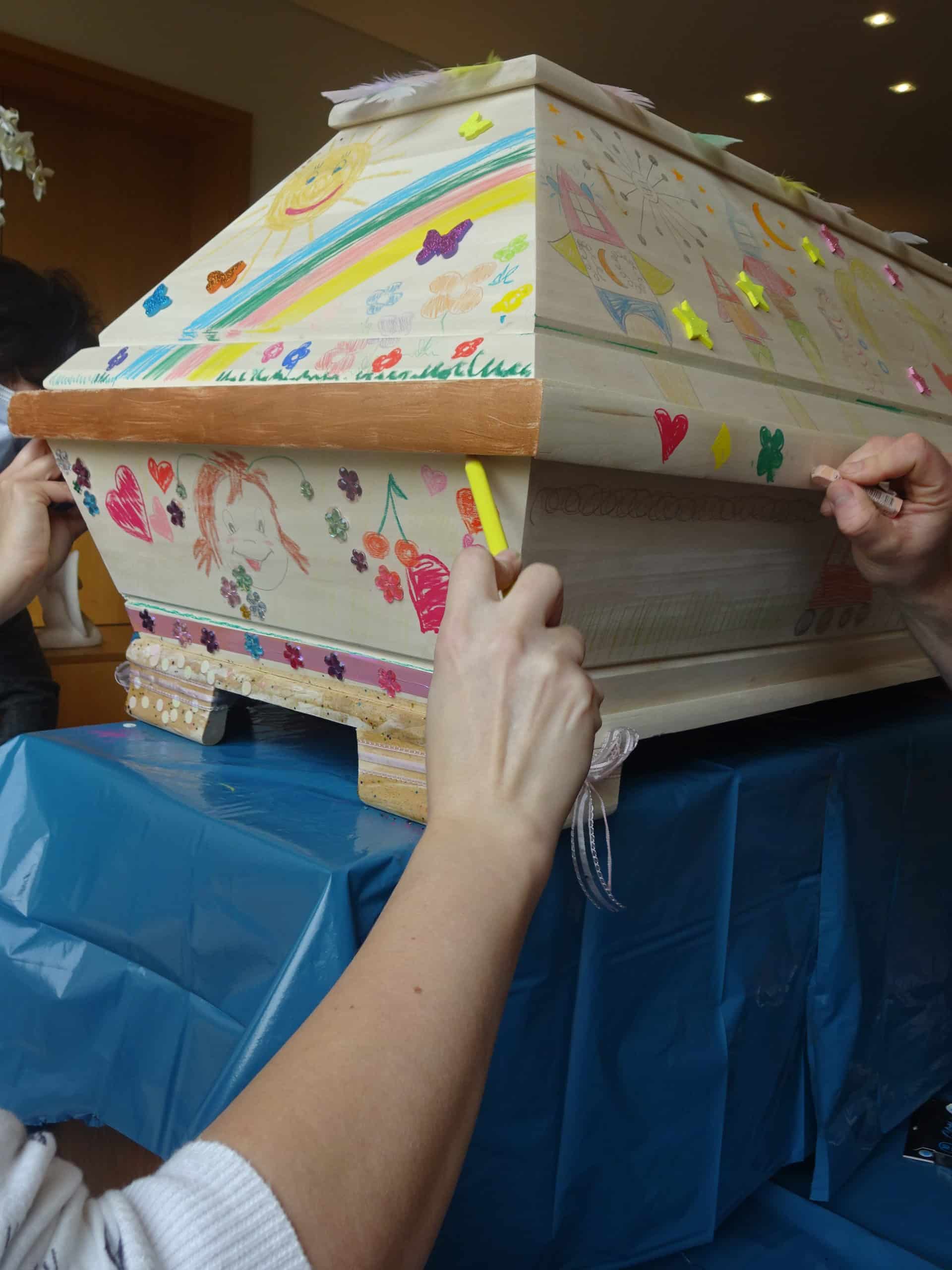
Do you think children grieve differently to adults?
Children definitely grieve differently to adults. They don’t sit in the corner and cry. Sometimes they are introverted and thoughtful, at other times overly excited and often very angry. There are some good books on the subject of children’s grief, but there is no set guide for dealing with grief, as it manifests itself differently for everyone and is simply very individual.
And how differently do you and your husband grieve?
I find it helps to talk a lot about the situation and my feelings. Anyone who asks me anything always gets an honest answer, even if many people can’t handle it very well. Sometimes I sit somewhere, dwell on my thoughts and then just start crying. I usually feel a bit better afterwards.
In everyday life, you’re often so involved and distracted, but the pent-up feelings just have to come out after a certain time. The children are sometimes a little confused because they don’t realise this so often. I then explain to them what I was thinking about and why I’m sad at the moment. I’ve also done a lot of crafting and writing in the last few months. It helps me to write down my sometimes confused thoughts. I’m also thinking about publishing a blog to perhaps help others who are affected.
My husband is rarely approached and asked how he is doing. That’s actually a shame, because men don’t grieve any less, but perhaps more for themselves. My husband tends to go out into the woods to make wood or to the workshop to think or just let it all out.
What does the loss of a child do to a partnership?
In our case, the shared loss has brought us even closer together. Since the accident, we’ve talked a lot about our thoughts and feelings, even if there isn’t always much time for that in the normal madness. We realise when it’s too much for the other person and they need a few minutes to themselves.
In everyday life, we share the tasks and also the caring work. All of this helps us to stay strong together and to have a stable foundation for the children and family life. I really appreciate all of this, because it’s not something that can be taken for granted and some relationships are broken by such a loss.
Is there anything that helps you to come to terms with the loss?We remember our daughter together through small rituals and crafts. For example, we drew a picture together of what it probably looks like in the place where our sister is now.
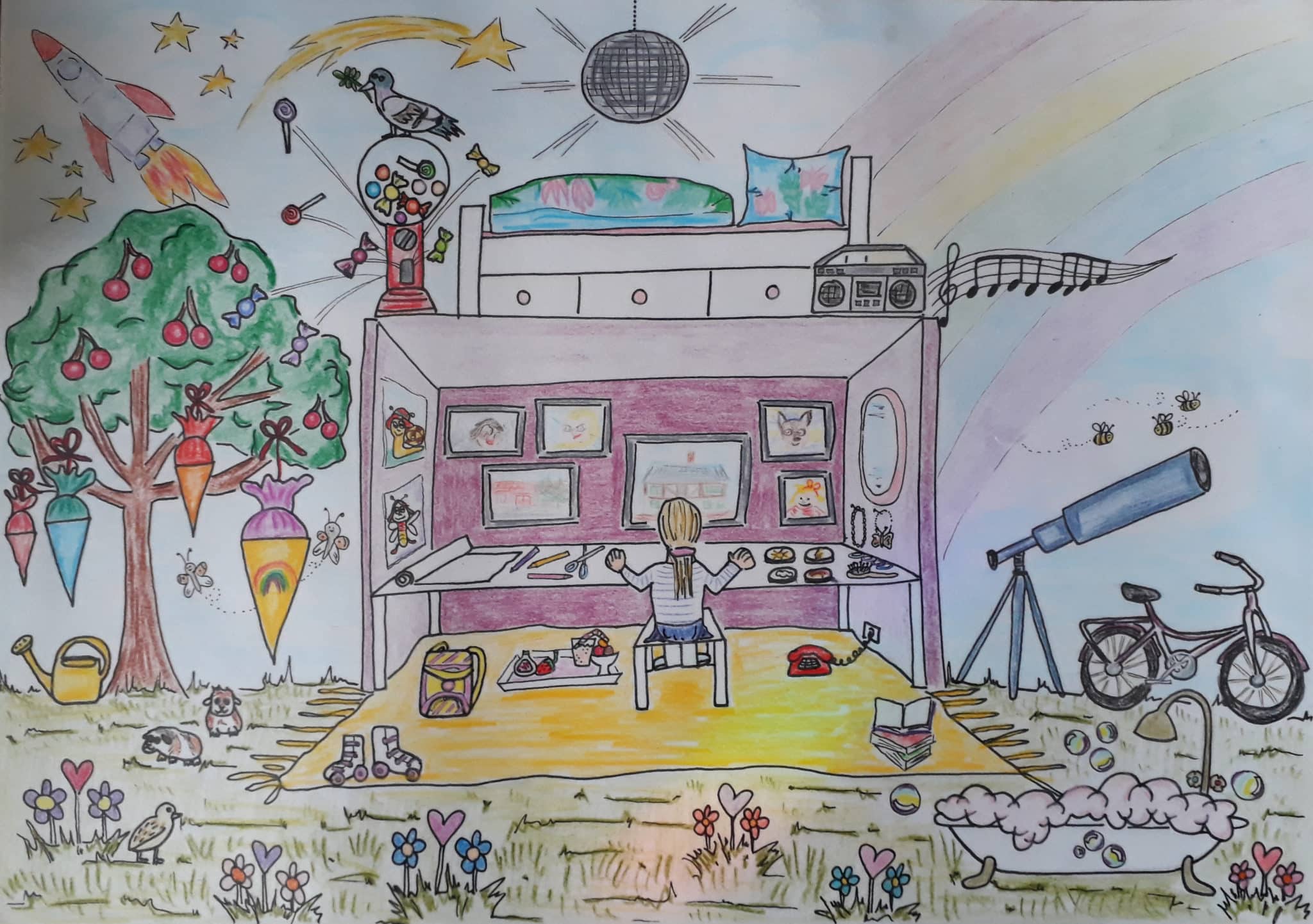
We sometimes bring stones or things that we find on holiday or on excursions and make something out of them. I crocheted a life-size doll that sits in the children’s room and wears our daughter’s favourite things. Together with the children, I chose some of their favourite items of clothing and sewed them into cuddly dolls.
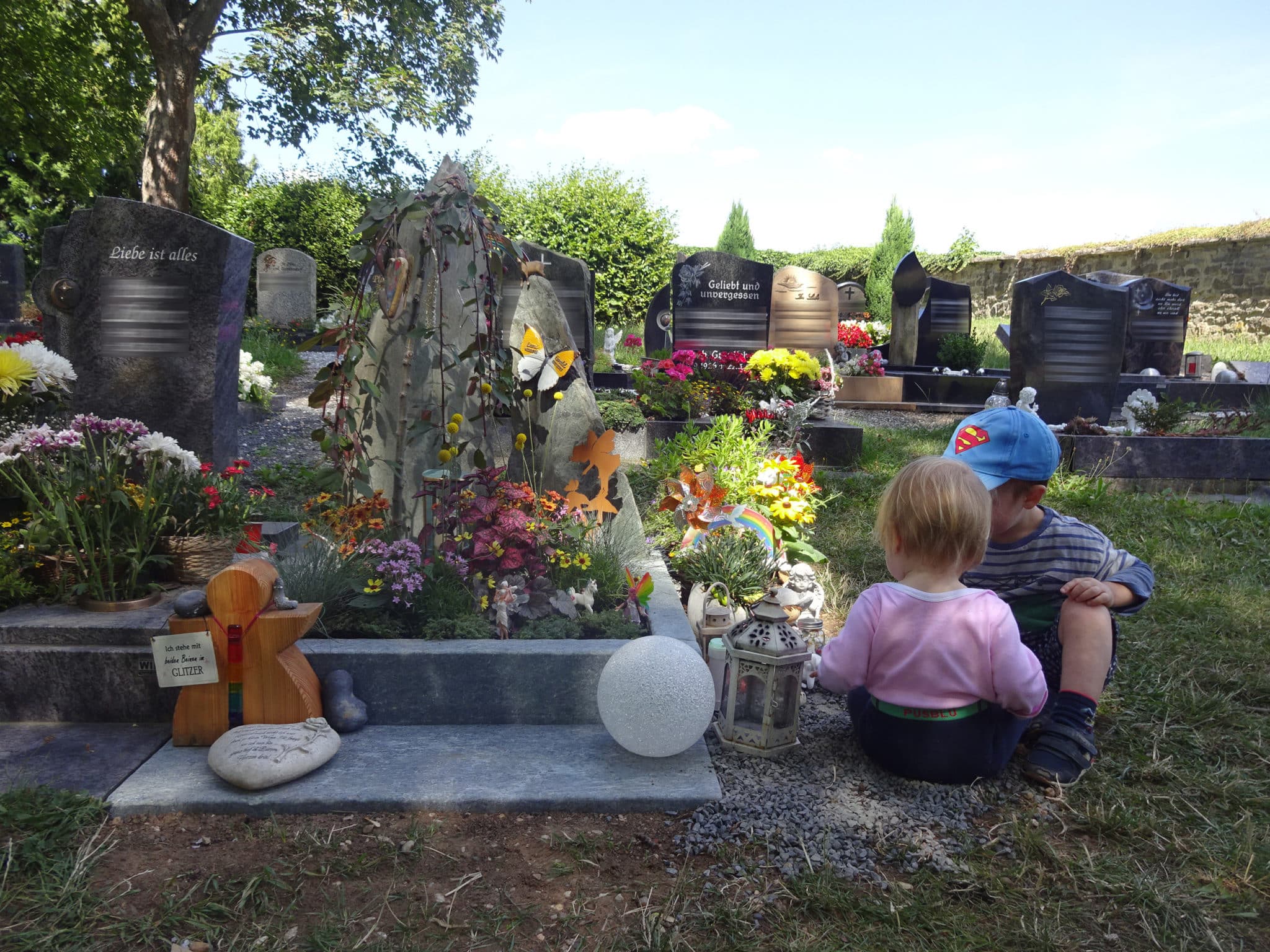
The nursery is still unchanged, the door is always open. The children sometimes go in to play or look at the memory box. Sometimes they also want to sleep there. We go to the cemetery together, bring flowers, decorate the grave or light candles. Or we sit together in the garden at the site of the accident. We have also decorated it. The children shouldn’t be afraid to continue playing here.
The children don’t always want to do this, which is completely fine. However, they often come up to us on their own, want to talk or look at pictures and talk about shared memories. The kindergarten has also carried out sensitive grieving work. There was a remembrance corner in the group room, a „tree of remembrance“ was planted in the garden and the little one was given a photo album that he can look at whenever he wants. The children also go to the cemetery together from time to time.I take photos of rainbows and collect feathers – this has developed and established itself as a kind of „heavenly sign“ or greeting for us. We find a little comfort in that. Of course, we also get support from family and friends who look after the children from time to time, go on outings with them or simply invite us over for a meal or take us for a walk and a chat.We don’t currently go to therapy, either individually or as a family. We once went to a self-help group but that wasn’t really for us, at least at the time. We recently applied for a family-orientated preventative measure, where we all want to go together to understand and process our grief even better, to simply have a break from work and all the tasks and obligations of everyday life and also to exchange ideas with other people affected.
Were there any sentences or reactions from other people that really hurt you?
Yes, there were a few. I’m sure many people do it unconsciously and want to comfort you instead of hurting you, but sometimes they just can’t find the right words. Sentences like „You have three other children.“ or „You’re a role model for us and we can learn something from that“ are probably meant quite differently than they come across to us, but it just hurts to hear something like that.
It doesn’t comfort us when someone says:
„The good Lord only does this to those who are strong enough to endure it.“
And we’re not even believers.
And then, of course, there are the really bad sentences, some of which reach you openly, others via detours, such as „It was clear that they wouldn’t manage with four children.“, „You have to be more careful.“ or „Well, you better not have another child now.“ That’s disgusting and offensive and you don’t know what to say in response.
But at this point, I really have to emphasise everyone who „dares“ to simply drop by, talk to us and ask how we are doing, who simply hug us tightly and wordlessly and who take such great interest in our fate. Because of the open and cheerful manner that our daughter had, many are really deeply affected and saddened.
How are you doing just over a year after your daughter’s death?
You’ve returned to a certain kind of everyday life in a fairly stable way. You go to work, do the housework, look after the children and do everything that needs to be done. However, you are often less focussed and less resilient than „before“, tired and jaded. Some things become meaningless, others you simply learn to appreciate. But you’re alive and trying to make the best of it.
Of course, there are still often situations where I’m just completely exhausted and infinitely sad and still can’t believe what’s happened. But the moments of numbness and pain are no longer permanent, they tend to come in spurts and perhaps lose a little of their intensity. There are also „normal“ days again when you can be happy, grateful for the time you spent together and what you still have.Grief is not over after a year, as many people always say. The feeling of grief, the painful missing and the love for our daughter will always stay with us. You somehow learn to integrate it into your life, but this life is simply different from „before“.
What do you wish for the future?In general, I would like to see a more open approach to mourners and to the topic of death and dying. For example, that people don’t look at you the wrong way if you don’t wear black for a year or go on a picnic at the cemetery. That more people dare to deal with the topic and are not afraid to involve their children, who can really be a role model on the subject.
For me personally, I hope that I don’t become an overanxious mother, that I can continue to give my children the space they need to develop freely and carefree and that I don’t wrap them in cotton wool to protect them from all the dangers of life.
For my family, of course, I wish for good health and that we all manage to cope with this difficult loss and always appreciate that we have each other.