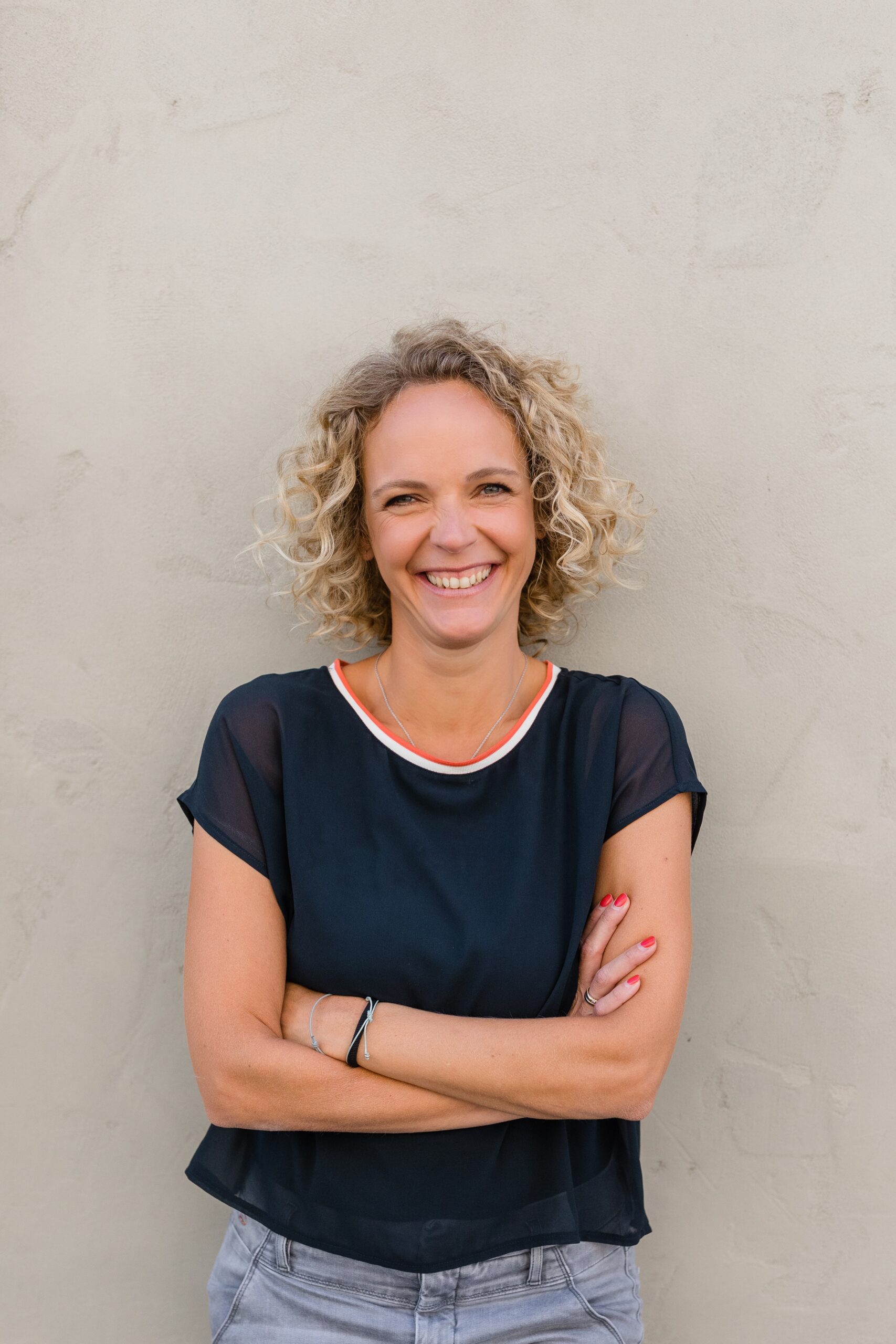

Dear ones, Anna-Maria Böswald is the founder of SternenEltern Schwaben e. V. and initiator of the Erinnerungswald der Sternenkinder. She founded the association many years ago – and also created the memorial forest – because she and her husband needed a place where their twins, who both died after birth, could have a visible place. In the middle of us. Because they belong.

Dear Anna-Maria, would you like to tell us about your twins?
My husband and I had always wanted a big family, but getting pregnant was very difficult for me. After many years, a miscarriage and finally IVF, I was able to get pregnant with twins. It was clear early on that they were both very low and that the pregnancy would be difficult. I only had to lie down from the 11th week, but we remained confident.</p
On Father’s Day, completely unexpectedly, my waters suddenly broke. I went to hospital – and a short time later it was clear that our twins were coming much too early. Joan Constantin and Arian Leonard were born by caesarean section. They were too small to survive – but they lived. They both cried, kicked and breathed. We were able to have them baptised and spend a few hours with them.
These hours were the most precious thing they could have given us. When we said goodbye, they both gave my finger a gentle squeeze – as if to say: Mum, it’s okay.
And then they left in my arms.
What did this turning point mean to you?
The death of our children was one thing – but the additional experiences we had at the time were almost just as traumatic. There was no clarification, no information, no memories that we were given, no psychological support – not even for our four-year-old son, even though we had asked for it.
In the end, we did what everyone – including the counsellor – advised us to do because we were completely overwhelmed: We didn’t let our son see his brothers, even though he really wanted to. I now realise how wrong that was – and that experiences like that can also break families.
So how did you come up with the idea of creating a forest of remembrance?
This pain gave rise to the desire to do better for other families. So we founded the acute association SternenEltern Schwaben e. V.. In this context, the first joint project with the district came about – almost as if by a small miracle: the Memory Forest of the Star Children.
When we were thinking about what we could do for affected families, my husband suddenly said:
„Do you know what I miss most? Two things. Firstly, that our children don’t appear anywhere. They are invisible to everyone, as if they never existed. And secondly, that I never get to see them grow. No development, no changes – nothing.“ And then he said: „I think it would help me if I had both symbolically: a tree that I can see growing. A tree that bears the name of our children, visible to everyone. So that they can finally be seen.“
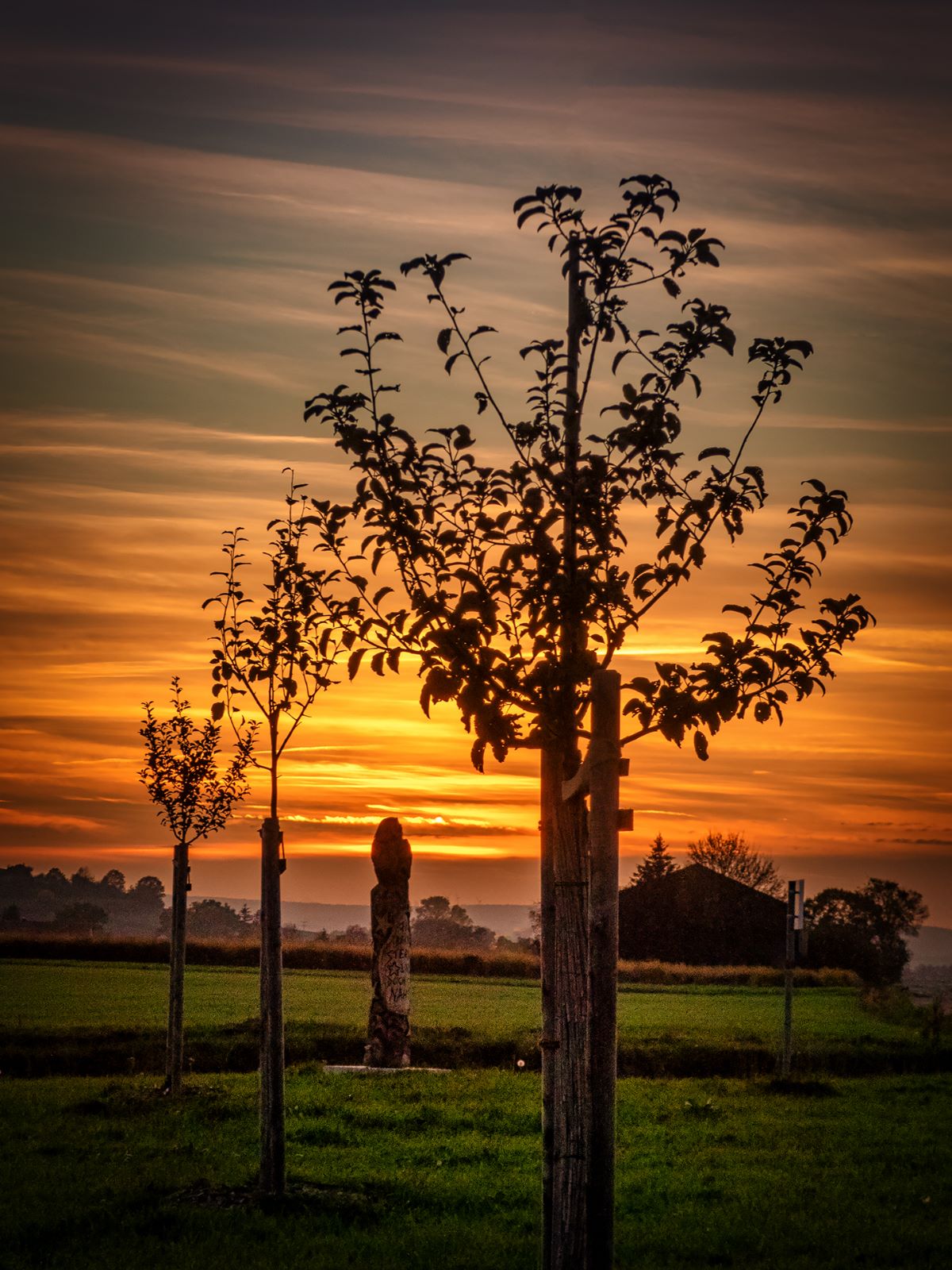
This idea gave rise to the memorial forest. We wanted to create something that could grow symbolically – just as the love for our children continues to grow. Something that you can accompany, nurture and watch grow. After a short time, the first area provided to us by the district was already fully planted: 148 star trees representing more than 150 children – each one visualised by a tree that grows, blossoms and lives on.
Since then, we have seen the trees change and grow bigger – some are now „free“, without support. It really is like accompanying them as they grow. The memorial forest has become a meeting place, even for people who don’t have star children themselves. They come, look, listen – and are touched. That was exactly our wish: that these children become visible and belong.
Are you in direct contact with the families? What do you experience in this exchange?
Yes, and it’s very different – every family goes their own way with it. Some just pick their tree, choose the variety and the sign design, and that’s just right for them. They know: There’s a tree growing for my child, and that’s all their heart needs at the moment.</p
Others, on the other hand, deliberately seek out dialogue – sometimes only briefly, sometimes in long, very intensive phone calls or personal meetings, even directly at the plantations on site. There is often a lot going on, and you realise that this exchange gets things moving for many people.</p
What is particularly noticeable is that mothers whose children died many decades ago – sometimes 30, 40 or even 50 years ago – have an incredibly great need to talk. Many of them were never allowed to talk about their children back then. There was no information, no memories, no saying goodbye. Some didn’t even know where their child was buried. The babies were often simply buried quietly with another coffin, without a name, without a trace.
And then I keep hearing the same sentences these mums tell me – common statements that they were told back then and still carry around with them today: „If God had wanted you to be a mother, the child would have stayed.“ Many of these women kept silent all their lives – out of shame, out of pain, because it „wasn’t allowed to be“. The men didn’t talk about it back then either, they had to be „strong“. But of course they suffered too.</p
For me, these encounters with the older families are the most emotional. When you see someone standing in front of a small tree after so many decades – a tree that outwardly looks like any other, just with a name tag – and suddenly gets down on their knees, cries and simply says „thank you“…
Then you know what this place means.
It’s as if a piece of life that has been invisible for so long is finally given a place again. For many, it is the first time that their child is really „seen“ – that it has a name, a place and a meaning in the world, in our midst. These moments never leave me. They are sad and healing at the same time. And they show how important it is that places like this exist.
How does the whole thing work technically, how/where can families contact you?
Families can find all information on our homepage. The individual locations of our remembrance forest are described there – each with its own requirements, because we always work with different cooperation partners such as districts or municipalities. It is important to us to guarantee the highest quality at all locations and at the same time preserve the naturalness of the area.</p
The website also contains the forms to apply for a star tree. For many, this is already sufficient – but others would like more personal contact, and this is of course possible at any time. You can simply write to us by e-mail and we will guide you step by step. Together, we look for the right tree – each variety is usually only available once because every child is unique – and design the individualised sign.
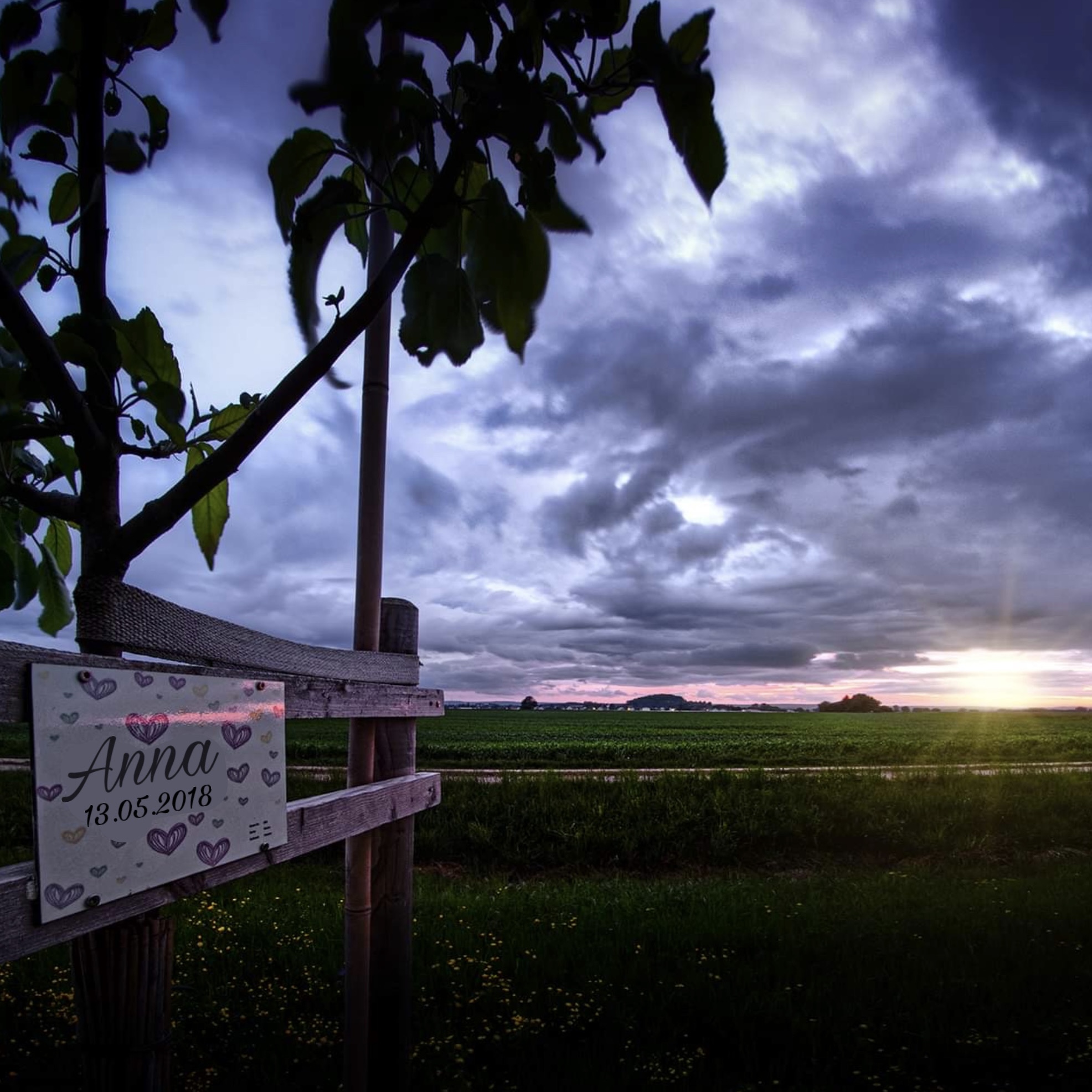
We pay a lot of attention to detail, especially with the signs, because they represent the child to the outside world. They should really fit. The families can design the sign themselves, in DIN A5 landscape format, or leave the design to us – whatever feels right for them. The end result is a tree that not only grows, but also gives the family a visible, loving place to remember.
What costs can you expect?
Our aim is to ensure that remembrance does not come up against financial hurdles for anyone. That’s why we try to keep the costs as low as possible through donations, funding and the support of our cooperation partners. At the moment, we can actually give out the trees completely free of charge – this is a matter close to our hearts. We very much hope that we can maintain this model in the future so that every family, regardless of their situation, can get a place for their child.</p
How has the Erinnerungswald ultimately evolved?
Over time, the Forest of Remembrance has developed into something that we wouldn’t have expected in this form at the beginning. Today, it is much more than a place of remembrance – it has become a form of self-help. Parents network there quite naturally, meet between the trees, talk, share experiences or simply enjoy the silence together.
And that’s not all: the remembrance forest has also become a real magnet for visitors. No matter when you come – there are always people there. Some walk quietly through the rows, read the names, linger briefly. I’ve heard people say: „You have to be grateful every day when this doesn’t happen to you.“ Others ask questions, want to understand, listen.
This openness and attentiveness are exactly the form of sensitisation that we wanted – that people are willing to engage with our children on their own initiative. That they are seen, visited and recognised as part of our community. For me, that’s the best thing about this development.</p
What feedback do you get?
The feedback is incredibly varied – as individual as the families themselves. Many tell us that this place is exactly what they needed. For some, the memory forest is a place where they want to be regularly – some come to „their“ tree several times a week, upload photos to social media or tell us what has just changed in their lives. Others only come on certain occasions – birthdays, anniversaries or simply when the heart pulls them there. And there are also families who are never there themselves – the certainty that their child can grow there symbolically and is visible is enough for them.
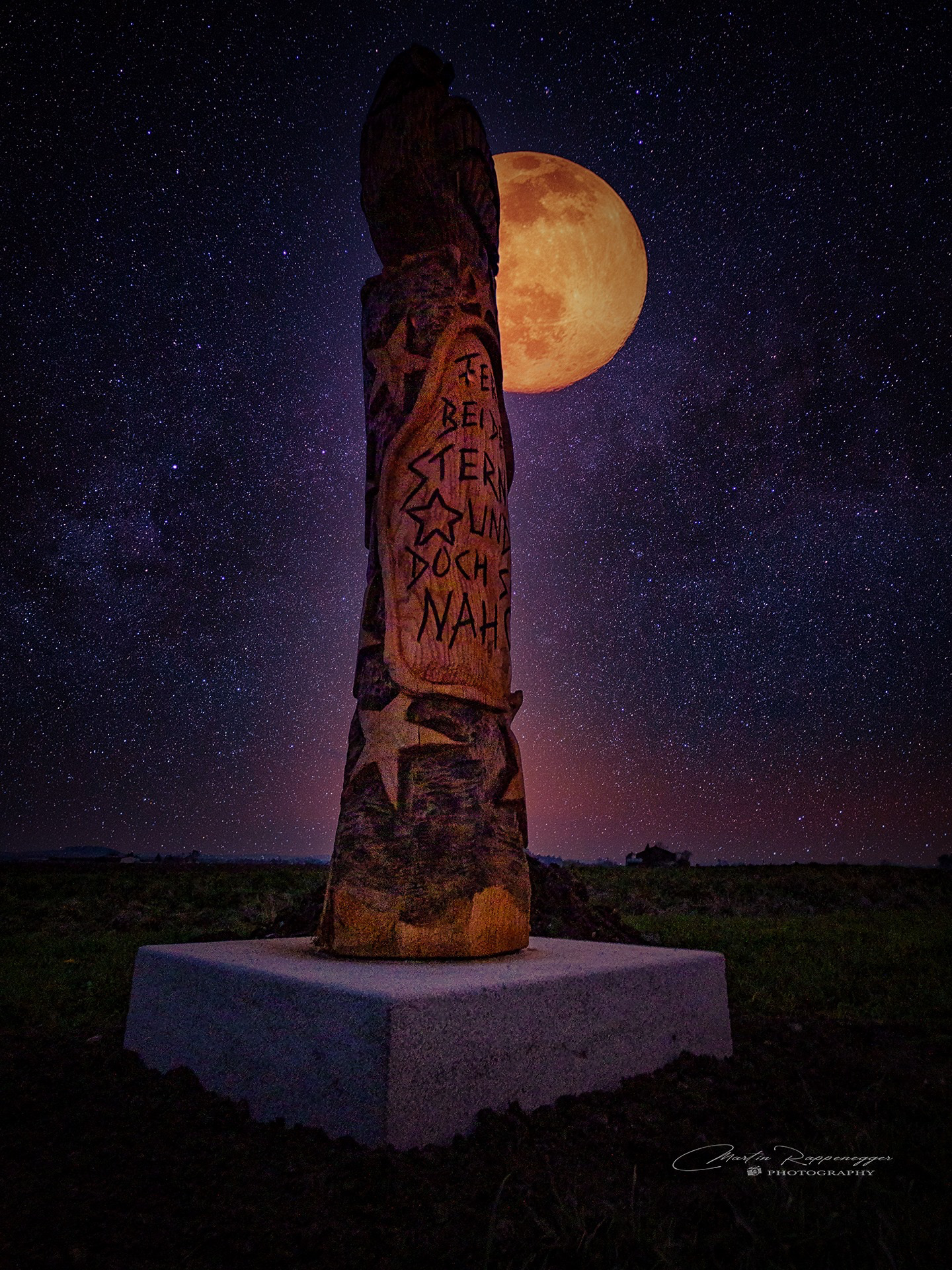
Some families organise real family gatherings there, with picnic blankets, games and siblings, surrounded by greenery under „their“ little tree. Many simply sit there, enjoying the peace and quiet and nature. The fact that the areas are deliberately left in their natural state creates a special atmosphere – with wild flowers, tall grass, buzzing insects and a wide variety of birds. At certain times of the day, deer, hares and other wild animals can even be seen.</p
Some families also harvest the fruit from their trees – some see it as a gift from their child, others affectionately call it the „fruits of love“. The forest of remembrance thus becomes a place where life, memory and nature merge together in a beautiful way. Over time, friendships have also developed there.
Parents meet by chance on a walk, get talking, exchange ideas – quite naturally, without group pressure or the classic self-help character. That’s exactly the beauty of it: everyone can embrace the place in their own way. And what makes us particularly happy is that the memorial forest is alive. It is not just a place of mourning, but also a place full of life, encounters and connection. We could never have imagined this at the beginning.
What does this place mean to you?
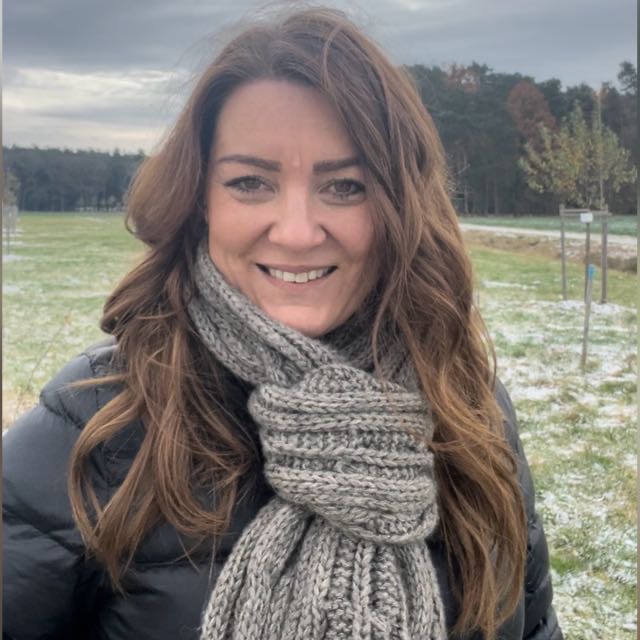
For me, the forest of remembrance is a very special place – a place of power. Not only because the trees for our own children are allowed to grow there and they are therefore in our midst. I am also touched by the fact that they are never alone there – surrounded by so many other children, so many stories.</p
But there is another reason why this place is so important to me: because it has become a source of strength for many families. Everyone can find something of their own there – comfort, peace, connection or simply a bit of peace. I am incredibly grateful that so many people discover exactly what they need in this place. That’s the wonderful thing about it for me.
What are your next plans?
After the first memorial forest was fully planted within a short space of time and the waiting list grew longer and longer, it was clear to us that we had to keep looking. It hurt to have to cancel families – because behind every enquiry is a story, a child, a love.</p
We are all the more grateful that we have now been able to open two more locations, both in the district of Neu-Ulm: a large, beautiful memorial forest in Biberach near Roggenburg in cooperation with the district, and a second one in Unterroth – right next to an idyllic lake, where around 20 little trees are currently still waiting to grow big and strong for a child.
And the development continues: the contracts for two new locations have already been signed – one in the Upper Palatinate and one in Lower Bavaria. It’s incredibly nice to see that more and more regions are willing to create places like this – places where children can become visible and families can find a place to remember.
Our greatest wish, of course, would be that we can create such opportunities across the board at some point. It will certainly be a long road – but we are confident and excited to see what the future holds.</p
What help do you need?
At the moment, our biggest challenge is getting to the families – reaching them and showing them that this option exists. Many don’t even know about the Forest of Remembrance, and that’s such a shame, because this place can mean so much.
In rural areas, especially here in Bavaria, it is still difficult for many people to talk openly about the loss of a child. Many families suffer in silence because society often still expects people to „function“ and not talk about it. Some are therefore afraid to seek such help. Yet this is exactly what is so important: to dare to open up.</p
We would like to say to everyone: Trust yourselves. Everything that is discussed with us remains confidential, of course. There doesn’t have to be a name on the sign – a symbol, a saying or a picture is enough, just as it feels right for the family.
Of course, we also need financial support to be able to maintain the programme in the long term. But practical help on site is just as valuable: Anyone who comes by once and takes a few photos – for us or for the families -, who helps to keep the site clean, picks up rubbish or simply mows the grass around the seating areas is already making a big contribution. Every small gesture helps to keep this special place alive.
What does a remembrance forest like this also do for the surrounding area?
And it has an incredible impact on raising awareness in society: visitors, walkers and cyclists regularly pass by, stop, read the signs and talk about the children. This is exactly what we wanted – for these children to be and remain in our midst.