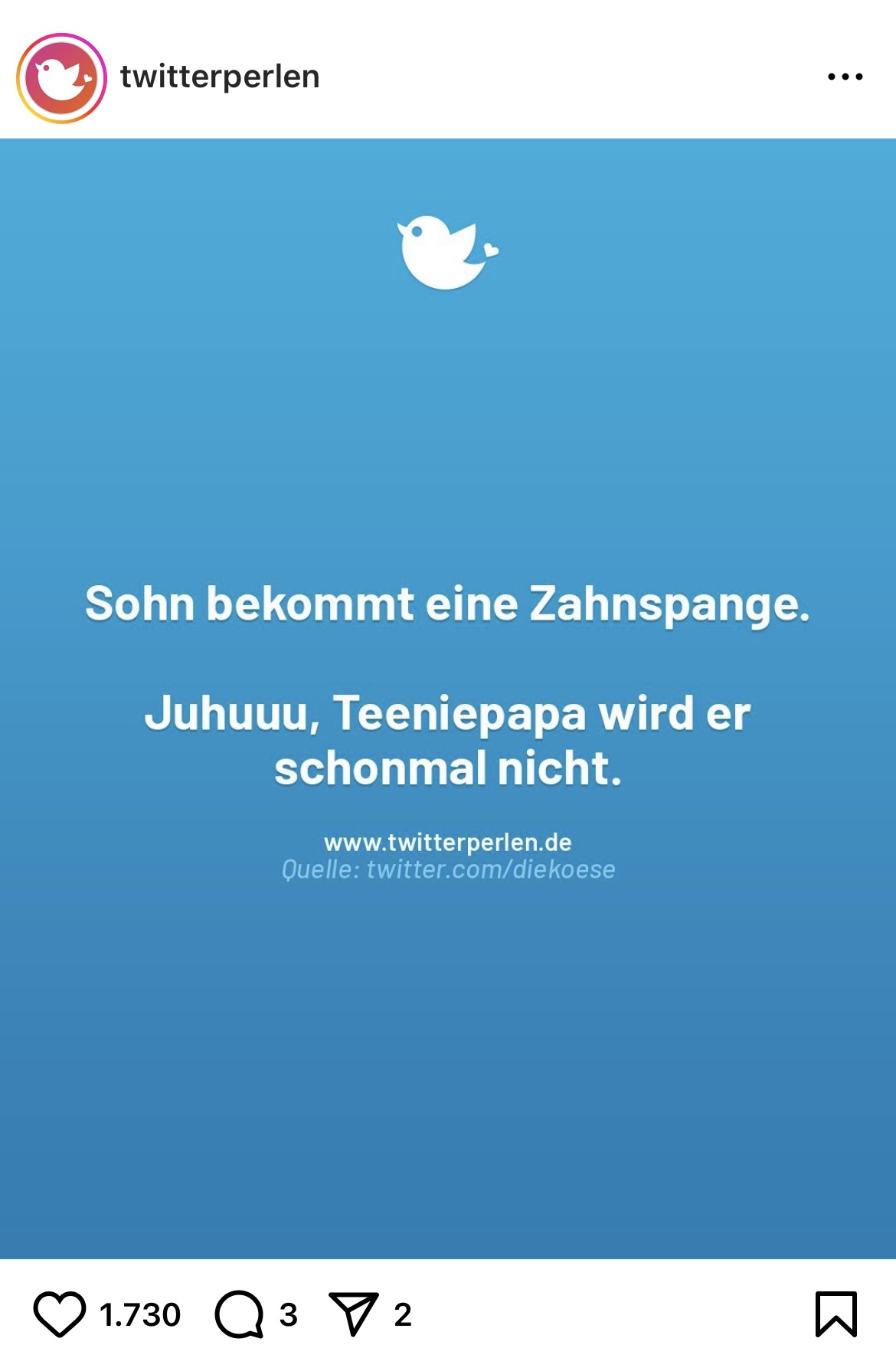
Dear ones, this week I got stuck on the Twitter pearls, which I often find very funny, on a saying that I couldn’t get out of my head because it simply lacks any respect. It read: „Son is getting braces. Yay, he’s not going to be a teenage dad.“
Let that roll off the tongue. So a dad is happy that his son is now so unattractive in his eyes that no one wants him anymore? With the „Respect, Digga“ in the title of this post, I’m not referring to young people, but to my parents who say things like that.
Think about it: How often are pubescents ridiculed in the public eye when their hormones are sprouting? How often is what they say simply dismissed as: Oh, you grow up first! What do you know…
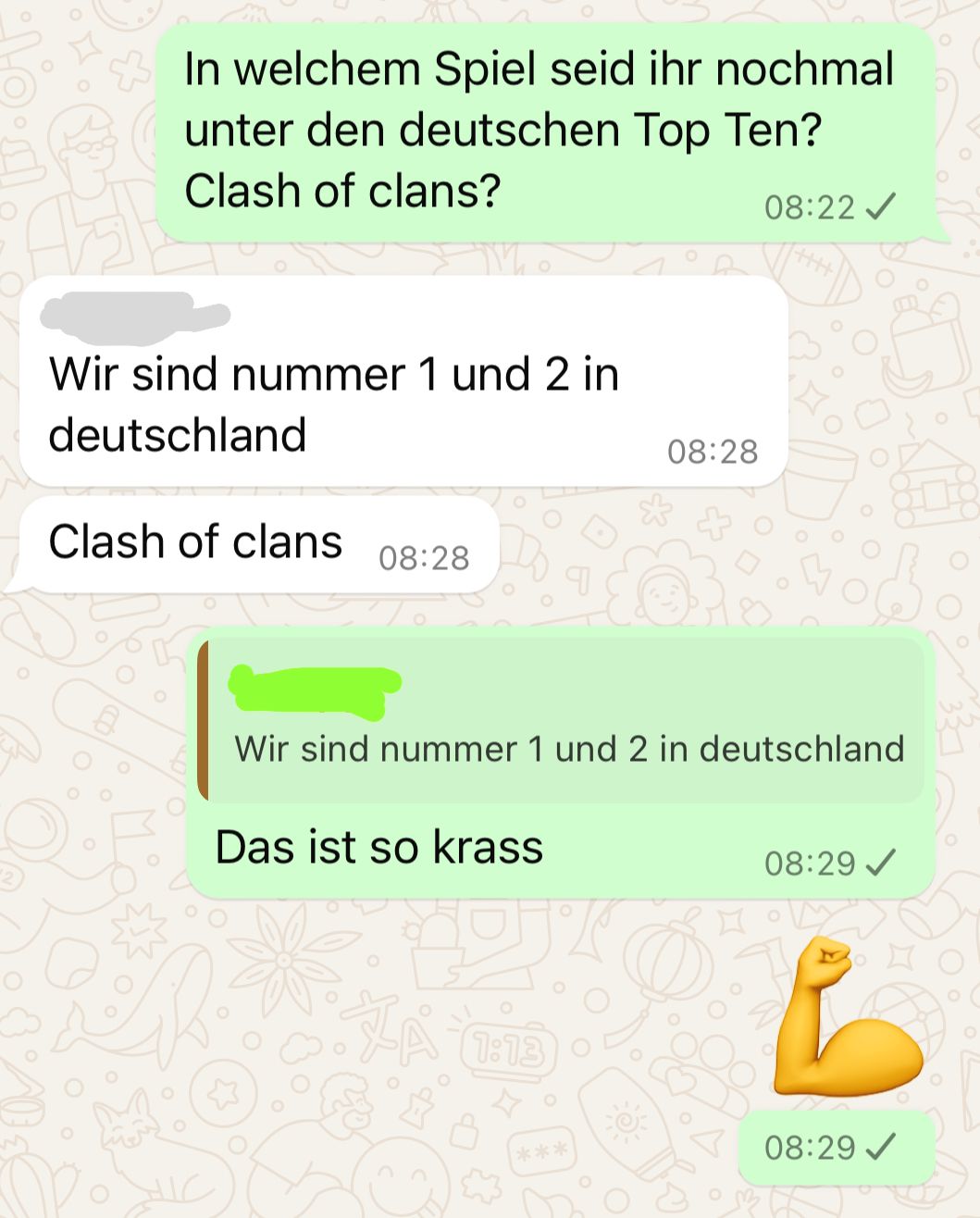
How often do they talk into the void when they tell us that they are one of the top ten players in Germany at Clash of Clans? Do we ask them to show us how it works? Will they explain their strategies and their recipe for success? Does that even count as success in our minds?
How seriously are they taken when they really suffer their first heartbreak? Do their parents say: „Cheer up, the next one will come“ or is there empathy and comfort and pressure and understanding for this huge drama that it is at the moment?
And this respectful attitude doesn’t just apply to young people, it’s about an inner attitude towards children! This doesn’t just develop, it can also emerge during a tantrum in kindergarten. I see you in your pain. We’ll get through this together. Instead of: Don’t be like that, it’s just a lollipop that’s just broken.
And if they have any questions. Do we then turn their heads with a „Are you stupid or what?“ attitude or do we say: Hey, I’ll explain it to you another way, maybe it’ll be clearer then (I’m also thinking here of a few teachers from my youth who treated me and others like that). How good that you ask and really want to understand instead of: Don’t bother, I’ve already explained it a thousand times.

Or with a new partner later on. How do we react if the person is perhaps not the one we would have wanted for our child? Do we take an interest in what exactly our child likes about this person and try to understand them or do we just look at them with a „Are you serious?“ look?
Do we forbid things out of principle or do we allow ourselves to be swayed by good arguments? Can the children ask us questions on all topics or do we perhaps become mute on the subject of money or love (not imposing, that’s not what we mean, but a general willingness to talk)?
Do we snoop around in their room, diary or mobile phone or do we respect their privacy? Do we trust our children to do things? Do we manage to accept decisions, even if we would have decided differently ourselves? And if so, how do we still manage to talk about it if we think something is not good for the child? The attitude: I respect what you are doing, but in my experience I would like to give you xy to take with you…
Respect, Digga! Good behaviour between parents and children
And just to make this clear again: This is not about daily understanding and 24/7 affection. Everyone has a bad day or a stressful time and doesn’t react in the typical way described here. I’m just talking about the general attitude towards children and adolescents. If this is characterised by taking them seriously instead of smiling at them, there is also the chance of reconciliation afterwards. To admit your own mistakes. To get back on an equal footing.
We are the parents, we have a little more life experience, we are allowed to decide things, we don’t have to live together with the children in a shared flat or be „friends“. We are allowed to offer support.
But we are allowed to declare our support, we don’t have to put ourselves above anyone else, we are allowed to give our children the freedom to decide things for themselves and be there if things don’t work out. We can remain curious about them and everything they experience out there for themselves.
We are allowed to give them space to develop, they are not our property and we don’t give them away if they fall in love, we can simply wish them the greatest happiness and fulfilment at all times.We can let them run and catch them, we can be their energy centre, their safe haven where they can anchor. But they are allowed to choose their own paths and experiences and we listen to them attentively and perhaps even learn as much as they do. More than we could ever have imagined on this wild voyage called life. Don’t you think?