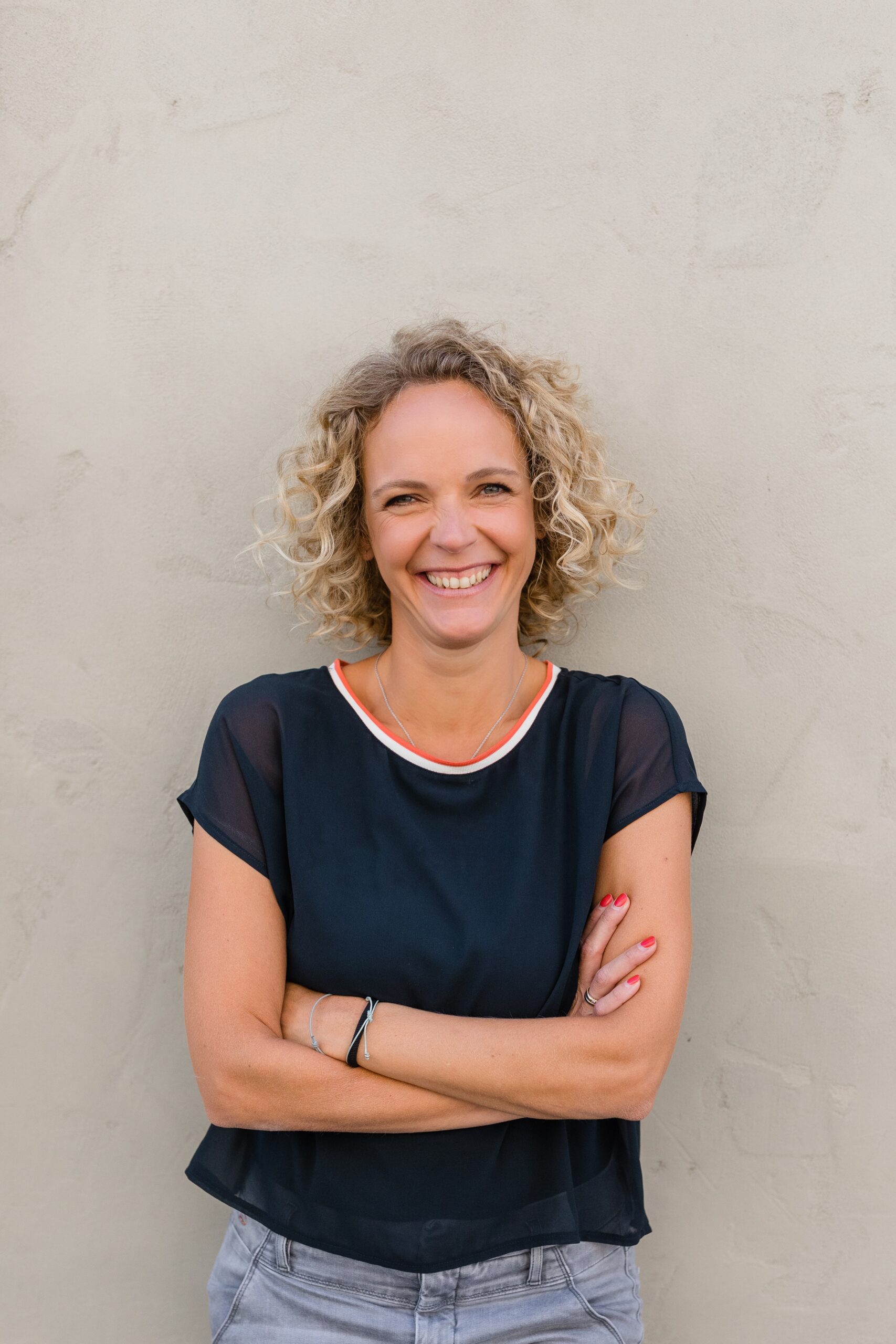

Dear ones, did you always know that you wanted to have children, did they come into your life unexpectedly or did you decide to have them after much deliberation? Verena Kleinmann is at a point in her life where many of her friends are having children.
And for her, having children has long been an unquestioned part of her life plan – even though she didn’t actually want them. Nevertheless, she naturally asks herself: Will I regret it if I don’t have children? Will I be lonelier or unhappier? What social expectations will actually influence my decision? And who will be my family if I don’t have children? She has written a book about this: Everyone is having children, I doubt.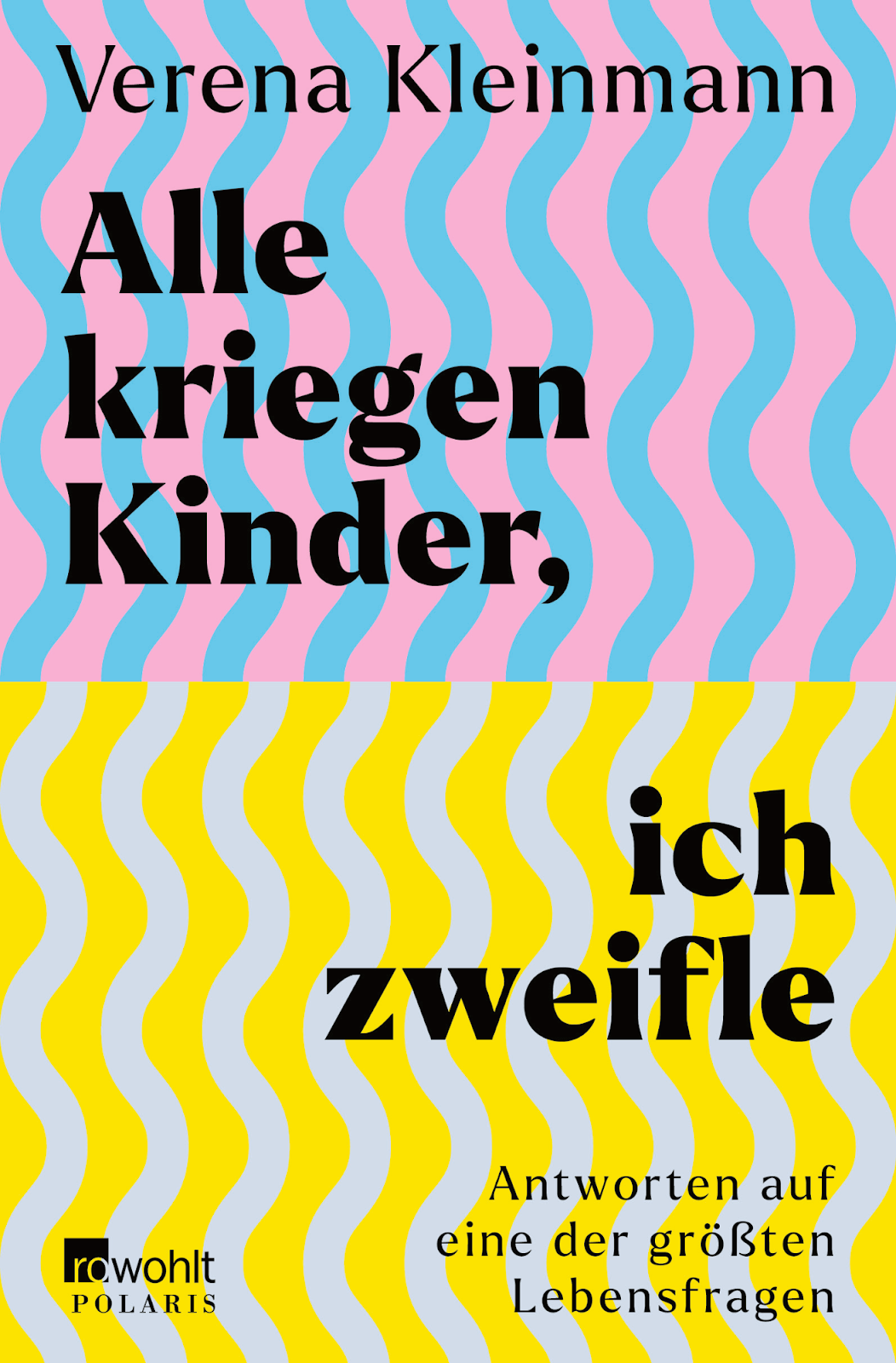
Dear Verena, which question about having children is the loudest in your head right now?
Probably how my book on the subject will be received. But that’s probably not what you were getting at 😉 At the moment, most of my close friends have small children. The friends I’ve known the longest and who are close to me also live in other cities.
I wonder how we manage not to lose each other when it comes to children despite our different lifestyles. I’ve spoken to a few people about this and we’ve decided that we’d like to try short holidays together to counteract this, despite the fact that we lead such different lives.
You conducted dozens of interviews for your book. What was the bottom line? Are there ways to lead an equally fulfilling life outside the traditional nuclear family
?
Phew, there are so many „bottom lines“. First of all: yes, of course you can lead a fulfilling life without a traditional nuclear family. The reverse is also true: a traditional nuclear family is not the only way to lead a fulfilling life. It’s not a sure-fire success. If only because „fulfilment“ looks very different for everyone. Now to the bottom line.
One is: there are an infinite number of ways to lead our lives. I am convinced that every variation has beautiful, tragic, great, crazy, sad, etc. aspects. With and without children. So from my point of view, it really is complete rubbish to think that those who have formed the classic nuclear family have done everything right and will live „happily ever after“ forever.
As already mentioned, this is of course not the case in reality. But we have been taught and internalised this through films and fairy tales, among other things. That’s why we are so surprised or horrified when couples like Collien Fernandes and Christian Ulmen break up. There are small and big challenges in all family and life models.
Another quintessence is: you always bring yourself with you. This means that if I have doubts about what I’m good at, I can do it in anything. So no matter what life or family model I find myself in. For me, this means not thinking so much in terms of deficits, but rather seeing much more of what I have. And if I’m lacking something, see if I have the resources to change it.Were there any mothers you interviewed for whom motherhood meant not only fulfilment but also sacrifice? Who struggle with the patriarchal structures in which we still live as a family today?
Yes, of course. I have spoken to many women who, looking back, realise how much they have sacrificed; that they are exhausted; that they were always there for the emotional peace in their families and that they pretty much forgot about themselves for many years. The women I’m talking about are older than me. I can’t (yet) estimate how much this will affect my friends who are my age and the even younger generation of mums.
My assessment, however, is that not enough has changed (yet). What makes me most angry about this: In most cases I know, men don’t see how much their wives – the mothers of their children – have achieved and are still achieving. Especially when it comes to separations, they try to save themselves financially. These men simply don’t understand how much unpaid care work has been done by their wives. That really makes me so angry and sad.
If you remain childless, do you also lack role models a little bit?
Yes, totally! There are hardly any childless role models outside of the cat lady or the career woman without children. Role models give us orientation. They teach us about the possibilities. If we only ever see the self-sacrificing, cooking, vacuum-cleaning mum who works part-time, then we naturally think that’s probably what you’ll do as a woman later on.
This was of course an exaggeration and no longer fully reflects reality. The fact that we need role models also applies to being old without children. That’s why I found it so nice to talk to childless women in retirement homes. They all told me that they didn’t feel lonely. I found that totally reassuring. Incidentally, the risk factors for loneliness are a lack of education and insufficient financial resources. Childlessness is not a risk factor.
What ambivalence do you yourself still feel about the question of whether you should become a mother or not?
I see the great love that my friends and their partners have for their children and I also see how much I enjoy spending time with them and their children. Then I sometimes think that this is of course super nice and also so deep. I don’t have that. Then I’m back at home and really enjoy my free life and of course I also realise how much strength, responsibility and sacrifice it means when you have children. I think that’s the tension that will probably never go away. But I am also very good at always seeing different perspectives.
What doubts and taboos still exist when it comes to wanting or not wanting to have children?
In the group of mothers, it is probably the case that you are still not allowed to say that you regret being a mother. Two women who belong to the „Regretting Motherhood“ group told me this in any case. For women who want a child, going to a fertility centre is probably still taboo. That’s what a fertility doctor told me in an interview.
The gynaecologist said: „People talk about anal bleaching, breast lifting and other things; the topic of fertility centres is more of a taboo.“ On the one hand, I found that very funny, but of course it was also really blatant. These are just two of the many taboos surrounding the topic. I think that’s also because there are so many emotions, shame, vulnerability, etc. involved.
Your conclusion after writing the book is that it needs one thing above all else: Bonds. What exactly do you mean by that?
Yes, according to studies, relationships are the key factor for a happy life. We need people we can rely on and who can rely on us. Two factors are particularly important for deep relationships: relationship work, in the form of time spent together and shared experiences and compatibility. You can find these bonds in your biological family, but you don’t have to. That’s why it’s so important for me to spend more time with my longest friends again. 😊
What are you looking forward to in your future? What are you afraid of, what are you looking forward to
?
I’m super excited to see what twists and turns my life will take. My next step is to move house. When I think about it, I feel anticipation on the one hand and a bit of tension on the other. As a hypochondriac, my biggest fear is that I will get a serious illness or that my head will stop working. If that doesn’t happen, I can actually trust myself to be pretty good at making things nice for myself. This means that hopefully there’s still a lot to look forward to. Besides all the doubts in all areas of life, of course. 😉