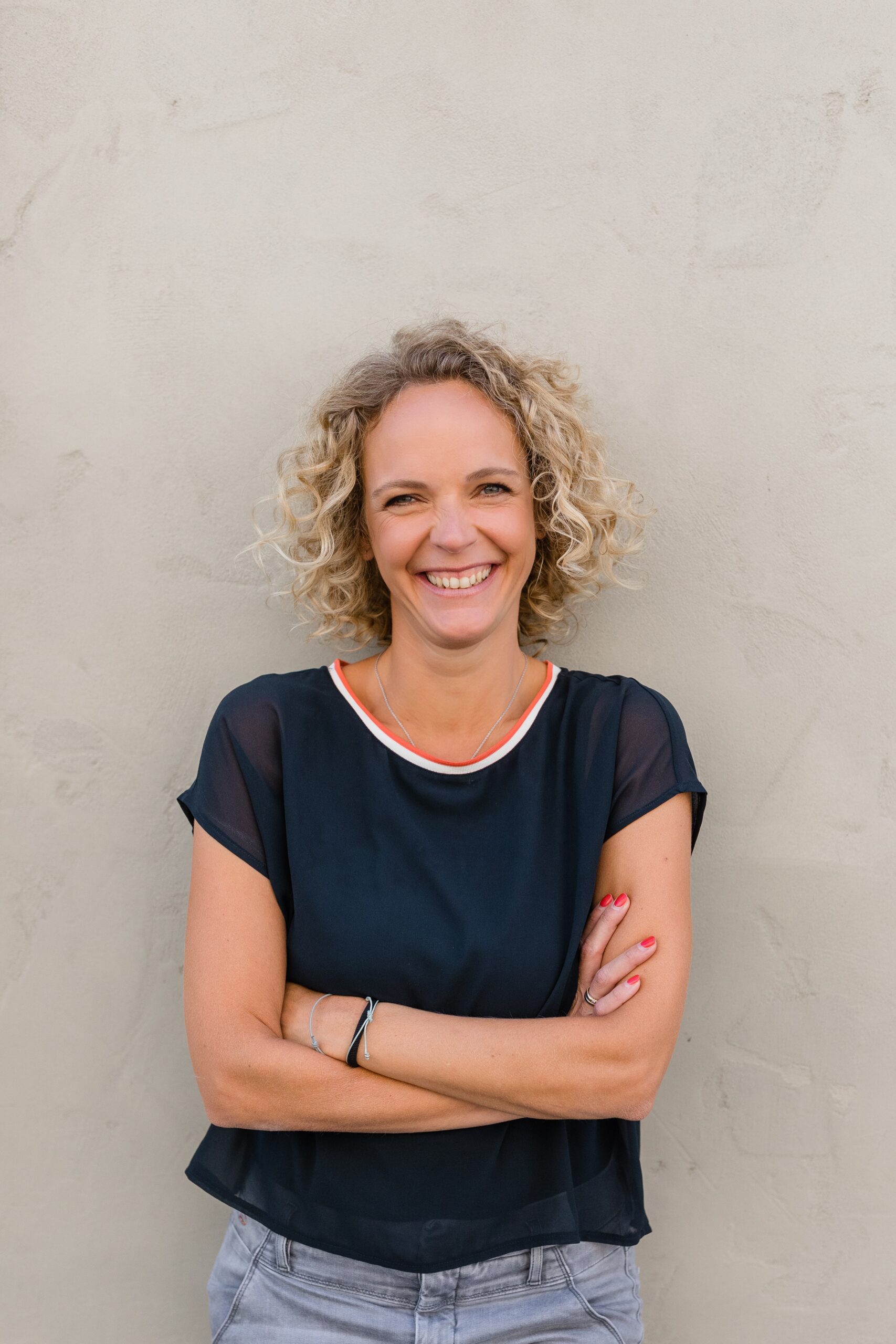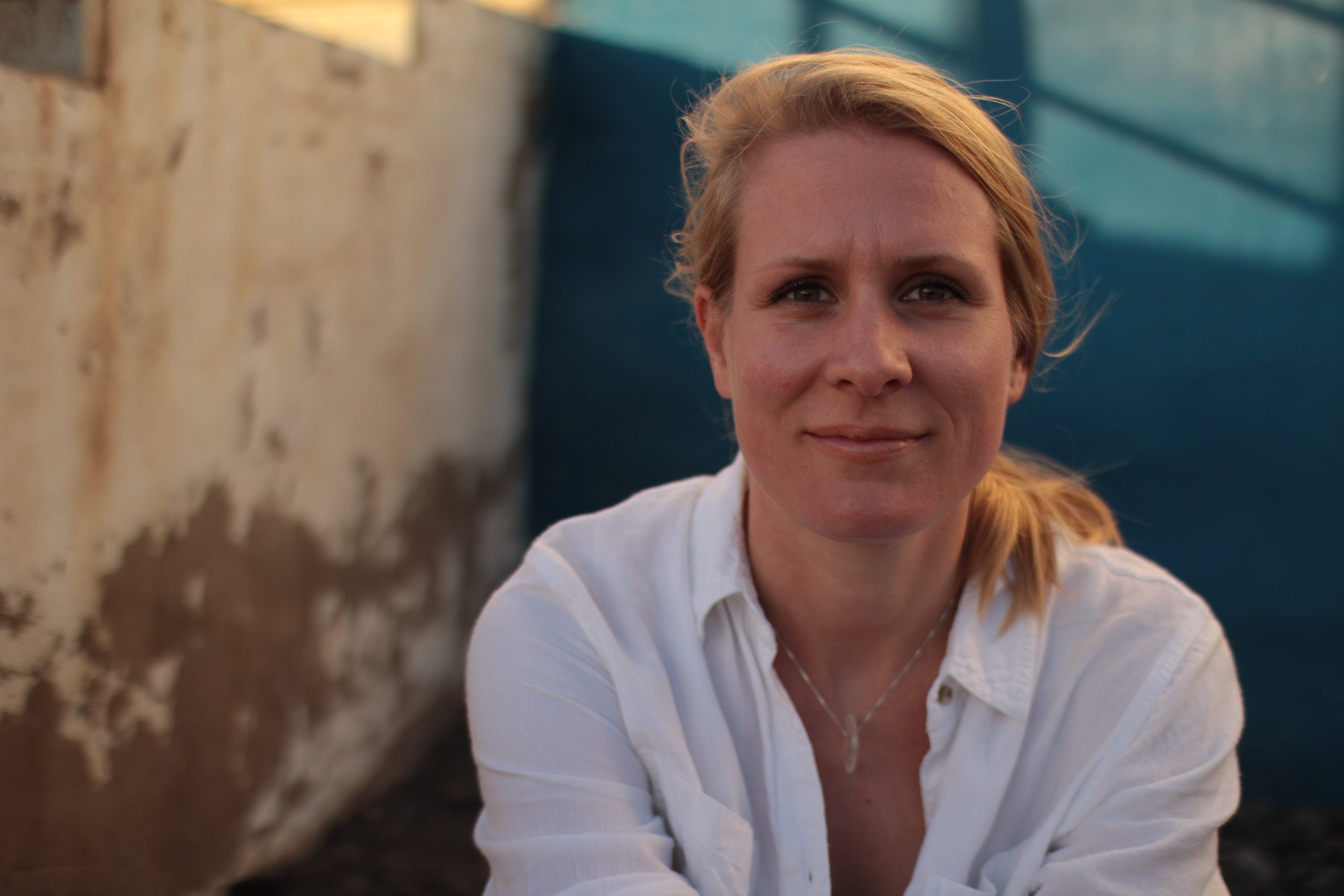
Dear ones, Nadine Birner is a doula and says: „Birth is political“. She is convinced: „Pregnant people want to be taken seriously, not fobbed off, they need knowledge, not half-truths, they need community, not going it alone.
And above all: they need to see the big picture, the context and the structures.“
She delivers all of this now because she believes in it! And because she is convinced that it is very important, both for us individually and collectively. Her words are also worthwhile for everyone who is no longer pregnant, because the topic affects us throughout motherhood.
Dear Nadine, you say that birth is political. And so is pregnancy. In what way?
We are not pregnant in a vacuum, but in the midst of our society, in which certain images, ideas and narratives dominate, e.g. how pregnancy and birth should take place, how you should behave as a pregnant and birthing person. There are rules and norms, spoken and in most cases unspoken, but very powerful.
So when I say that pregnancy and birth are political, I mean that they are embedded in structures and ergo in power relations. In a healthcare system that controls and standardises a lot and asks few questions and individualises little. In a society that demands conformity and often only celebrates self-determination as a fancy buzzword. In concrete terms, and we have known this for a few decades: the private sphere is political and politics is part of our everyday lives.
It is in our passport, in our wallet, in our pregnancy and also in our birth. The socio-political context determines whose pain is taken seriously, what concerns are heard, what behaviour is considered acceptable for a pregnant person, what access to what medical care they have, etc. Recognising and understanding this is usually a turning point for my clients, when they realise: it’s not me, the problems are structural.
Do you think democracy starts in the nursery?
If the idea behind the question is that we listen to our children, take them seriously, involve them in age-appropriate decisions and allow them to help shape everyday family life, then yes. If this means that there is room for negotiation, for different needs, for experiencing autonomy and boundaries, then yes.
In my opinion, the family is a safe framework for children to explore community and practise living together. A place to experiment, to try out self-efficacy and creative power. I am very aware that although I am not alone in this idea, in many cases it is far from reality.
Our children are extremely dependent on us at the beginning of their lives, and it makes a huge difference whether we let them feel this dependence or meet them at eye level according to their age, through our form of address, through our body language, through how we involve them and allow them to participate.If we accompany their childhood in a secure environment, with respect, affection and the trust that they can help shape it, then they will grow into a sense of belonging and responsibility. Then they can grow into adults who see themselves as part of our democratic society and contribute to it.
You are working for a dignified start in life, how can this be achieved?A dignified start in life succeeds on two interlinked levels: On a personal level, it requires knowledge, self-determination and freedom of choice. And on the structural level, it requires a society that allows this in the first place.
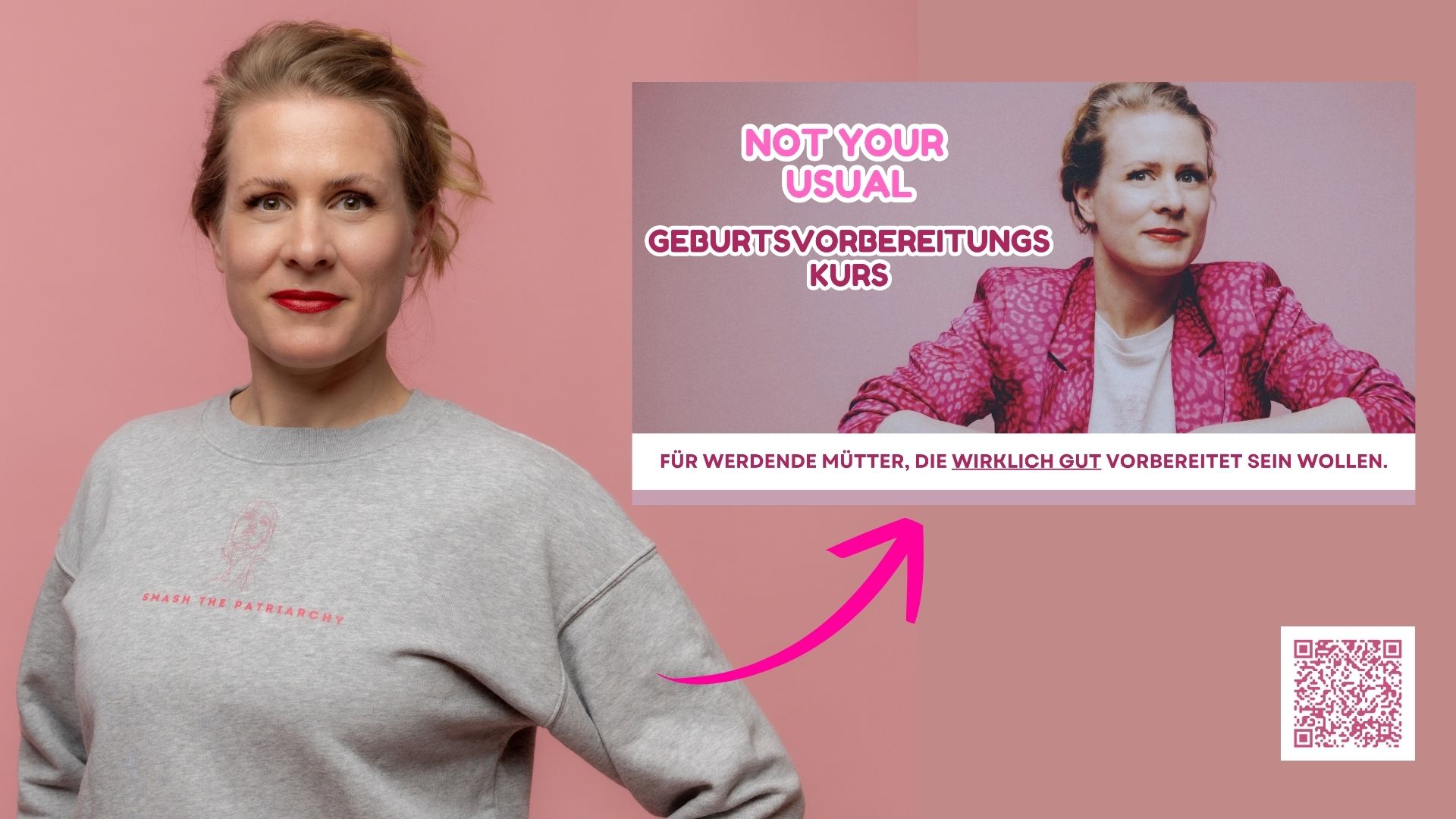
On an individual level, we can often take action more quickly – and that’s exactly what I’m doing with my antenatal course, for example, which starts in September. Here, we challenge stereotypes, fuel self-determination and create a place for exchange that is supportive.On a structural level, on the other hand, it often feels like a tough dry spell, but one that we still have to go through if we want sustainable change. After all, what good are your birth wishes if you’re tilting at windmills in the delivery room? What good is your self-determination if you are exhausted from constantly swimming against the tide? What good is your knowledge of role models and mental load if society continues to celebrate the „power woman“, the „everyday heroine“, the „supermum“?
For me and my work, this means that it’s not just about personal empowerment in my pregnancy counselling sessions. It’s also about visualising the conditions under which decisions can be made in the first place. One doesn’t work without the other.
Why did you train as a doula?
My pregnancy also turned my professional life completely upside down. I suffered from hyperemesis gravidarum and was out of my job from one day to the next. I was on sick leave and couldn’t finish my temporary project position. And then the abuse started, which left me speechless and even angry: I spent several days in clinics twice because my condition was miserable; in one clinic, I was dismissed by a doctor on the grounds of „lack of compliance“ because I asked critical questions about my treatment plan.
My gynaecologist performed an ultrasound, even though I had expressly refused beforehand. When I presented in the delivery room, the midwife asked me if I wanted to give birth „like a hundred years ago“. And when I turned up for the birth, the doctor’s sentence jumped out at me: Don’t shout so much!
I thought I was in the wrong film and at the same time I realised: this is all considered „normal“. It was constantly suggested to me that I was the one who was wrong. I had to comply, not behave like that, be cooperative. I had lived as a woman in our society for over thirty years by then and knew about judgement, control and mindfuck, but as a pregnant woman this grip increased enormously and violent assaults became normalised. From then on, it was clear that things couldn’t go on the way they were!
Pregnant women want to be taken seriously, not fobbed off, they need knowledge, not half-truths, they need community, not going it alone. And above all, they need to see the big picture, the context and the structures. I am providing all of this now because I believe – to reinterpret a much-quoted saying – that it doesn’t matter how we are pregnant and give birth. On the contrary: it is very important, both for us individually and for us collectively.
What are the biggest hurdles for new mums these days, how have the issues in the postpartum period changed?
As I’ve only been working as a doula for a year, I can’t give a qualified opinion on how the topics have changed over the years, but I can say something about the topics that dominate today. The postpartum period is an extremely sensitive, vulnerable time. For the person who has given birth, there are many different things going on around recovering from the birth and getting used to the new daily routine with a baby.
What many people often don’t expect is how the feeling of being controlled by others kicks in after the initial euphoria has subsided. I still remember exactly how I realised after the birth of my child: I can’t just sleep now when I’m tired. There is someone who needs me and I have to organise myself completely differently when I need time and rest for myself.
And this is often not a gentle arrival, but sometimes resembles an impact. In addition, there are all kinds of expectations and romantic notions with which we have embellished our postpartum period and which often collide with reality. When you have a partner, things can get rough – because a lot of things turn out differently in practice than they did in theory. The social environment is also not always as supportive as hoped or agreed.
And then there is this diffuse pressure from all sides: Get fit again quickly, get back into shape – keyword after baby body – return to work as soon as possible or stay in bed as long as possible. I think it’s helpful and good to keep reminding yourself of this: What is good for me? What can I leave out right now? Whose feedback is helpful for me right now, and which can I safely ignore? The postpartum period is a stark transition that needs space, calm and support, not more demands and a concert of wishes.You describe yourself as a feminist, so as a doula do you also work with fathers and make sure that you can provide a good balance?
My focus is primarily on the pregnant person, their well-being, their needs, their questions and their wishes. In the vast majority of cases, there is already more than enough to do. At the same time, it makes sense to broaden your perspective and include your partner in the counselling process. This usually develops automatically in my counselling sessions when we approach topics such as birth, care work or mental load. Then partners come on board and together we tackle issues that are relevant to both sides.
Because as much as I focus on the pregnant person: I also know that individual change can achieve little if the system around us remains unmoved. Then the room for manoeuvre remains narrow. For change to have a lasting effect, movement is needed on several levels and throughout the entire system.Nevertheless, my main focus remains on the pregnant person. That’s important for me to say. Because even today, pregnant people – even in their closest environment – often only receive a one-dimensional form of attention: as the carrier of the unborn child. It’s different for me. I want to see and accompany the whole person, with everything that is there: history, doubts, wishes, anger, questions, strength. And yes, I think there is also a need for stronger, targeted programmes for expectant fathers and other caregivers. There is still a lot of potential that needs to be tapped!How would you like to see a fair division of parenthood?
I think the idea of a parent team, which I adopted from Hanna Drechsler, is very appropriate. A team in which everyone treats each other with respect, with genuine interest in each other and a willingness to share responsibility. A team in which everyone’s needs and wishes count and in which there is constant renegotiation: Who takes on how much care work? Who does how much paid work? Who does the housework? Who has time for hobbies, voluntary work and leisure activities and when?
I also believe that equal parenthood does not contradict the idea of romantic love and romantic partnership, but quite the opposite: only through equality can love grow at eye level and with respect in the first place.
What do you do well in your own everyday life that you pass on to your clients – and what not so well?
This is the beloved topic of self-care. Especially during pregnancy and postpartum, it is a fundamental act of self-preservation. My clients are producing new life, which is incredibly energy-sapping on all levels, physically, mentally and emotionally. And with birth comes a whole new level of availability and commitment. But you can’t draw from an empty well and in the vast majority of cases, pregnant people and people who have given birth are not given the level of care they need.
I work with my clients to develop an understanding of self-care that is more than a visit to the spa with a pregnancy glow mask. It’s not about wellness or beauty ideals, but about the deeper questions: What do you need to feel safe? Supported, strengthened, connected with yourself? What nourishes you, what brings you back in touch with yourself? Sure, the face mask can be part of your self-care routine, but I think it’s equally important to recognise that self-care can also be uncomfortable. It also means questioning how you talk to yourself, what patterns you repeat, what conflicts you avoid and what responsibilities you (don’t) want to take on.
At the same time, self-care also means being kind to myself, being gentle. Not beating myself up to function, but taking space that is not automatically granted to me by society and finding a balance between my everyday life and my needs.
I manage this myself, sometimes more, sometimes less well. I know pretty well what is good for me, what I need – but I often find it difficult to say no to the desk and yes to the couch. The same goes for not putting in an evening shift in front of the laptop after I’ve fallen asleep, but rather going to the lake again. Especially now, when I’m building up my business, I find it really challenging to find a good balance. But I also realise that where there is no power, there is no work. And I take that very seriously. And then I love to turn to Svenja Gräfen’s book „Radical Self-Care Now!“
.
What do you wish mums for the start of the child adventure?
First and foremost, I wish them kind and benevolent companions on their journey. Familiar people – whether friends, midwives or doula – who are there for them, who carry and support them, who listen to understand, not to react. Who are there and offer their care without intention. Who take themselves back without leaving them alone. Because in my opinion, nothing is more unfavourable than going through this challenging and upsetting time alone – and at this point I would like to emphasise that you can also be very alone in company.