
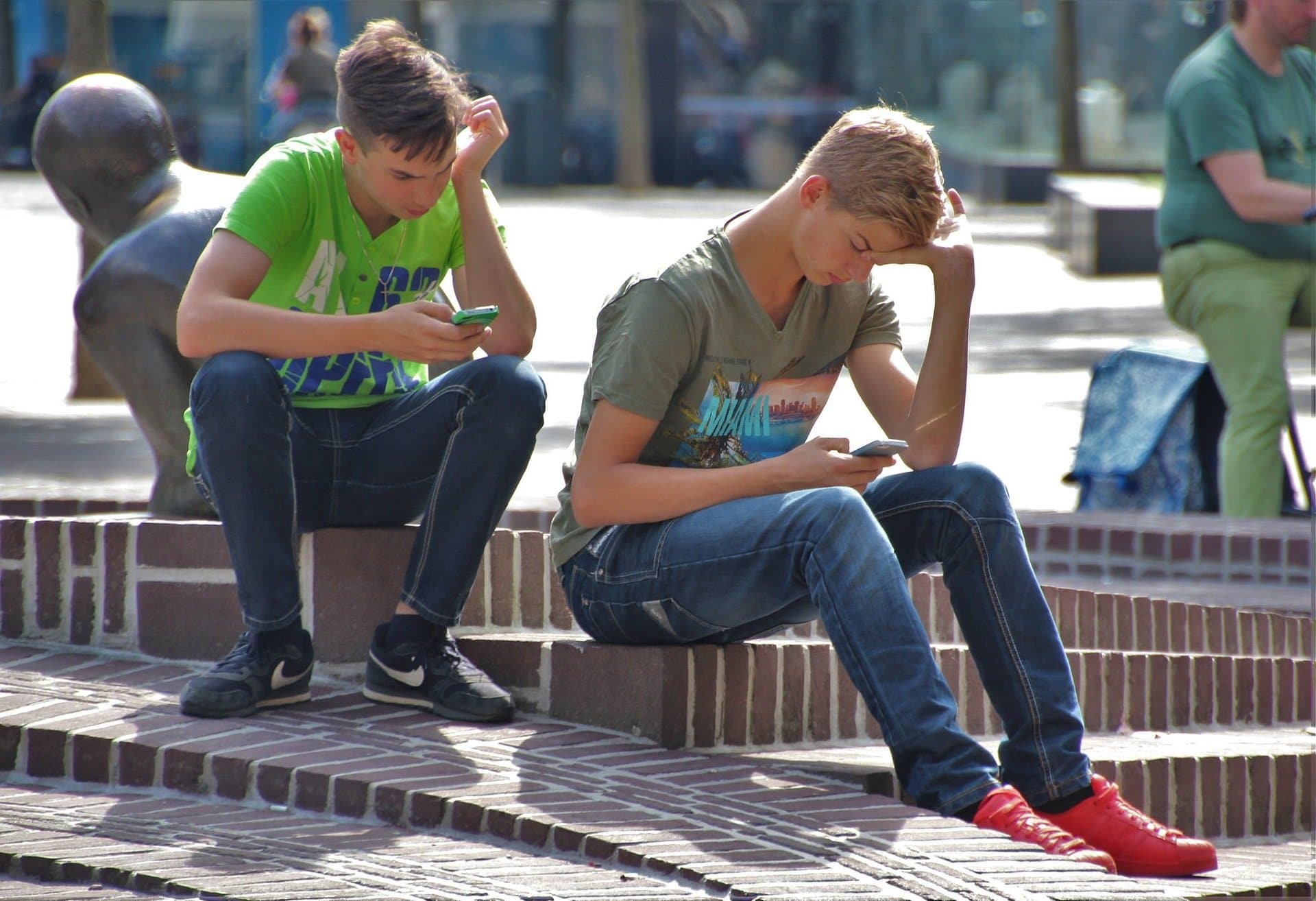
Dear all, over 80 per cent of 12-year-olds today have their own smartphone and use it to surf the internet alone, where sooner or later they will encounter sexual content: whether intentionally while curiously browsing for pornography, during their first attempts at sexting when in love, or unintentionally in class chats and while gaming online with strangers. Sex and media educator Madita Oeming calls it „digital puberty“ and now offers parents and caregivers help and concrete advice on how they can confidently guide children and young people in dealing with sexual media in her book Aufgeklärt statt aufgeregt (Enlightened instead of excited).
This raises pressing questions such as: What online risks will my child face? How do I initiate an open conversation about pornography? How do I strengthen my child against the dangers of cybergrooming and deepfakes? How can I encourage them to handle images and data sensitively and to respect their own boundaries and those of others? And best of all, her examples are calm, confident and offer an enlightened approach to pornography, sexting and other topics. We were also able to ask her a few questions about this.

Dear Madita, you talk „as naturally about porn as others talk about tomato plants on their balcony,“ writes the FAZ. So let’s get started: How do I initiate an open conversation with my teenager about porn?
Of course, it always depends on the age and the parent-child relationship. Ideally, a culture of open communication about sexuality and the body, as well as about media in general, has been established early on. You can then build on that. There are two ways to start a concrete conversation about porn. Either through everyday digital life. Children in particular often come into contact with it for the first time unintentionally. So you can ask: „Have you ever come across anything online that made you feel uncomfortable?“ Alternatively, you can also use the experiences of others to make it clear right away. This happens often and it’s not your fault. For example, parents can say: „I’ve read that porn often ends up in class chats. Has that ever happened to you?“ With older teenagers, you can take a different approach and say: „I realise that at your age you have probably already encountered pornography. I understand that it is exciting. It is just important to me that you don’t keep it to yourself if you have any questions or concerns about it.“
What should I discuss with my child before they get their own mobile phone?
I would make agreements in advance about how the child can use the device. Agree on which apps are okay, which are not, and which device settings are necessary. And always make it clear that this is about protecting the child. Children should be aware of why they should handle their data sensitively, for example. You can think together about which profile picture or profile name is appropriate so as not to reveal too much. It is ideal if parents manage to team up with their child to combat potential online risks.
Topics such as cybergrooming or sextortion do not necessarily have to be discussed in detail, but they do need to be made clear in an age-appropriate manner: „There are adults on the internet who pretend to be your peers and do not necessarily have your best interests at heart. So listen to your gut feeling if something feels strange!“ Continuous communication is important. Which digital spaces does your child frequent? Which people and content do they encounter there? The most important message is: „Whatever happens to you online, you can talk to me about it and I won’t punish you for it.“ The most important message is: „Whatever happens to you online, you can talk to me about it and I won’t punish you for it.“
Porn literacy is essentially media literacy as it relates to pornography. It’s about being able to critically reflect on and classify pornographic content, but also being able to find a way of dealing with it that feels right for you.
On the one hand, it involves being aware that the images are fabricated, i.e. knowing that these are fantasy films for adults, not a representation of or instruction manual for sex. This also means not comparing yourself with the bodies or sexual performances shown. On the other hand, it also involves knowing and communicating your own boundaries and respecting those of others. For example, not simply sending pornographic content to others without asking. And likewise, sensing for yourself whether images feel good or bad.
If my child tells me that there was a strange conversation in a gaming chat room with questions about masturbation… how should I react as a parent?
First, stay calm. „Thank you for telling me“ should be the first thing you say to encourage your child to do so again. Then you could ask: „Why did that seem strange to you? What do you know about the other person?“ And so on. Try to remain as neutral as possible and avoid phrases such as „Why did you do that in the first place?“
At this point, your child probably already feels that they have done something wrong. Depending on the situation, you can then consider together how to proceed. Should the contact be blocked? Is it a case for reporting? If possible, nothing should be decided over the child’s head. You can also work together to see if such contacts can be avoided in the future. For example, through different settings or a different server.
You are also considered an expert on deepfakes. What exactly should we as parents know about „digital puberty“ in order to be able to support our children effectively?
Above all, parents should be aware that a single, harmless image can easily be used to create deceptive, defamatory or sexualised AI-manipulated content. Children should therefore be sensitive when it comes to their own images. For example, they should think carefully about what profile picture they choose and in which circles they share images. It sounds harsh, but every image can easily be misused today.
Of course, this also applies to the pictures that parents share. „Sharenting“ is a problem. What I find on many parents‘ social media accounts would easily be enough to create sexually explicit deepfakes, for example. This is not theory, but already paedophile criminal practice. I would like to see more awareness of this among adults. Children are not content.
What rules do you consider essential when it comes to cybergrooming?
Children who are online alone, whether on their own smartphones or on gaming servers, should above all be aware that this phenomenon exists. This also helps to explain convincingly why some rules make sense. One agreement could be, for example, not to accept contact requests from people you don’t know. Or to choose profile names that don’t reveal anything about your age, gender or place of residence. You can also teach them warning signs, such as: „If someone pressures you for information or pictures, or repeatedly insists on switching to another channel, you should be sceptical.“
It is essential that children are aware that they can leave a conversation at any time if it feels strange. To this end, it is also important not to always and everywhere train them to be polite. However, the most important „rule“ here is and remains: „You can always come to me if you are unsure about an experience or an encounter on the internet!“
You also write about myths surrounding pornography. Which ones are the most persistent?
Oh, there are quite a few. For example, that only men or boys watch it. That it only ever shows women being degraded. That most people become addicted to pornography. Or that young people automatically become hypersexualised through early exposure. There are potential risks associated with pornography, of course, but they tend to be overestimated. And morally-based assumptions are often talked about as if they were empirically proven facts. That annoys me. Especially when, as with right-wing battle cries such as „early sexualisation“, it hinders sex education, which is an effective protection against the actual possible negative effects of exposure to pornography.
Has working extensively on this topic changed you? If so, how?
In many ways, yes. I have to be honest and say that writing this book was quite a feat and that some of the topics still weigh heavily on me. After all, I dealt with issues of violence on a daily basis, which I had underestimated. But at the same time, I feel stronger. Funnily enough, I feel much safer, even though I am much more aware of all the dangers. Knowledge also helps me to find my bearings. Above all, it has reinforced my hopeful and loving view of the children and young people of ‚today‘. They manage so much so well, even when we let them down. That touches me.

What opportunities do you see for our kids online (is it much easier to come out today because you can find like-minded people)?
Digital spaces also offer a lot of potential for sexual development. They can be a space of opportunity where young people can tentatively explore their first sexual encounters in relatively controllable settings. Provided they are given the appropriate skills. Online, I can click away, block or wait two hours before responding. It’s easier for me to be myself and set my boundaries. Many people find it easier to say no online. And yes, too.
The internet can be a valuable place, especially for those who are restricted in analogue spaces because they are queer, live with disabilities, are under strict parental control or are simply shy. I would have loved to have had these opportunities when I was young, and I am convinced that it would have spared me some negative analogue experiences.