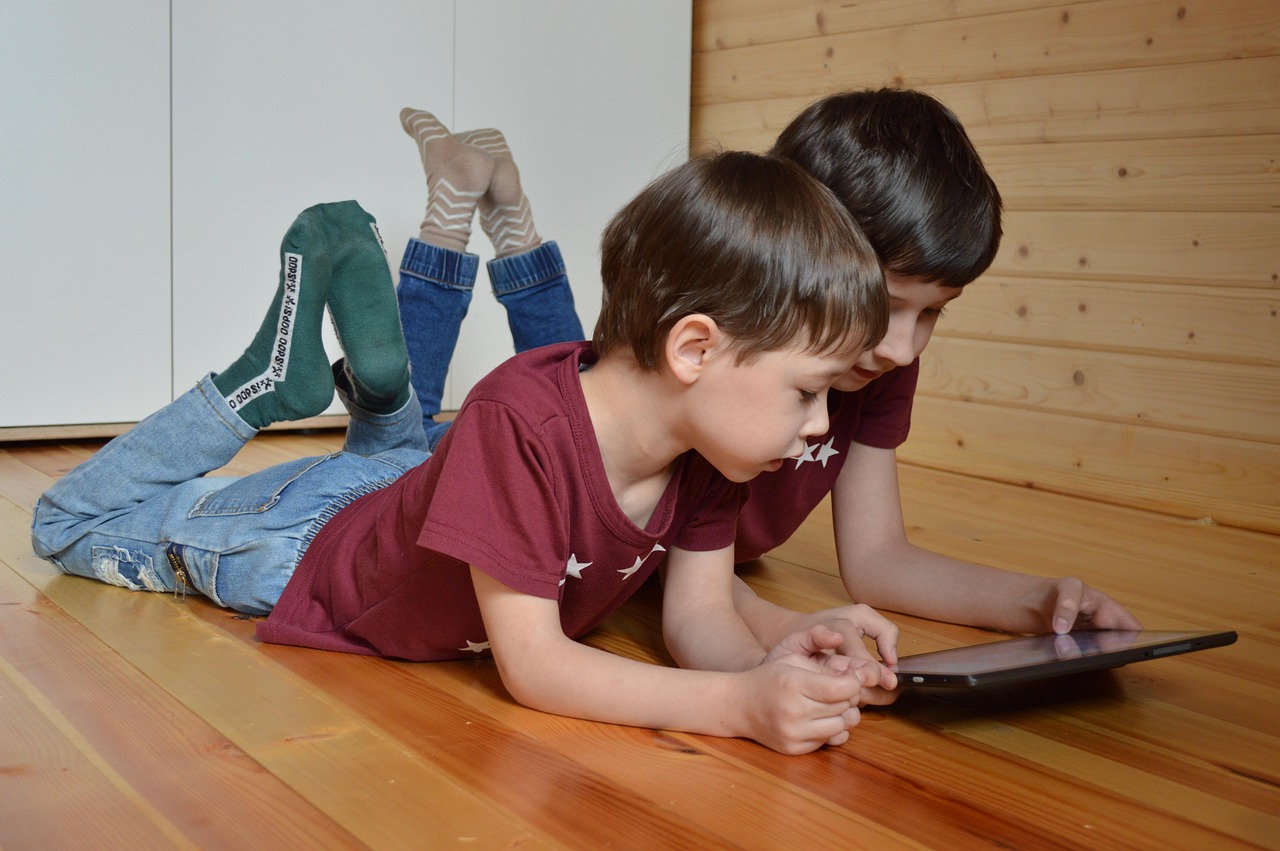
Dear readers, Katharina recently wrote about how there are no consoles in her home, and Alexandra Nolte, a mother of four children who is „older than Google“, is often shocked by how carelessly her friends hand their children mobile phones. She doesn’t want a „glass nursery“ for her own children. Here she shares her thoughts on the matter and then gives us an interview.
„No glass nursery for my kids“
‚I’m still one of those people who had to get off the internet when someone wanted to make a phone call. But I never stopped growing with the internet. And then the film The Matrix blew me away, and the digital world has always been a part of me.‘
However, with AI, I now realise how quickly you can be left behind. If this happens to me, despite regularly expanding my knowledge in this area, how must it be for others? That’s why I started educating my friends about what can go wrong, where the dangers lie and how to deal with them. One thing led to another.
Now I’m going public with this topic and trying to raise awareness among parents with „The invisible worlds behind the screen“ to raise awareness among parents and address the uncomfortable topics of data protection, cybercrime and media literacy among children.“
Dear Alex, you say that as a mother of four children, you are often shocked by how carelessly my friends hand their children mobile phones. Can you tell us about a specific situation?
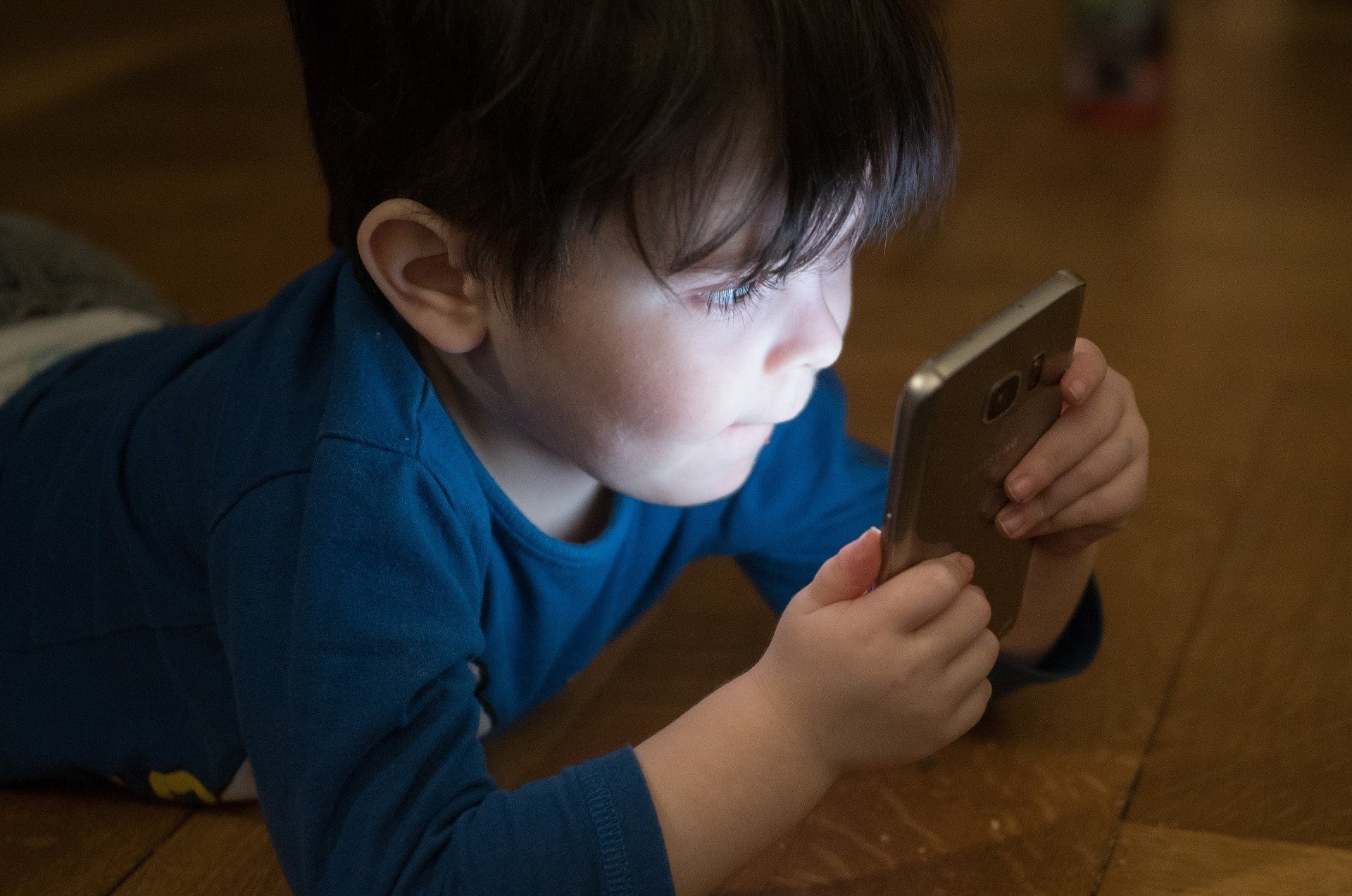
These situations happen more often than you might think: for example, in a restaurant. A child becomes restless and is handed their father or mother’s mobile phone. Of course, the YouTube settings are not what they should be for a child. Playlists and algorithms have already been trained, consciously and unconsciously. Now content is available that children should perhaps not see.
For me, it’s my love of Tim Burton. This content is completely unsuitable for my youngest, but it is displayed because I prefer this content for myself. It’s important to know that this is the case and not to wonder how it could have happened.
Which features do you think are particularly underrated?
The AirDrop or QuickShare feature is particularly underrated and dangerous. A button suddenly flashes up: „Accept“. The child presses it and, regardless of who dropped something there, it is there, displayed and saved in the media library. If it’s just a picture of a flower, you’re in luck, but there may be content floating around that you don’t want your child to see. Very few people know that you don’t need Wi-Fi or anything like that for this feature; the data arrives, is confirmed, stored on the mobile phone and is simply there.
You say that you notice how quickly you yourself are being left behind by the rapid development of artificial intelligence. In what way?
Let’s just take the generation of videos for social media. A year ago, it was still quite easy to tell whether a video was generated or not. For example, AI was not able to generate realistic hands. That has changed in a very short time. Now, reality and fiction are virtually indistinguishable. If you don’t stay up to date on these topics, you quickly overlook things that are really important. And it’s safe to assume that this will only intensify in the future rather than diminish.
You started educating your friends about everything that can go wrong. Tell us more.
I started showing them what you can find out in a very short time with voluntarily shared information. Let’s stick with social media. WhatsApp is also part of this, and even the status function is not as private as you might think. It can be used to create a very nice movement profile. Add a few posts from Facebook or Instagram and you’ve got a map. Where does the person like to eat, go to the hairdresser, play sports, how is their home furnished, and much more. You can even find out their exact address quite quickly, nursery, school, everything is visible.
When I show how quickly content can be falsified thanks to AI, most people are shocked. Thanks to AI, I can make anyone say whatever I want or create images/videos of situations that never happened. That’s frightening.
Where do you think the greatest dangers lurk in the „invisible world behind the screen“?
In my opinion, there are several dangers that all go hand in hand. The algorithm decides what content to show based on the child’s clicking behaviour. AI learns alarmingly quickly from this data what to do to keep the child on the screen and begins to reward the child for desired behaviour on a level that neither the parents nor the child actively perceive.
Then comes the distortion of reality: on social media, everyone is a superstar, super brave, super beautiful, super trendy and super rich. If necessary, a filter is applied. Repeatedly played advertisements that are not always perceived as such because the favourite influencer always has them with them. And suddenly you’re stuck in a bubble that you can’t get out of so quickly.
Take a child in puberty, for example. They always feel misunderstood and are easily influenced. Participating and belonging are very important at this age. The algorithm remembers which content works for this child so that they stay on their mobile phone. The AI learns and shifts this content further and further without being noticed. Faster, louder, possibly more emotional, it begins to set triggers that are unconsciously stored in the child’s brain. Every like, every heart releases dopamine. The reward system kicks in. It’s addictive. Added to this is the comparison with a fictional reality: everyone is more beautiful/thinner/richer than me. This quickly creates a feeling of inferiority. Now add a specific bubble with a predetermined direction, and the content selected by AI can not only steer consumer behaviour in a certain direction, but also direct opinions. In my opinion, the greatest danger is that we are raising children who have never gotten to know themselves.
You’re talking about how an algorithm works – and how AI amplifies the whole thing…
Exactly. The algorithm remembers quite crudely: yes or no! Cat picture or dog picture! But AI can think beyond that: if you like dogs, then you probably also need balls to play with. Would you like to buy a ball for your dog? Look, here’s a nice ball. Children can recognise and see through this kind of manipulation once they have been explained what is actually going on.
What do you tell your own children about data protection and cybercrime? And at what age?
That there can be bad people everywhere, on the playground as well as on the internet. This starts quite early. Don’t go with strangers, start with the little ones. And: If it sounds too good to be true, it usually is, but that comes a little later.
I can’t say exactly at what age we started, because we grew up with the issue. Personally, I take the same approach to cybercrime as I do to analogue crime. Talk, talk, talk! Informed children are strong children. When one of my children asks, they get an explanation appropriate for their age.
Why should location tracking be turned off on WhatsApp?
Because otherwise everyone can see where you are! Even people you don’t like or, worse, don’t know at all. Why do we check the legal notice very carefully before we order? Because I can set up a fake shop for you in three minutes. Come on, I’ll show you how.
Why you shouldn’t talk to strangers in a general chat on Roblox (it’s best not to go in there at all) is just as important as not getting into a stranger’s car just because someone says „Your mum sent me!“ We have a code word in our family that only the children and we parents know. It’s a safety net in case of an emergency. The most important thing is to be honest and answer questions or point out dangers in a way that is appropriate for children but honest.
You also find it problematic how much data is collected via apps and what that does to children’s media consumption…
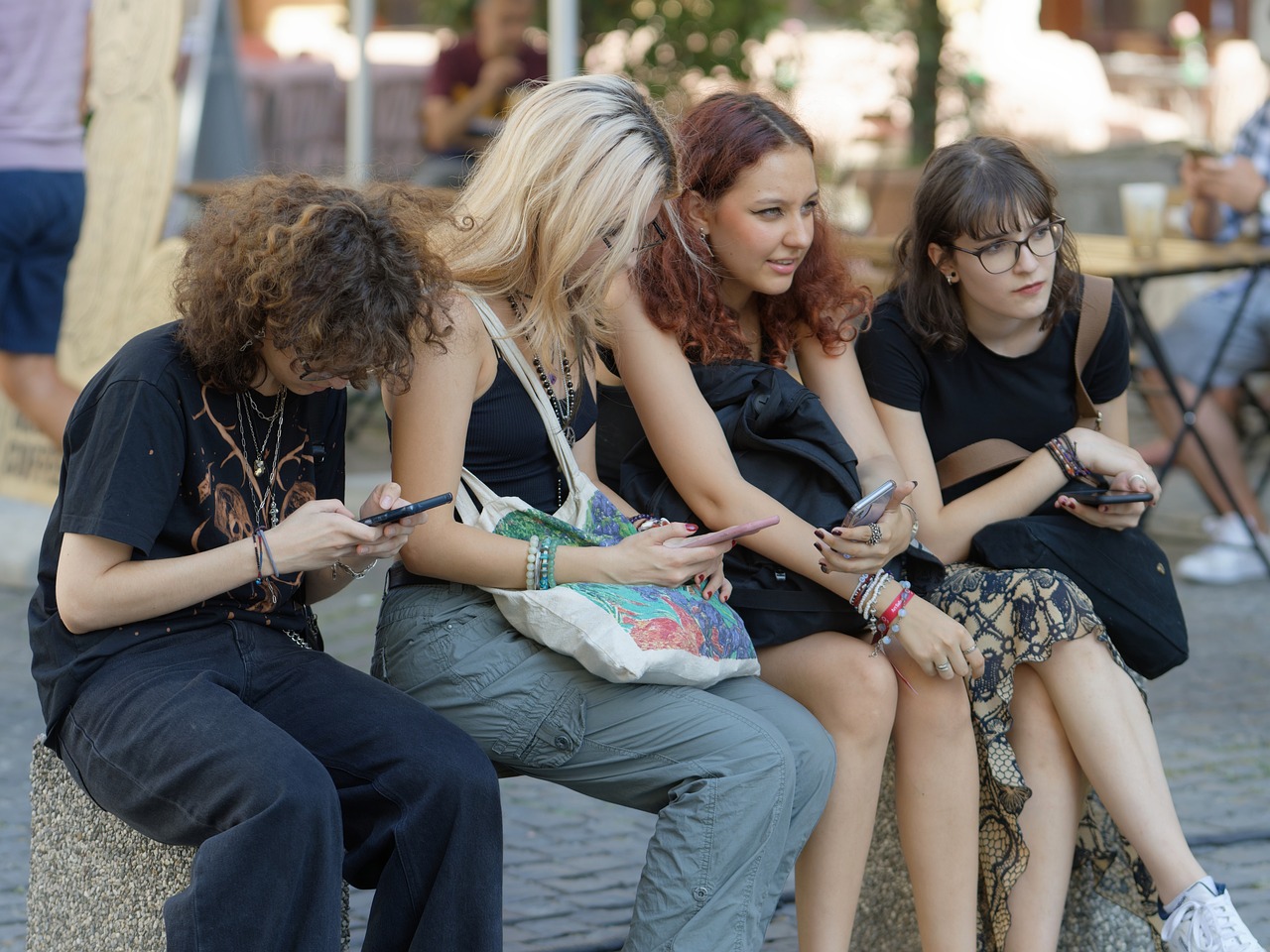
It’s not just about name and age, it goes much deeper than that. What did the child look at, for how long, when did they swipe on, which colours do they linger on longer, which sounds do they prefer, what is their reaction time, can their current mood be deduced from this, do they respond to rewards, and much more. A personality profile can be created in no time at all. Movement data, learning behaviour, strengths, weaknesses, social interactions, voice recordings, image material! This is how a primary school-aged child becomes the perfect customer. You think it’s important to ‚lock‘ a mobile phone and not leave open devices with children because you believe that this opens the door to their bedroom to any stranger. Could you explain that in more detail?
To me, an unlocked mobile phone is like a glass children’s room! Anyone can walk in and out as they please. The uncontrolled flow of data lets everything in and lets everything out. I don’t want that in the analogue world, and I certainly don’t want it in the digital world. What few people know is that even completely harmless apps can have chat functions. It’s a pretty easy way into my child’s bedroom. I can’t intervene and my child is not yet able to assess the dangers.
But if I lock the device, it’s not impossible, but it’s much more difficult to get to my child. There are so many forms of crime on the internet, and even though I can’t protect my child 100%, I still want to be a protective shield and be able to help my children if they experience something bad. That’s why I want to help other parents protect their children so that they can explore the internet with curiosity.
Do you also see opportunities?
I actually see more opportunities than disadvantages. The internet is full of opportunities, creativity and endless possibilities. It connects, educates and opens up worlds that were unimaginable just a short time ago.
The big problem is that we as parents have never learned how to deal with it and now we just push our children into it and leave them there on their own.
If we manage to guide our children in such a way that they understand the internet as a tool that can be used responsibly and creatively, we will have very happy children. The internet gives us all the opportunity to discover and develop talents, we can use it creatively and not just consume it passively, we can boldly develop projects and make friends across city and country borders.
In conclusion: How can we make digital childhood safe?
A safe digital childhood actually works in exactly the same way as a safe analogue childhood. We don’t send our children out onto the motorway to play on their own. And the same applies in the digital world. We can’t just leave our children to their own devices and turn a blind eye to the dangers. We need to understand the digital world and stay on top of things so that our children can navigate it freely.
It’s like being at a playground: children are allowed to run, climb, test their limits and be curious, but we stand at the edge and are there in case of an emergency. A locked mobile phone does not mean that my child is restricted, but rather that they have a safe starting point from which they can try things out and be curious.
We cannot protect our children 100%, neither in the analogue world nor in the digital world, but we can talk about it, and that is actually the most important protection! Even about things that make us uncomfortable. A very important topic: sexual harassment on the internet. A really bad topic. But only a child who knows what that is can come to us and say, something happened, I find it strange, help me. This is the only way we can protect our children, by talking about it, by staying on top of it ourselves and by understanding what our children are doing.
Children need their parents to guide them, not to ban their mobile phones. With a ban, my child will only learn that if I do something, I will be punished, so I won’t talk about it and suddenly, the digital world, just like the analogue world, is no longer safe. We need to talk to our children about it, we need to educate our children, and in order to do that, we need to be educated ourselves. And this is exactly where I try to help parents. As a mother who has exactly the same worries and concerns. Media literacy is not a nice-to-have, but super important for strong and curious children.