
Are We Really Responsible for Our Kids' Happiness?
The picture-perfect family picnic sets us up to feel like failures when the zoo trip ends in whining. What if happiness was never our job?
Friends, nothing makes us happier than a guest post that teaches us something, too. This one did exactly that. It offers such wonderful insight, and it doesn't just take the pressure off parents to make their kids happy 24 hours a day. It also shows what we can look for together with our kids to build a fulfilling life. You loved the authors' earlier piece, “My Child Is a Dreamer: How School and Learning Can Still Work,” by Stefanie Rietzler and Fabian Grolimund. Here's their new one, for more warmth around the heart:
Am I responsible for my kids' happiness? Ever since we started working more on the topic of happiness and wrote the book “Jaron auf den Spuren des Glücks” (“Jaron on the Trail of Happiness”), parents have asked us this question surprisingly often. As if our kids' happiness were just one more item on parents' endless to-do list. Of course we all want our kids to be happy, but do we really have to feel responsible for it?
I put in so much effort, and it's still not good enough!
Type “family” into Google image search and you get a taste of what the media think a family looks like today: Dad, Mom, daughter, and son run blissfully smiling, hand in hand, across a field in the golden glow of the setting sun. They enjoy a lavish picnic on a spotless blanket in the park. They lie beaming and snuggled up on the couch or the rug in a tidy living room.
So the modern family is active, adventurous, and shares harmonious moments of happiness together.
It starts, of course, with a hearty breakfast where the kids happily polish off the healthiest foods while the attractive parents, naturally, have time for lively conversation (try searching “family breakfast” and see for yourself).
As ridiculous as these pictures are, and as well as we know how unrealistic they are, they still get to us.
They plant the idea in our heads that kids are always happy if parents just do it well enough.
And because we all want to do it well, we go all out for our kids. We cook up the perfect program for the birthday party, order the matching decorations weeks in advance or make them ourselves, plan exciting outings, and read blogs on how to make healthy food appealing to kids (veggie faces, anyone?). Always hoping for thrilled kids and lovely family moments.
But where so many expectations are packed in and so much has been prepared, disappointment is rarely far behind. The kids whine at the zoo because they want ice cream instead of looking at the animals. Your daughter is so stressed by the chaos and noise at the birthday party that there are tears, and the younger sibling has a meltdown because the gift was smaller than the birthday kid's. The oh-so-healthy veggie faces get curious looks, but in the end Mom eats them. And the holiday you spent days preparing was once again not as peaceful and harmonious as you'd pictured.
We feel hurt and angry: I went to all this trouble and it's still not good enough! How ungrateful and spoiled kids are these days! We would have appreciated this so much more back then…
Welcome to the hedonistic hamster wheel!

According to a study by psychology professor Shigehiro Oishi of the University of Virginia, most people in Germany believe that a happy life is defined mainly by pleasure, joy, stability, and comfort. To get closer to that, we plan the next great vacation, go after another step up the career ladder, and try to earn more money so we can afford a bigger house or a second car.
So it's no surprise that we often bet on the same thing when it comes to our kids' happiness. We try to coax a smile out of them with fun activities or make them happy with new toys.
Many of us know that none of this leads to lasting contentment, only to a short-lived high. But when we ask ourselves what a happy life really includes for us and our kids, a lot of us feel a little helpless. It's something like: “I know that nonstop entertainment, consumerism, and career won't make us happy, but then what will?”
Where is happiness hiding?
Research on life satisfaction and positive psychology shows that happiness doesn't show up loud, colorful, and expensive. It tiptoes in.
It sneaks into our lives when we do work that interests us and helps others, alongside people we like.
It creeps closer when we're extravagant with our seemingly scarce time and give it to the people who matter to us.
It comes out of hiding when we know what we love to do, what we're good at, and what makes us lose track of time.
It joins us when we savor things on purpose: sinking into a gripping book, listening to a piece of music, taking a hot bath, switching on all our senses at a meal, or marveling at nature.
It stays a little longer when we take stock of everything we have, what we're grateful for, what went well today, and what we're looking forward to.
It finds a place in our lives when we think beyond ourselves, support others, stand up for a good cause, and get to feel a sense of purpose.
It finds its way back to us when we can allow uncomfortable feelings, too, and have people around us in hard moments who we can share them with.
How we figure out what makes us happy, together with our kids
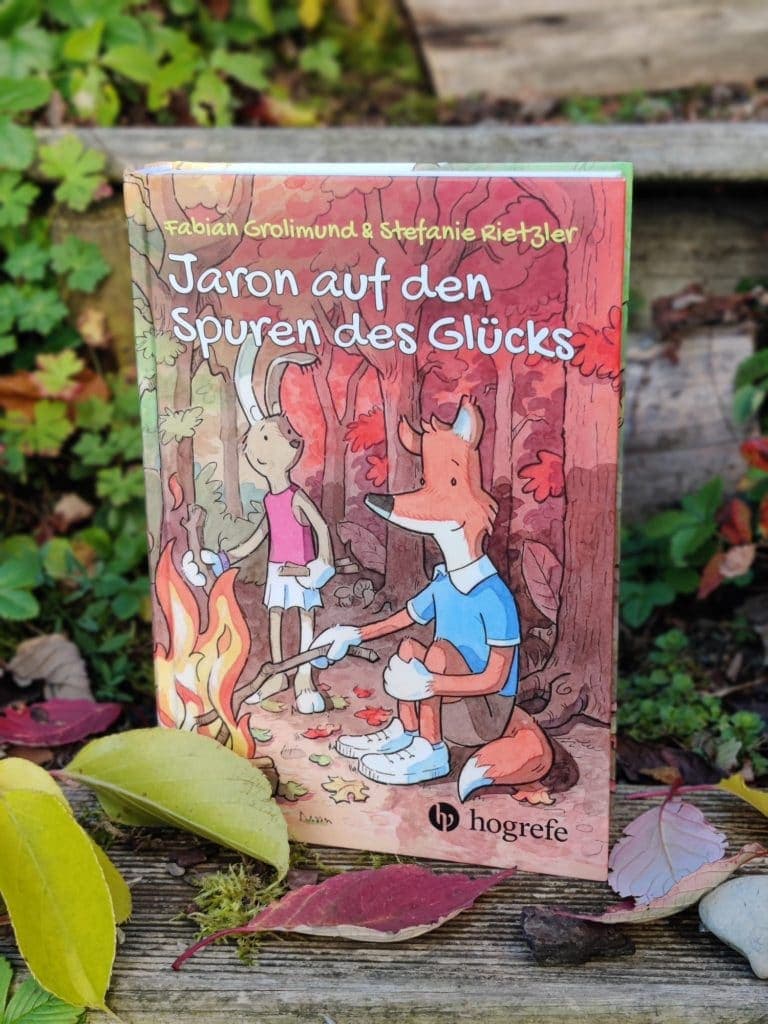
In the book “Jaron on the Trail of Happiness,” a young fox named Jaron sets out in search of happiness with his friends: Lotte, a dreamy bunny, Frieda, a cozy bear, and Merle, a loyal but somewhat timid duck.
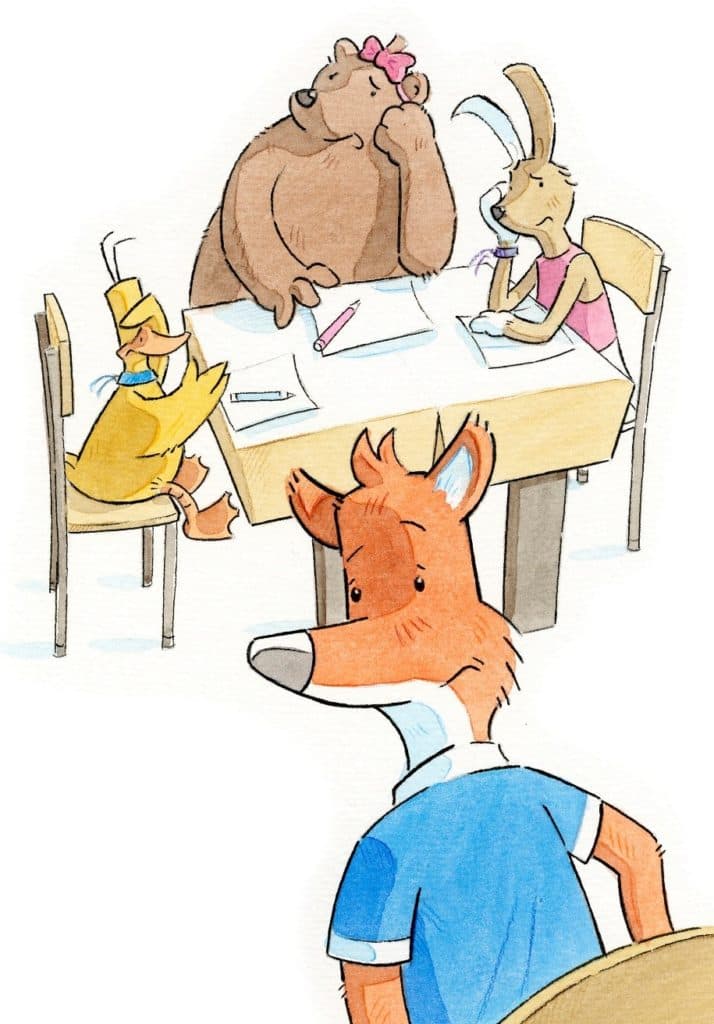
He doesn't do it entirely by choice. His strict teacher, Ms. Lynx, has put him in a group of girls for the semester project because the cool boys didn't want him on their team.
“Who'll take the fox?” Ms. Lynx calls out, eyeing one group after another. “Merle, Frieda, Lotte, there are only three of you?”
“Please not the girls, please not the girls,” Jaron begs in his head, drumming his paws against his thighs.
“Can't we please, please work as three, Ms. Lynx?” Merle the duck quacks.
But Ms. Lynx doesn't budge. “I said groups of four! Jaron is joining you.”
The girls groan, and Jaron rolls his eyes, too. “She can't do this to me!” he thinks, and sighs.
When Lotte finally suggests happiness as their topic, Jaron knows he could use a little more of it himself, but he's doubtful that it can be found.
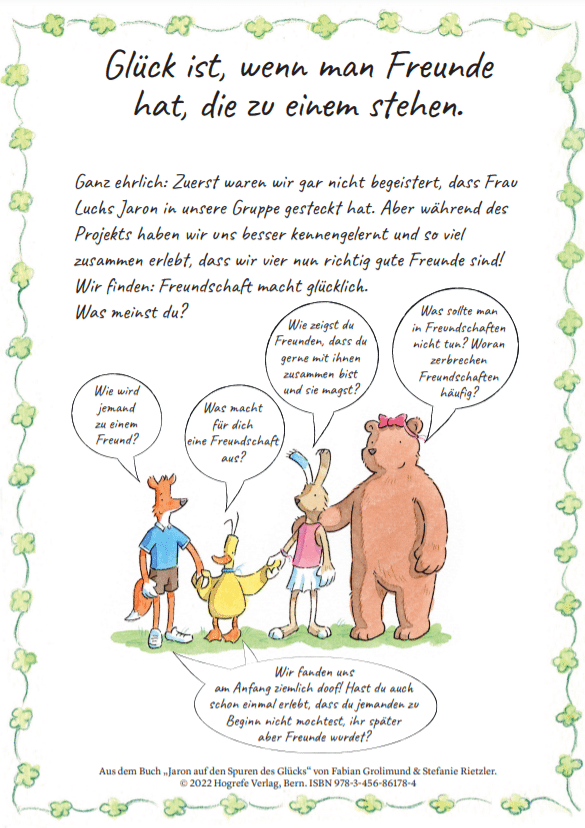
After a rocky start, a lovely friendship grows among the animal kids. Jaron finds more and more of himself and builds up the courage to go his own way. Over the course of their adventure, the kids discover different happiness lessons, which they write down in their explorer's journal. These lessons encourage readers to go looking for clues themselves and find out what's good for them.
But new troubles soon await Jaron. His father, the mayor, eyes the changes Jaron is going through with suspicion. He forbids him to keep seeing the three girls and grounds him for his insubordination. He's convinced that his son simply doesn't know what's good for him.
Jaron, meanwhile, suffers more and more because he can't live up to his father's expectations:
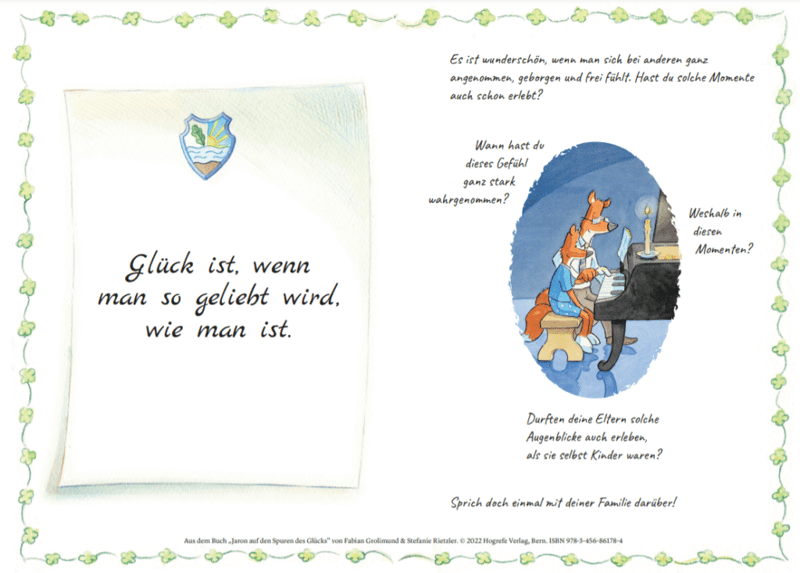
“You know, Dad,” Jaron says. “I didn't want to cause you trouble.” Nervously, he takes his paws off the piano and wrings them. “I know you'd rather have a son like David: a star athlete you can be proud of at the game, someone you never have to be embarrassed for because he misses the penalty kick. Or someone like Vinnie, who's got grit and can hold his own, like you always say. I really tried, but I'm just not like that. I can't get you to be happy with me.”
Jaron's father listens without saying a word. He plays a few notes, suddenly stops, and says without looking at Jaron: “It's terrible to feel like you never measure up and have to be different. I never wanted to pass that on to you.”
That's when Jaron starts sobbing so hard that his whole body shakes. His father puts an arm around his shoulder and pulls him close. Jaron buries his snout in his dad's fur and cries until he has no tears left.
After a long struggle and a few dramatic events, Jaron and his father find their way back to each other, and the mayor gets better at accepting his son as he is:
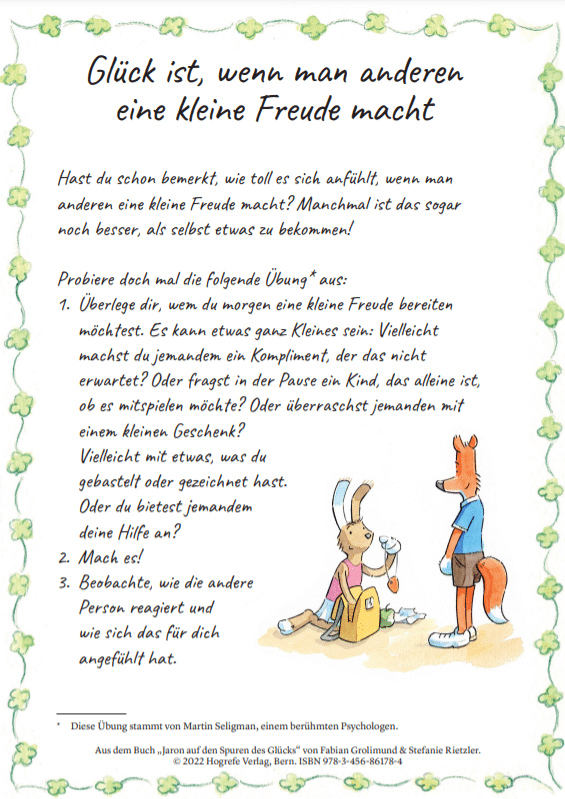
Besides the lessons that invite shared reflection, the kids also find concrete happiness exercises. Two examples are the “What Went Well” exercise and the kindness exercise, both of which studies have found effective for boosting life satisfaction and well-being over the long term:
So are we responsible for our kids' happiness?
Every mom and dad probably has to answer this question for themselves. Personally, we believe that as parents we can't “make” our kids happy. But we can figure out, together with our kids, what's good for them and for us, and what contributes to a contented life. That lays a foundation for our kids' ability to look after their own well-being later on, instead of chasing the wrong things.
About the authors: Fabian Grolimund and Stefanie Rietzler are psychologists who run the Academy for Learning Coaching together. They are the authors of several bestsellers, including “Lotte, träumst du schon wieder?” (“Lotte, Are You Daydreaming Again?”) and “Geborgen, mutig, frei – wie Kinder zu innerer Stärke finden” (“Secure, Brave, Free: How Children Find Inner Strength”). More about their work: www.mit-kindern-lernen.ch
This story first appeared in German on StadtLandMama.